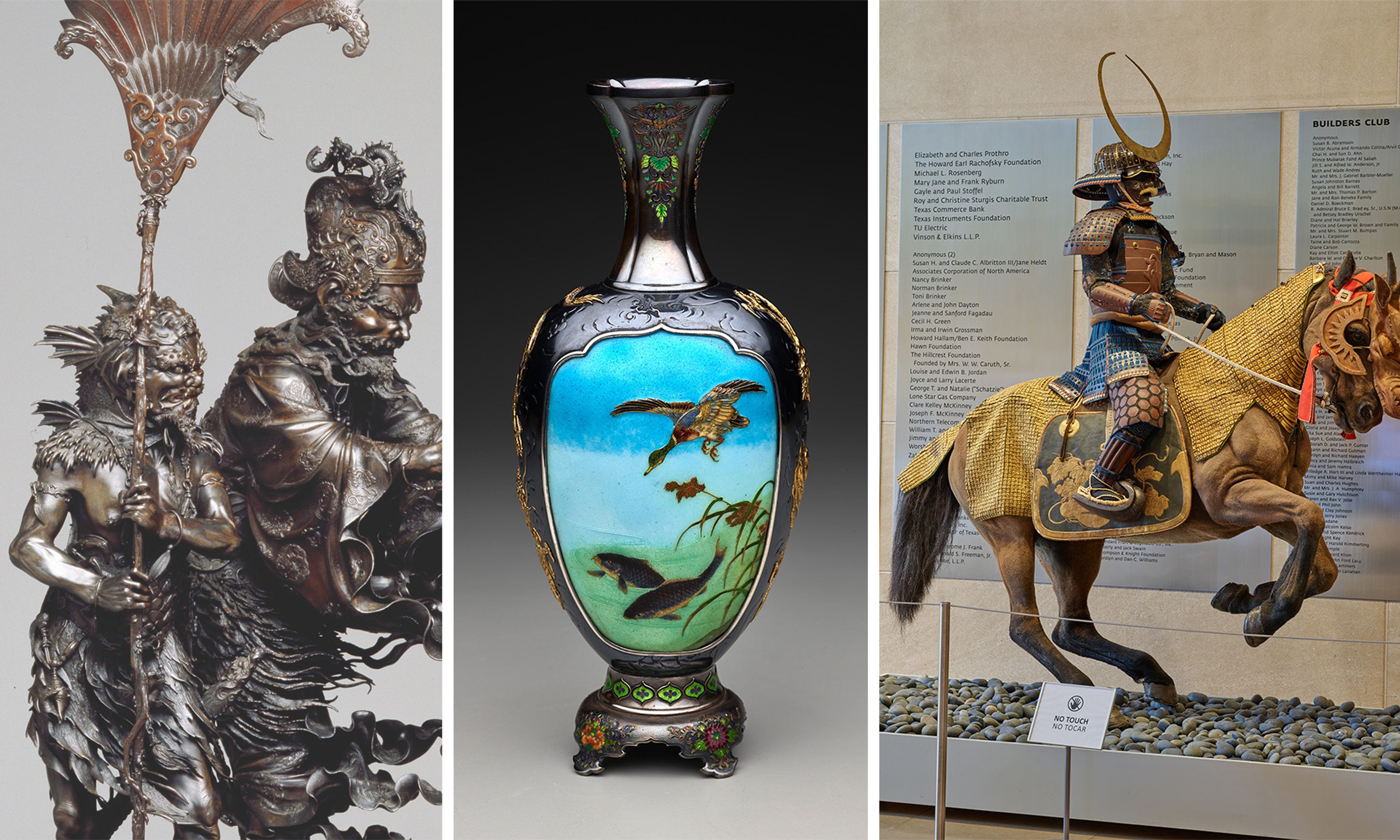
I always love visiting Texas for its world-class art and formidable energy, personal and petroleum, and always get to the Dallas Museum of Art (DMA) if time allows. During my last Texas trip, in April, I was delighted to have the time to see Samurai to the Imperial Court, a revelatory, radiant new DMA exhibition on Japanese metalwork from the late Muromachi period (1336–1573), avant-garde times, into the dynamic, Modernism-infused Meiji period (1868–1912). In our own parlous epoch, who in their right mind wouldn’t be drawn to arms and armor?
The samurai, Japan’s elite warrior class, were serious indeed about their weapons of war. “Spot-on deadly but done with style” might have been their calling card. Through 90 objects and five centuries, we sense their martial spirit and feel aesthetic chills, but elegantly crafted metal wasn’t only for the battlefield. Artists were nothing short of brilliant in making cloisonné vases, metal sculpture, incense burners, and more. Samurai’s art and scholarship are collaborative, which I like. For this superb show, the DMA worked closely with Dallas’s Ann and Gabriel Barbier-Mueller Museum, specializing in samurai art.





Comments