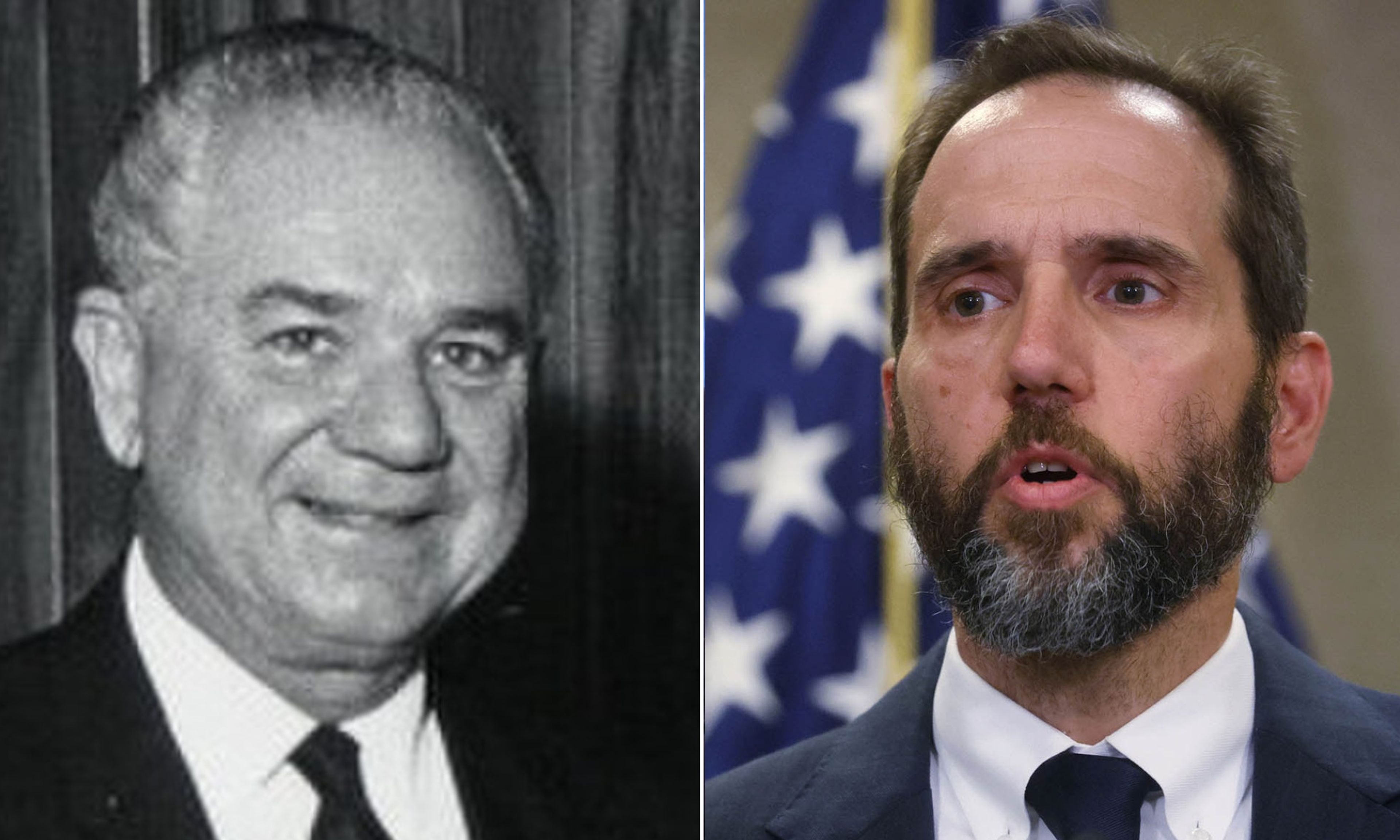
Ishould have learned by now never to write from memory. It’s faulty and, alas, I find with increasing frequency, the problem doesn’t get better with age. Given the data at our fingertips with a few pecks at the keyboard (or, when I’m too lazy to peck, by dictating to ChatGPT), there’s no excuse for it. Yet, here I am confessing error for misremembering that Leon Jaworski was the special prosecutor who litigated the subpoena for the Watergate tapes in United States v. Nixon (1974), not Archibald Cox. I mistakenly cited Cox in a recent rumination on whether Jack Smith’s appointment as Biden Justice Department special counsel passes constitutional muster.
It’s alarming to misremember things like this. I was 15 and already obsessed with politics when President Richard M. Nixon resigned in August 1974. The Watergate episode had the nation frenzied. I remember it as if it were yesterday (but it wasn’t, so, trust me, I’ve checked myself): I stared agape at the TV in our Bronx apartment in the summer of 1973 as Alexander Butterfield, a top aide to Nixon’s powerful chief of staff, H. R. Haldeman, testified to the Senate Watergate Committee that the president’s conversations were recorded on a White House taping system. That revelation lit the fuse for the October 1973 explosion known as the “Saturday Night Massacre.”





Comments