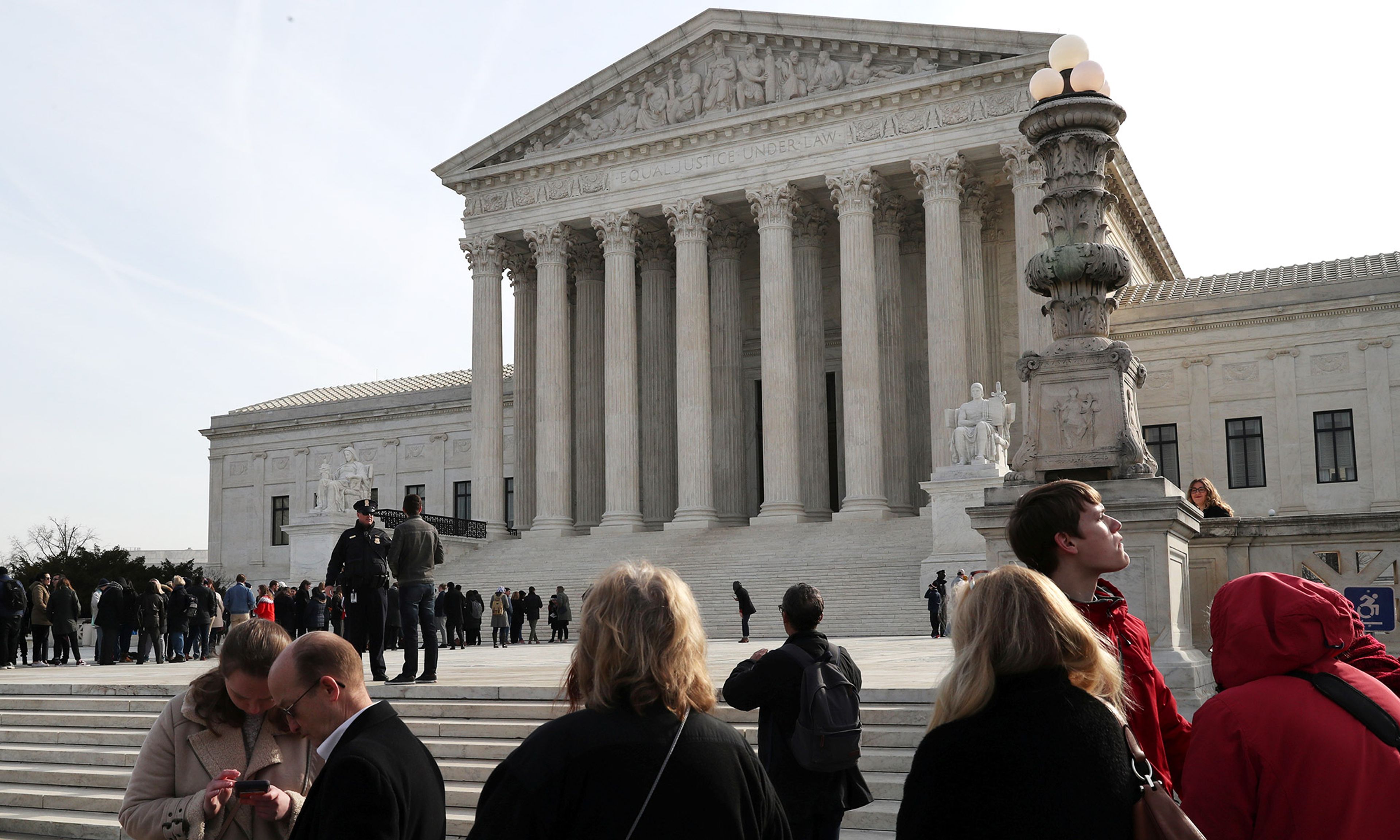
The Supreme Court, this morning, in Alexander v. South Carolina State Conference of the NAACP, restored a South Carolina congressional map that had been struck down as unconstitutionally race-based by a three-judge district court. The decision is a small step, but only a small one, in the direction of sanity in a frequently insane area of the Court’s jurisprudence.
Politically, the decision is a win for Republicans as it made Nancy Mace’s district safer for the remainder of this decade. South Carolina continues to have six districts that range from strongly to entirely Republican and one (James Clyburn’s sixth district) with a black plurality that is safely Democratic. Mace’s Charleston-based first district is the most contested; she ousted incumbent Democrat Joe Cunningham by just 1.3 points in 2020, after which the new map was drawn. She was reelected by a 14-point margin in 2022 under the contested map.





Comments