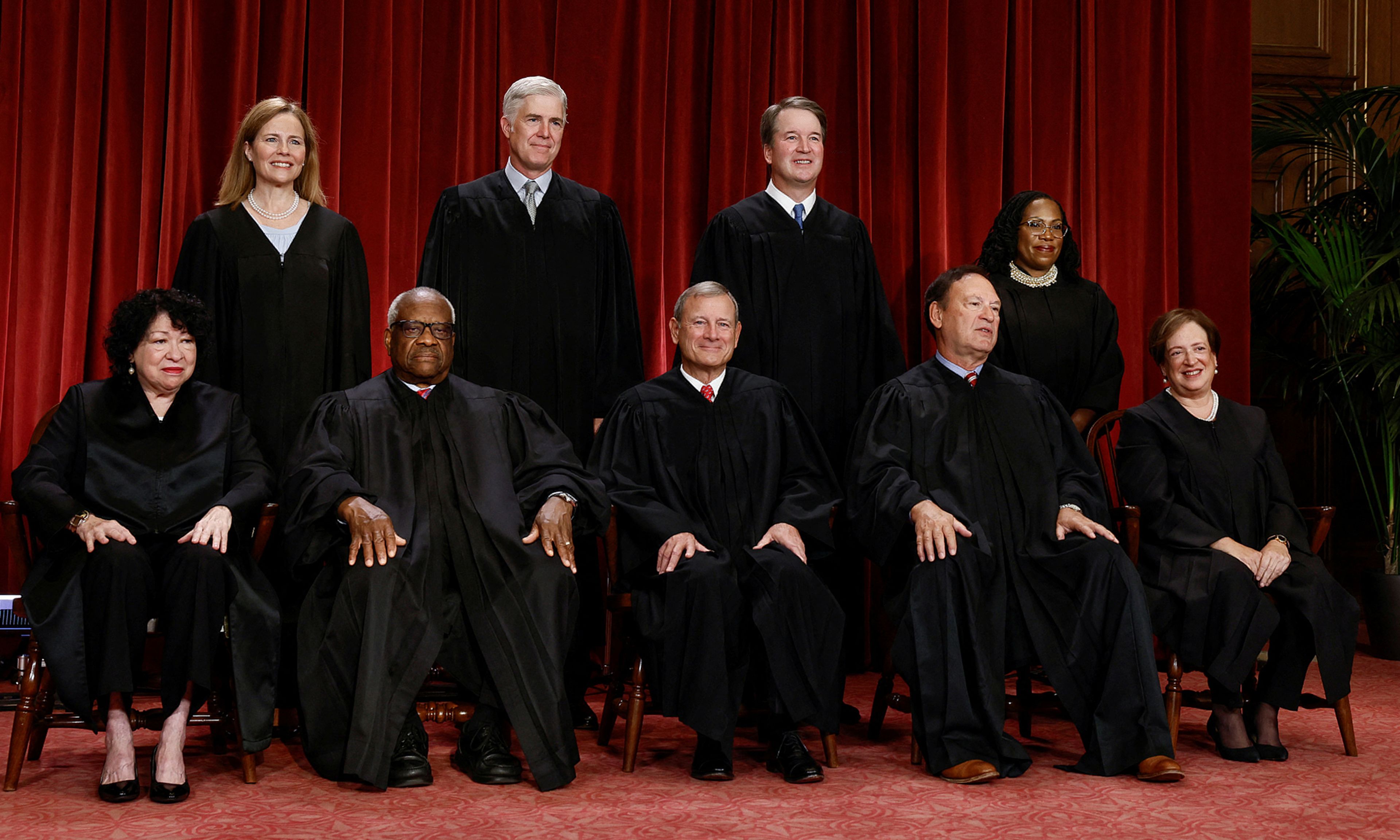
In politics, one of the hardest decisions is whether to do something you think is right when it’s being demanded by the wrong people for the wrong reasons as part of a campaign to accomplish the wrong ends. That’s where the Supreme Court has found itself in the debate over publishing a code of ethics for the justices. Today, the Court did so. It will get no credit for this from its critics, but the code is a positive step and one that deprives them of a bad-faith talking point. It makes it easier for members of the public and the bar to review in one place the standards that the justices hold out as governing their own behavior. It makes it harder for Congress to justify enacting legislation that would impose a code of dubious constitutionality.
The well-financed campaign to paint the conservative justices (and only them) as unethical is only one prong of a wider effort to intimidate and/or discredit the Court and its justices by physical protest, threats of violence, smears, and proposals to restructure the Court. Nonetheless, it has had an effect because members of the public who don’t follow the Court closely just keep hearing that the justices not only are acting unethically but are also not subject to any rules.




Comments