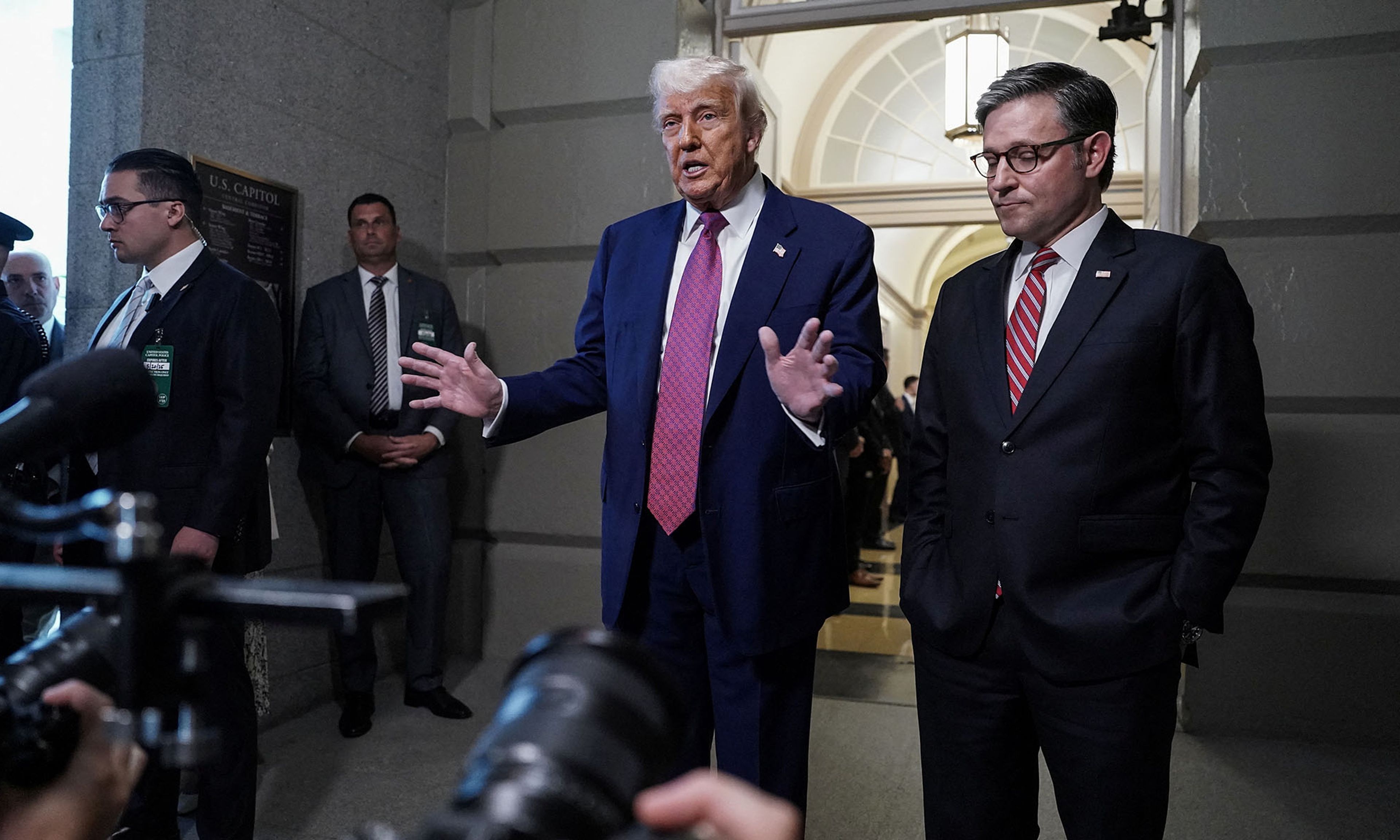
We have been frequent critics of Donald Trump’s tariffs, but we understand that there is a case to be made for reconsidering some of our trade policies. The place to make that case is Congress — not by unilateral presidential declaration of open-ended worldwide “emergencies.” The Founders rebelled against taxation without representation; they did not mean for the executive to control the duties on all imports by daily whim.
It is Congress that was granted power by the Constitution to “lay and collect Taxes, Duties, Imposts and Excises” and to “regulate Commerce with foreign Nations,” and for good reason. It is Congress that can set policies that are stable and predictable for business, our allies, and our adversaries. The representative branch’s policymaking may not be pretty, but it includes the greatest number of people in the most deliberative fashion in balancing competing policy concerns and getting buy-in from people likely to face the voters again soon. That’s how we have always set tax policy, and tariffs are nothing if not taxes.
Unfortunately, Congress has been in the habit of handing over much of its taxing power to the executive in the area of tariffs, and the courts since 1928 have supinely accepted this state of affairs. They shouldn’t. The least they can do is prevent presidents from seizing authorities that Congress hasn’t delegated. That’s what the Court of International Trade did on Wednesday in ruling that Trump improperly invoked emergency tariff powers under the International Emergency Economic Powers Act of 1977 (IEEPA).
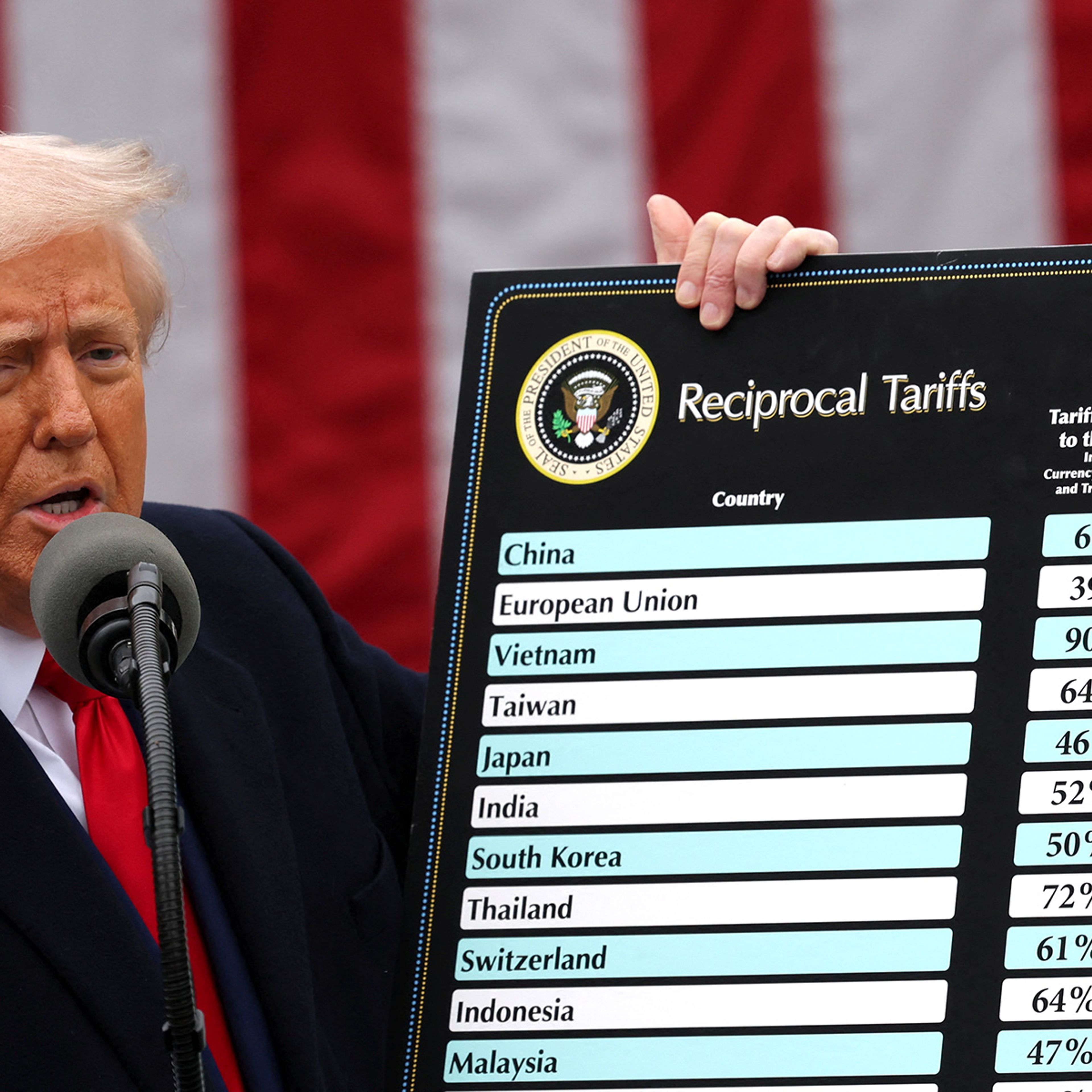
The court struck down three sets of Trump tariffs as unauthorized by emergency declarations under the IEEPA: the 10 percent global tariff on all imports, the “liberation day” retaliatory tariffs, and tariffs on China, Canada, and Mexico that were premised on a presidentially declared fentanyl-trafficking emergency.
The three judges on the court — a Reagan appointee, an Obama appointee, and a Trump appointee who previously worked for Trump’s first-term U.S. Trade Representative — were unanimous. The court didn’t question the authority of Congress to enact the IEEPA’s delegation of emergency trade and tariff powers, although it noted that the IEEPA was part of a statutory revision designed to narrow presidential emergency powers that had grown unchecked from Woodrow Wilson to Richard Nixon, and it read the terms of congressional delegation against the background assumption that delegations may not be unlimited and should not be presumed to delegate major questions on which Congress was silent.
As the court concluded, the worldwide and retaliatory tariffs “lack any identifiable limits” and are “unbounded . . . by any limitation in duration or scope.” In the court’s view, Congress “cannot grant the President unlimited tariff authority,” and the IEEPA accordingly limits presidential authority to “an unusual and extraordinary threat.” By definition, that cannot be a threat that is worldwide and has been ongoing for decades. Moreover, Congress specifically sought to exclude from its definition of unusual emergencies the existence of a trade deficit, given that Nixon had invoked precisely that justification for a much more limited “surcharge” in 1971 than the tariffs deployed by Trump.
The trafficking tariffs, at least, are anchored in a specific emergency and are limited to particular countries. There is more force in Trump’s argument — which the Court rejected — that the IEEPA allows him to use tariffs as negotiating leverage, or at least that the courts are ill equipped to second-guess his judgment that a fentanyl-trafficking emergency requires a broad foreign policy response that extends to trade sanctions. But he again ran aground by claiming powers connected only in the most attenuated fashion to what Congress delegated.
From here, the case likely goes to the Federal Circuit and, quite possibly, the Supreme Court. It would be better in all events for Trump to go to Congress instead, or for Congress to act on its own. But if the president persists in claiming worldwide, perpetual powers unconstrained by any specific rules, it will be the duty of the judiciary to stand against taxation without proper representation. It would be better still if the courts made clear that no Congress can give such powers away.



Comments