
School choice has been getting little attention in the 2024 presidential election. But the next president could have the opportunity to sign a tax credit promoting education freedom — as early as next year.
In 2025, the so-called Trump tax cuts are scheduled to expire. Unless Congress acts, the current $2,000 child tax credit (CTC) will revert to its pre-Trump, $1,000 per-child levels.
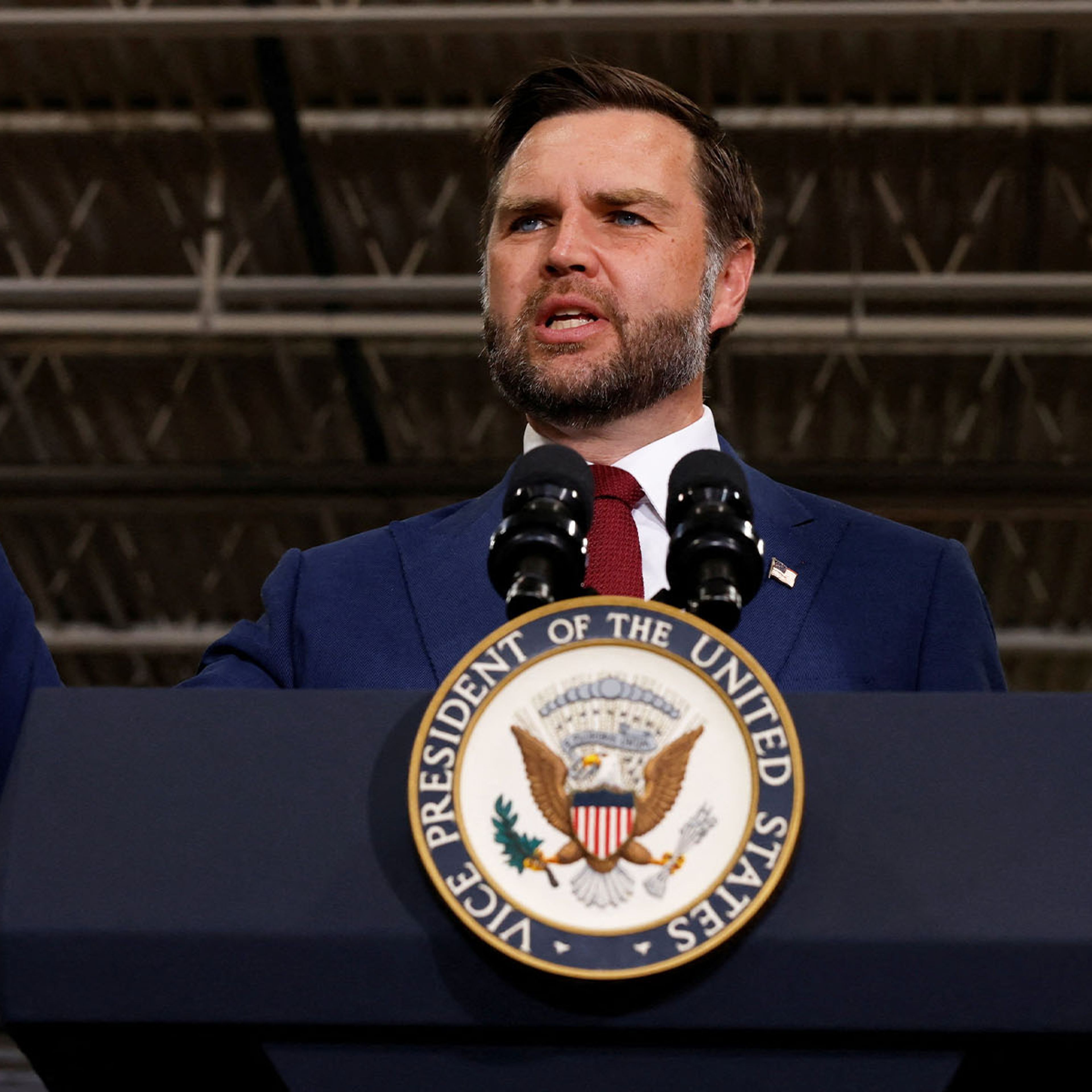
Leaders in both parties have expressed opposition to a CTC rollback. In fact, J. D. Vance recently called for the child tax credit to be raised to $5,000. And Kamala Harris subsequently voiced support for a $6,000 CTC for newborns.
Neither of these proposed increases are specifically tied to education. But adopting an enhanced CTC for education freedom could easily be justified. Especially when one considers two egregious “parenting penalties” found elsewhere in current law.
At the federal level, the most serious parenting penalty is embedded in the Social Security system, where parents, in effect, “pay twice.” That is, parents pay FICA taxes to support today’s retirees — and they also incur the child-rearing costs needed to raise the workers that will support tomorrow’s retirees.
Conversely, childless individuals only pay once (FICA taxes to support today’s retirees). They incur no child-rearing expenses and can rely on transfer payments from someone else’s children to support them in retirement.
The current CTC fails to offset the Social Security system’s penalty on parents. To do so, the child tax credit would need to be roughly three times its current size (which may explain why Vance and Harris have proposals in the $5,000 to $6,000 range).
At the state and local level, a somewhat similar tax penalty falls on families that take financial responsibility for their children’s K–12 education. Homeschoolers and private schoolers “pay twice” for education: (1) taxes to pay for other people’s children to attend public schools; and (2) out-of-pocket costs (tuition, books, materials, etc.) for their own children’s education.
Some would say the tax treatment of homeschoolers and private schoolers is no different from that of childless individuals (whose K–12 taxes are sometimes justified on the grounds that previous generations once paid for their public schooling). But this is of little consolation to cash-strapped families trying to pay for their own children’s education. Plus, it’s important to remember that public schools today cost taxpayers far more than they once did. Yet many public schools struggle to educate some students (which helps explain why families are turning increasingly to home- and private-schooling alternatives).
Thus, when it comes time to renew the child tax credit next year, Congress ought to give top priority to adopting an enhanced CTC for education freedom of say, $8,000 per child. This would bring much-needed relief to families who are getting a double whammy — paying twice for both Social Security and K–12 education.
Adopting an enhanced CTC for education freedom would be remarkably simple to do. Congress could simply offer families the option of claiming the standard child tax credit (for those enrolled in publicly funded education and child-care programs) or the enhanced child tax credit (for those taking financial responsibility for their children’s education and child care). This two-option policy would be akin to current tax policy for retirement savings, where taxpayers can choose between a traditional IRA or a Roth IRA.
Adopting an $8,000 enhanced CTC for education freedom would be a fitting way for Congress to commemorate the 100th anniversary of the 1925 U.S. Supreme Court case Pierce v. Sisters. In that landmark decision, the Court affirmed the fundamental right of parents “to direct the upbringing and education of [their] children.”
With 2025 fast approaching, someone ought to ask this year’s presidential candidates about school choice generally — and about an enhanced CTC for education freedom in particular. America’s parents deserve to know where their prospective leaders stand on this important issue.




Comments