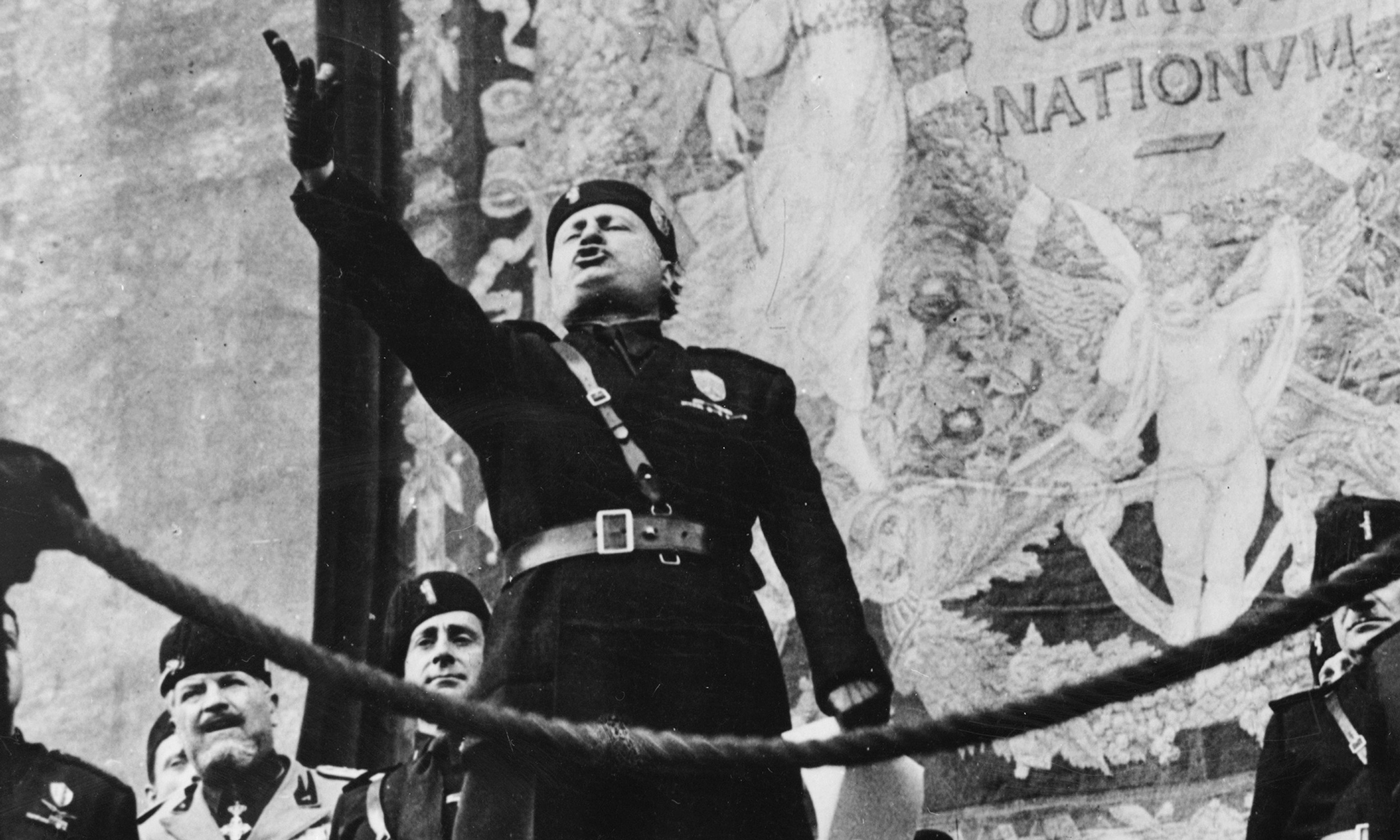
Naples, Italy — In the days leading up to the Allied occupation of Naples during the Second World War, many residents fled to underground shelters and catacombs to escape the bombing raids that pounded the city. What some of them left behind amounts to a grim warning about the power of a utopian ideology to deceive and denigrate the human mind.
In the shelter I visited recently — a labyrinth of frightfully narrow passages and tiny caves at least 100 feet underground — our tour guide pointed out a drawing scratched onto one of the walls. It was a crude portrait of the fascist leaders who had plunged the world into war: Hirohito, Hitler, and Mussolini. Under the drawing was the word “Vincerò!” — I will win! Not even with the collapse of the Axis powers in sight, living like a rat in a sewer system, would the underground artist lose faith in his political religion.





Comments