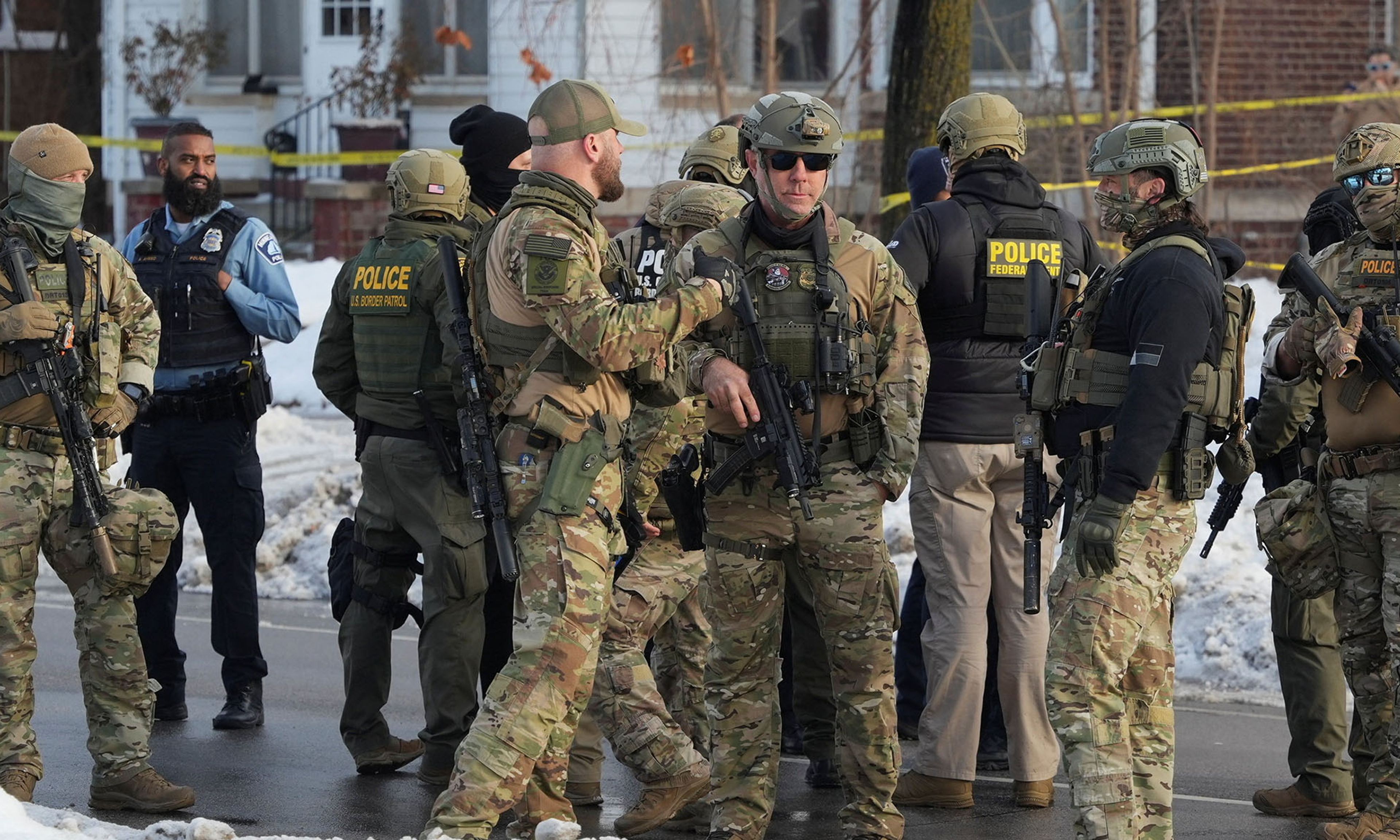
When I was a boy, I dressed up and pretended to be a soldier. Then I grew up. As a Marine in Vietnam, I recognized that pretend is okay for innocent little boys, but wearing combat uniforms in the grown-up world is deadly serious.
Over the years, I have uneasily watched the increasing adoption of combat uniforms by law enforcement. This includes Immigration and Customs Enforcement (ICE) and Customs and Border Protection (CBP) officers and their leaders, who in Minnesota and other regions go around dressed like Marines about to invade Fallujah. A number of factors surely contributed to the recent killings of two Americans by federal immigration agents in Minneapolis, but the warrior aesthetic these forces have adopted should not be overlooked for its potential role in heightening tensions. Dressing up like a warrior going into combat can make one behave more like one. What people wear can have psychological effects.





Comments