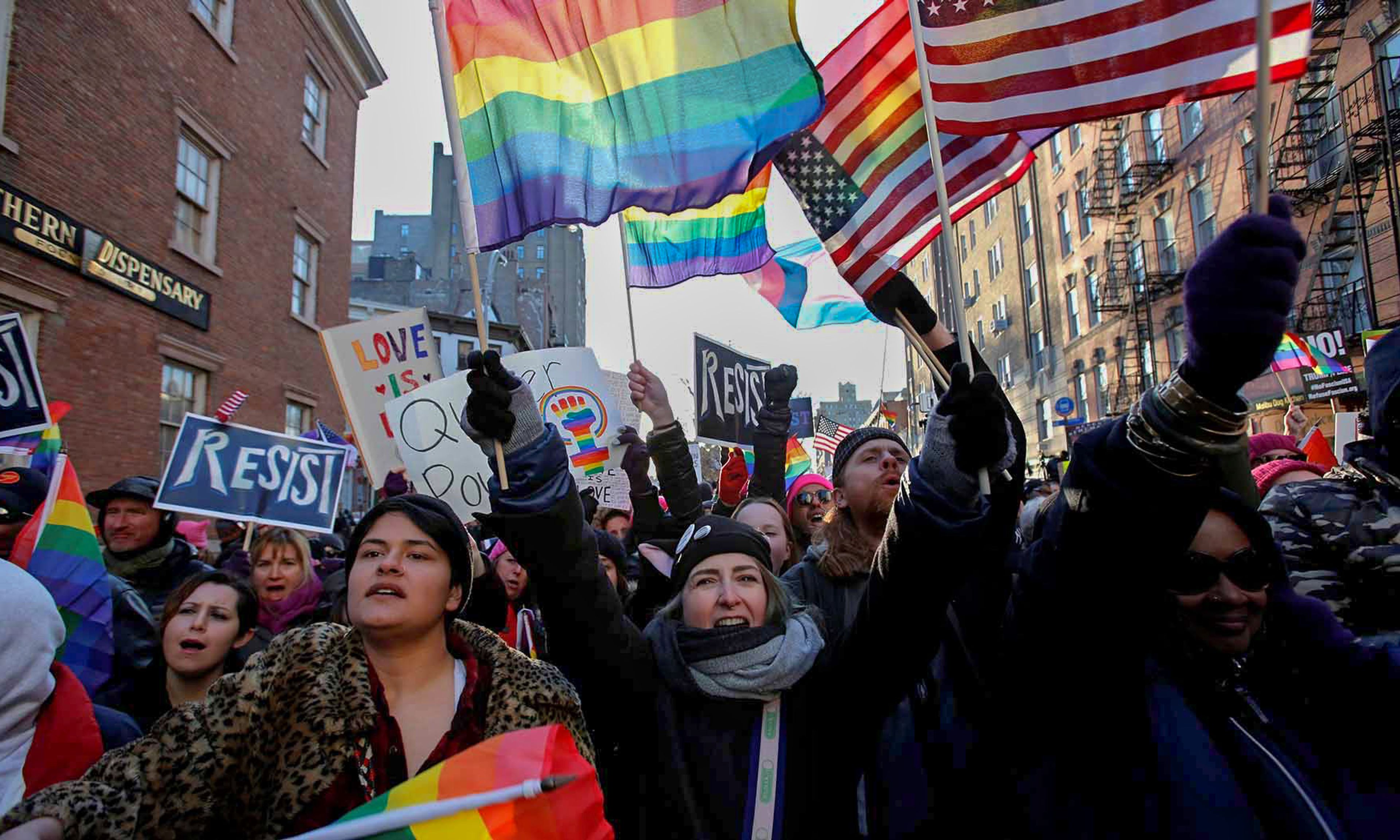
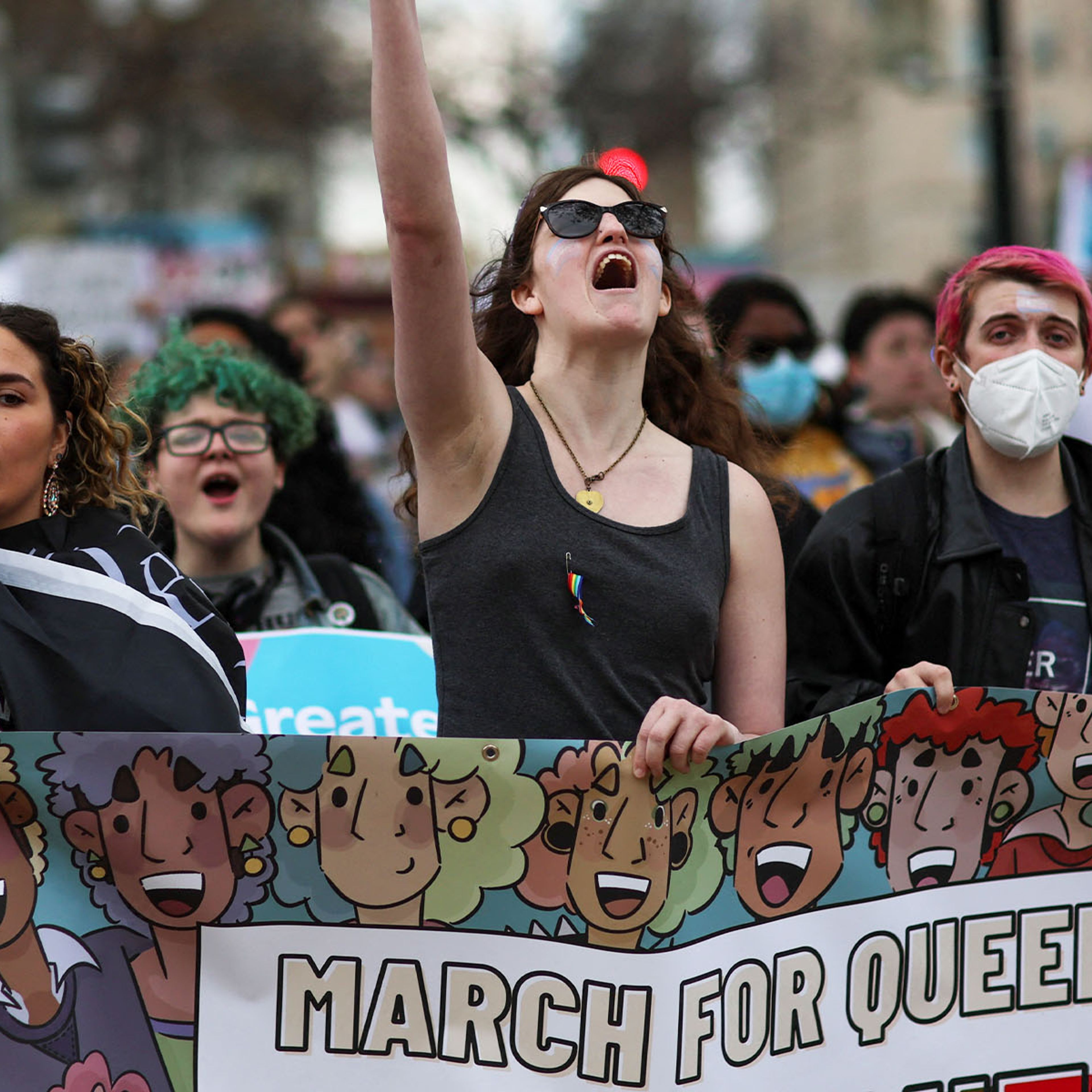
The future is gay, progressive, and Democratic. The astounding youth-led rise in the share of LGBTQ Americans over the past decade will produce an “equality electorate” oriented toward social justice. So argues a new report from Human Rights Campaign and Bowling Green State University drawing on U.S. Census Bureau survey data. According to the report, those who identify as LGBTQ composed 10 percent of the U.S. electorate in 2020, and this share will rise to 18 percent by 2040. This is mainly because younger people are vastly more likely to be gay than their elders, with 27 percent of Gen-Z identifying as something other than heterosexual. As this generation becomes the median voter, they will transform the United States into a more sexually diverse and progressive nation. You can almost hear echoes of predictions of the “emerging Democratic majority” that John B. Judis and Ruy Teixeira prophesied in their 2002 book of the same name, which argued that a new electorate was coming into shape due in large part to the rise of the Latino population that would ensure perpetual Democratic dominance. That demographic change was real, and arguably played a role in flipping some states, notably California, even as Hispanics have recently drifted right. But the “rise of LGBTQ” narrative is built on much shakier demographic foundations.
Unfortunately for progressives, this pot of electoral gold at the end of the rainbow is probably a damp squib.



Comments