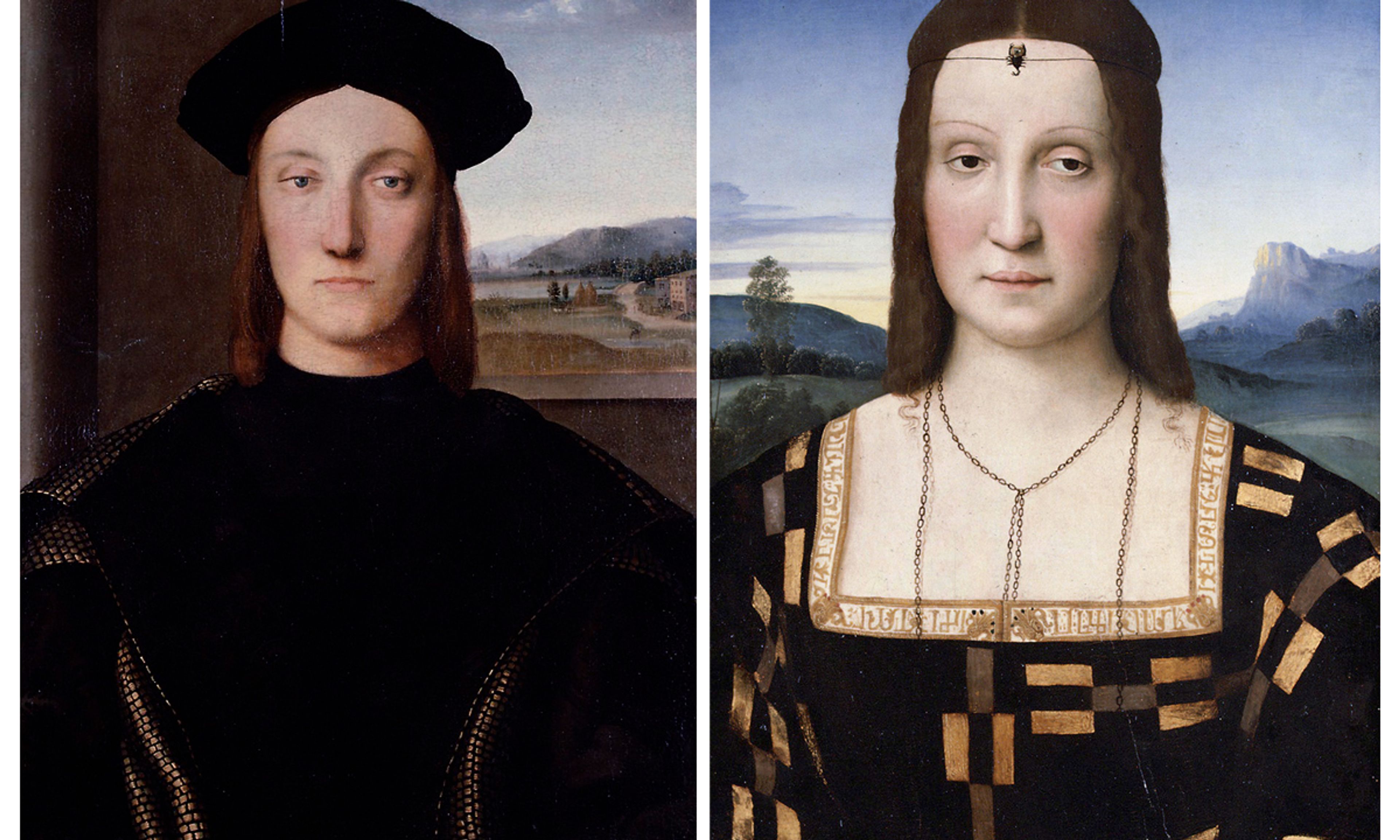
Well, “random thoughts” mightn’t be precise since I never do anything that’s random. I’m still absorbing the many works by Raphael (1483–1520) I’ve seen in the past few days, and now that I’m in Florence, I’ve seen many more. As I wrote earlier this week, I visited the Vatican Museum to see Raphael’s frescoes for the private apartments of Popes Julius II and Leo X. I also went to the Villa Farnesina to see what he did for Agostino Chigi, probably the richest man in Italy at the time.
First of all, I’ll return to the show’s title, “Raffaello: 1520–1483.” The Raphael exhibition begins in 1520, when the artist died, and moves chronologically to his early work in Urbino. I think starting at the end was smart. What he did in Rome, after all, made him an art superstar. Why he’s important — more than Leonardo or Michelangelo, he launched the High Renaissance — isn’t what happened in Urbino. The show’s not biographical but thematic. In any event, Raphael’s time there was the subject of a comprehensive exhibition at the Palazzo Ducale in Urbino in 2009. I saw that show. Since my mother was Italian and I have a big Italian family near Urbino, I felt it was my patriotic duty.

Comments