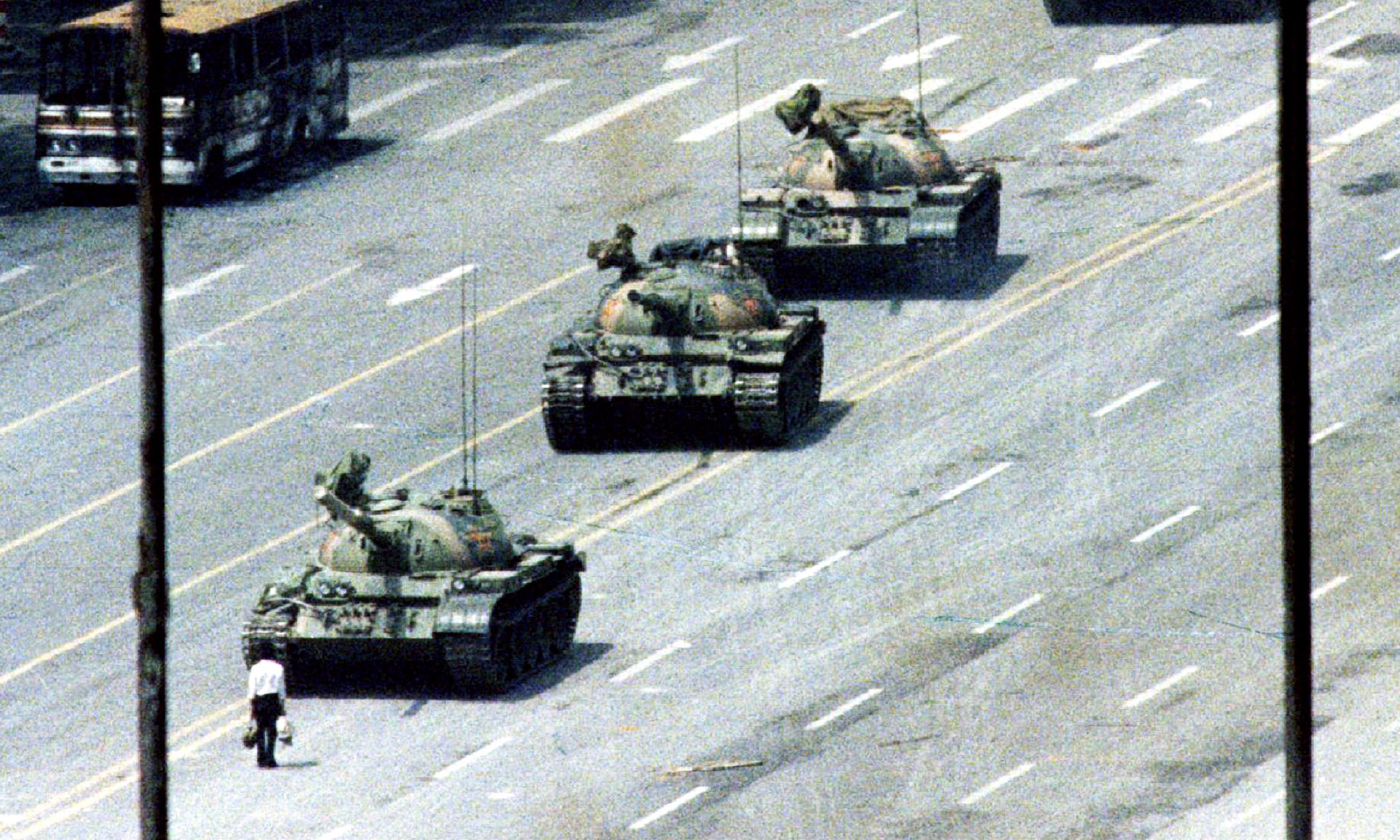
Thirty-one years ago, thousands of innocent lives were lost when the Chinese government violently attacked unarmed students and other citizens demonstrating for freedom and democracy in Tiananmen Square, and elsewhere, on June 4, 1989. China’s dramatically rising power and influence on the global stage have been accompanied by the government’s persistent efforts to destroy, censor, conceal, and suppress information about the Tiananmen massacre, in particular the courage and defiance encapsulated in the image of the “Tank Man.” But over time, the image has become emblematic of the nature of the Chinese Communist Party (CCP), and a deep stain on its moral legitimacy that, like the imagined blood on Lady Macbeth’s hands, won’t wash off.
Indeed, with China’s rise, Tiananmen’s implications have become global. They are embedded in China’s subversion of international human rights, and indeed, in the coronavirus pandemic: Had China changed course and turned toward democracy, transparency, and accountability in 1989, it almost certainly would not have inflicted the current storm of death and economic destruction upon the world.




Comments