Last week the Nobel committee announced that this year’s prize in economics would be going to Dr. Edmund Phelps of Columbia. This is good news indeed for advocates of supply-side economics. Phelp’s principal academic achievement is his successful rebuttal of one of the central tenets of modern Keynesianism: the Phillips curve.
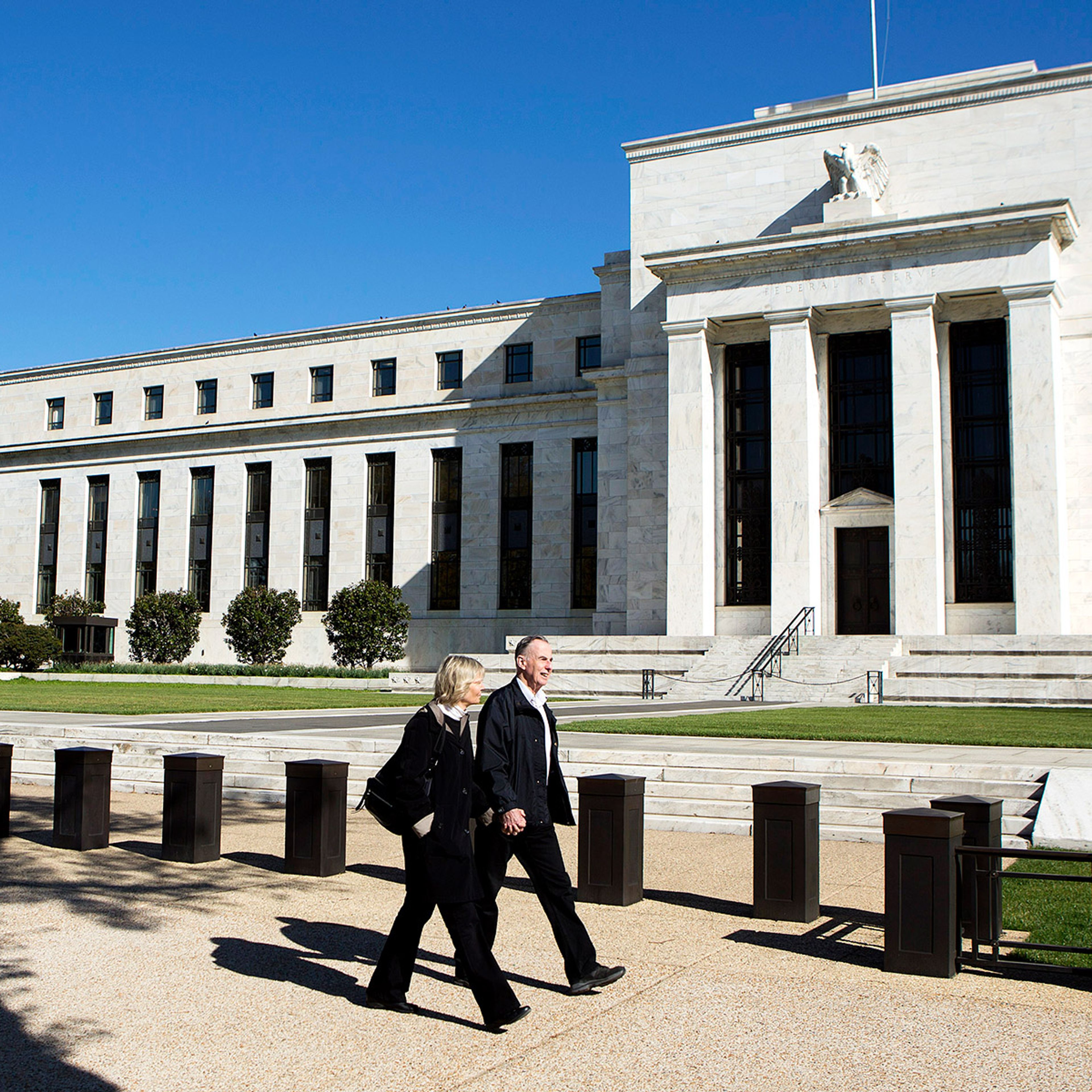
Someone should alert the board of governors at the Federal Reserve of Phelps vindication, since the minutes released from the Fed’s most recent meeting still contain the same old Keynesian gobbledygook:
The staff forecast prepared for this meeting indicated that real GDP growth would continue to slow into the second half of 2006 before strengthening gradually thereafter. … In the Committee’s discussion of monetary policy for the intermeeting period, nearly all members favored keeping the target federal funds rate at 5-1/4 percent at this meeting. Members generally expected economic activity to expand at a pace below the rate of growth of potential output in the near term before strengthening some over time.
In English this means: “We had some inflation, but don’t worry, we’ve slowed the economy enough to stop it from getting out of hand.”
For decades policy makers hewed to the premise that the Phillips curve demonstrates inherent long-term trade-offs between growth and stable prices. This led an entire generation of planners to believe that if the economy is flagging, you should print more money; that if the economy is growing too fast, stop the presses, slow things down, and throw millions of people out of work.
The Phillips-curve perspective is flawed. Attempts to stimulate growth and employment by way of loose money inevitably fail. If anything, the above chart shows how periods of sound money and price stability coincide generally with lower unemployment.
This makes sense to anyone who has actually managed a business, since instability in pricing is not conducive to hiring. Imagine that you manage a factory and every night magic pixies sneak in and change the calibration of the machinery, switch the dials on the consoles, and shrink or lengthen all of the rulers depending on their whims. It would be almost impossible to operate that factory efficiently, while investment in the factory, and eventually employment, would cease. That’s just what happens when central planners toy with the value of currencies — planning becomes impossible, and businesses contract.
Phelps has disproved the Phillips curve, at least as a long-run economic planning tool. He argues persuasively that labor markets determine the unemployment rate over the long run. Variables such as levels of growth, capital accumulation, and flexibility in labor markets — and not artificial stimulation through the printing press — are what decide whether or not people are given an opportunity to work.
Eisenhower’s Fed chairman famously said that his job is to remove the punch bowl as soon as the party really starts to get going. That’s why the 1950s were referred to as the years of the “stop-go” economy. Kennedy, on the other hand, learned the basic power of markets from his supply-side stockbroker father. The dual effect of Kennedy’s tax cuts and that period’s sound money led to what was dubbed the “go-go-economy.” Nixon tried to inflate his way out of stagnation, and then use price controls to put the genie back in the bottle. Gerald Ford tried to use idiotic lapel pins to do the same. It wasn’t until Reagan and Fed chairman Paul Volcker put monetary and fiscal policy into separate categories that the U.S. really started to live up to its economic potential.
Alan Greenspan, despite his better training, basically governed the central bank as a Keynesian: Too loose in the late ’80s; too tight in the early ’90s (helping cost George H.W. Bush the election); too tight in the late ’90s in the cause of stopping “irrational exuberance”; and too loose in 2003 because he didn’t believe in the efficacy of the Bush tax cuts.
One wonders what the world would look like now if not for the pernicious doctrine that growth causes inflation. What if planners a half-century ago never adopted the Phillips curve and the ’50s became the go-go-economy? Imagine the ’70s without stagflation? What if Greenspan hadn’t destroyed the telecomm sector in the late ’90s with his tight-money policy? What would the cumulative effects have been of “letting the horses run”? Our thirteen trillion dollar economy would be what today — 15, 18, 20 trillion? How many people who are now poor would instead be middle class? How many people who are now middle class would be affluent? How much global poverty would have been alleviated if the U.S. economy had been even more powerful in recent decades, able to drag that much more of the globe out of the muck and into prosperity?
A Nobel Prize for Dr. Edmund Phelps is an opportunity for the Federal Reserve, Wall Street forecasters, and the financial press to bury forever the enormously destructive theoretical error that is the Phillips curve.
– Jerry Bowyer is an economic advisor to Blue Vase Capital Management and the author of The Bush Boom.



Comments