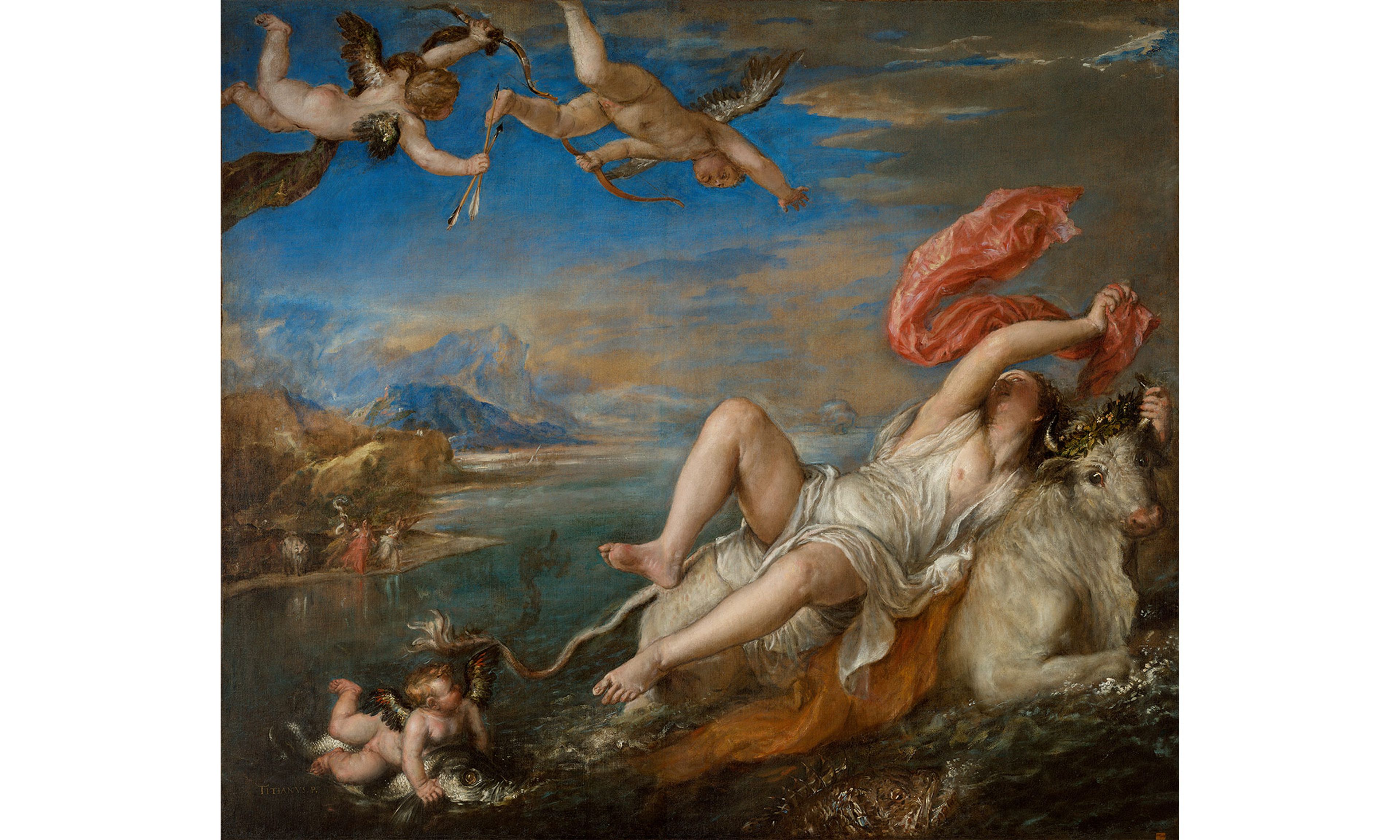
T itian: Women, Myth & Power is the new exhibition at the Isabella Stewart Gardner Museum in Boston. My advice is to run, not walk, to the phone, to your computer, to Western Union, to your local purveyor of smoke signals to get your tickets. That is, if you want to enrich your eyes with the most sublime color, channel the splendor of the court of Philip II, or simply tell your friends you’ve seen what I’m sure will be the most important show of the year. Let those without your foresight, alacrity, and good taste cry in their thin, cold gruel.
The Titian show, which in different iterations has already been to the National Gallery in London and the Prado in Madrid, gathers for the first time in 450 years the six big mythological paintings that Philip II (1527–98) commissioned from Titian (c. 1488–1576). It’s a great and deserved coup for the Gardner, which owns The Rape of Europa, arguably the best and certainly looking the best. Mrs. Gardner was exhilarated when she bought it in 1896 from a British aristocrat. She paid not a small fortune but a hefty one. Her joy will be yours, more so if you take the time to visit the rest of her collection in her Venice-inspired palace. The Gardner is unique.





Comments