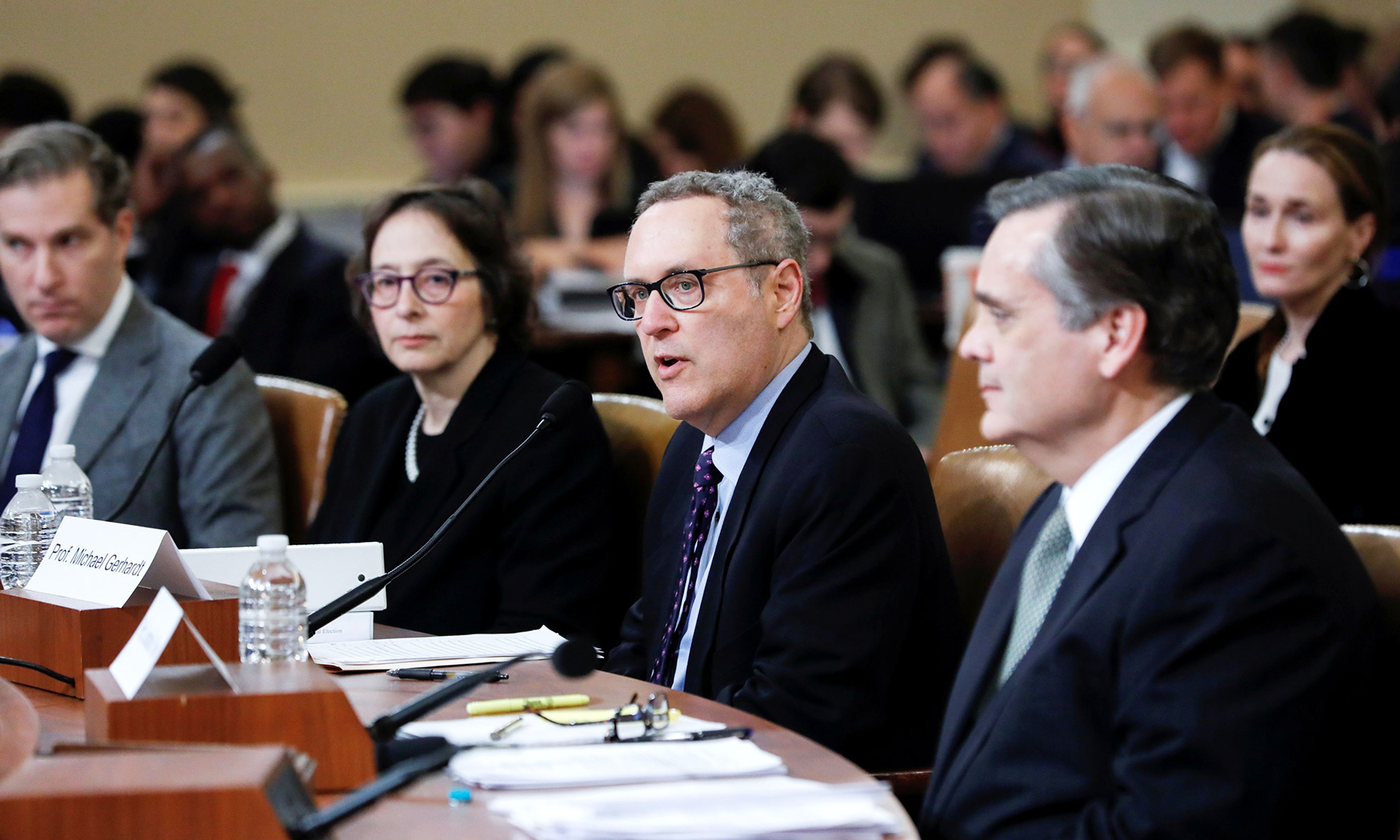
To put it mildly, the 1960s were not notorious for juridical modesty. They might compare favorably, though, to Wednesday’s episode of “The Lawyer Left Does Impeachment” at the House Judiciary Committee. Oh, I have no doubt that the three progressive constitutional scholars spotlighted by Democrats yearn in their hearts (and their classrooms) for the Warren Court, that apex of make-it-up-as-you-go-along lawyering. But even those jurists had the occasional convulsion of modesty.
The most instructive one for present purposes belonged to Justice Potter Stewart. The question before the High Court in the 1964 case of Jacobellis v. Ohio was how to define hard-core pornography for purposes of setting the elusive boundary where protected free expression transmogrifies into criminal obscenity. Assessing the terrain, Justice Stewart confessed that he could not “intelligibly” provide a workable definition … “but I know it when I see it.”





Comments