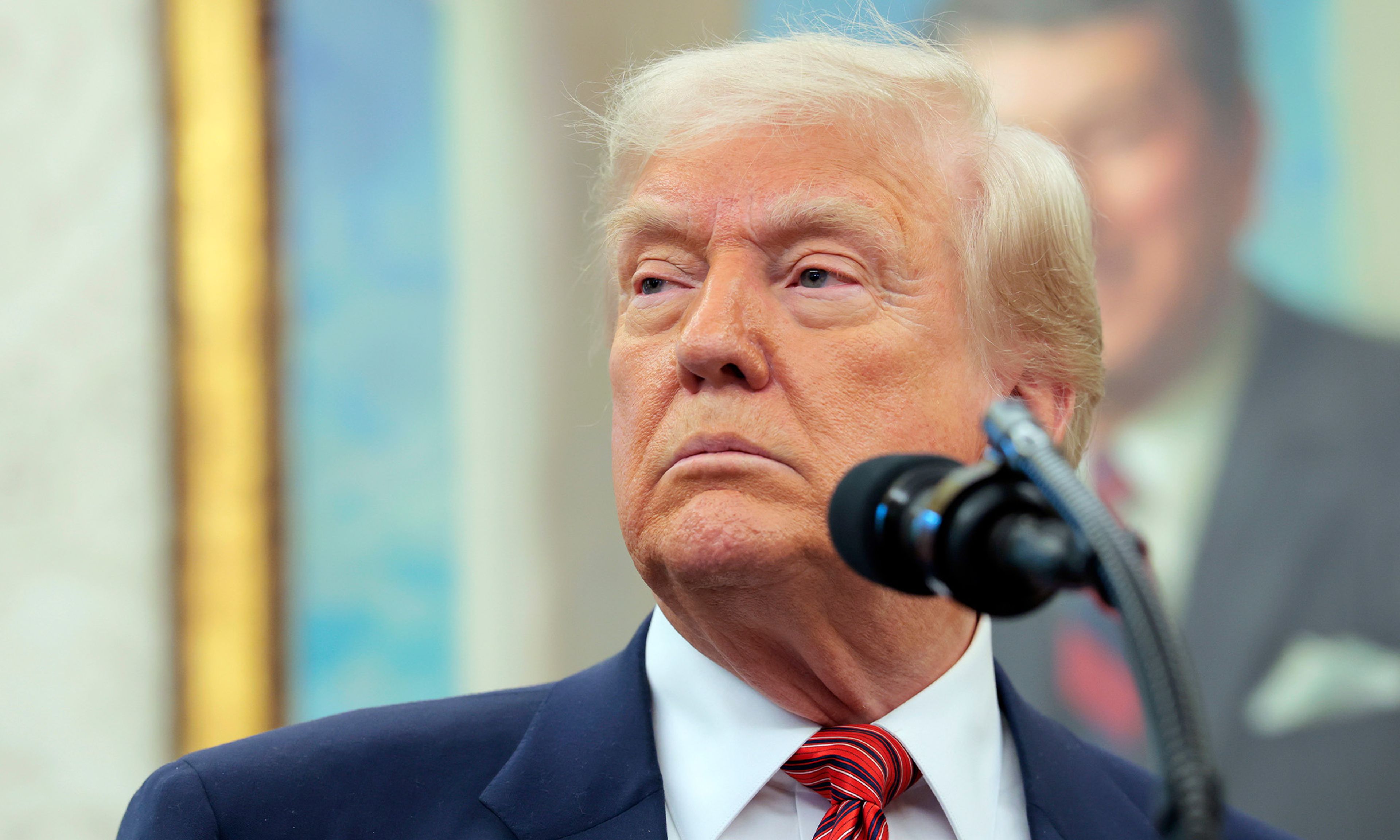
The second Trump administration contains multitudes. Rhetorically — and, often, practically — it has advanced an expansive view of executive power that echoes its leader’s famous, l’état-c’est-moi-esque declaration that “I alone can fix it.” And yet, in its concurrent attempts to rein in the most egregious excesses of our presumptuous and recalcitrant federal bureaucracy, it has tasked itself with effecting reforms that run in precisely the opposite direction. Paradoxical as it may seem, the Trump administration is thus engaged simultaneously in an effort to increase the power of the presidency and in an effort to constrain the institution. In the modern era, politics can be a strange game.
Consider, by way of example, the executive order that President Trump issued last Friday. At first blush, the missive appears to be yet another attempt at executive-led deregulation. “The United States,” it begins, “is drastically overregulated. The Code of Federal Regulations contains over 48,000 sections, stretching over 175,000 pages — far more than any citizen can possibly read, let alone fully understand.” And yet, when one proceeds further into the text, it becomes clear that, while the document’s literal purpose is, indeed, deregulatory, its real aim is to impose stricter limits on the freestanding power of the executive. The situation has become so dire, it continues, “that no one — likely including those charged with enforcing our criminal laws at the Department of Justice — knows how many separate criminal offenses are contained in the Code of Federal Regulations.” This, it concludes, is a problem not only because it makes life difficult for the citizenry but because “it allows the executive branch to write the law, in addition to executing it.”


Comments