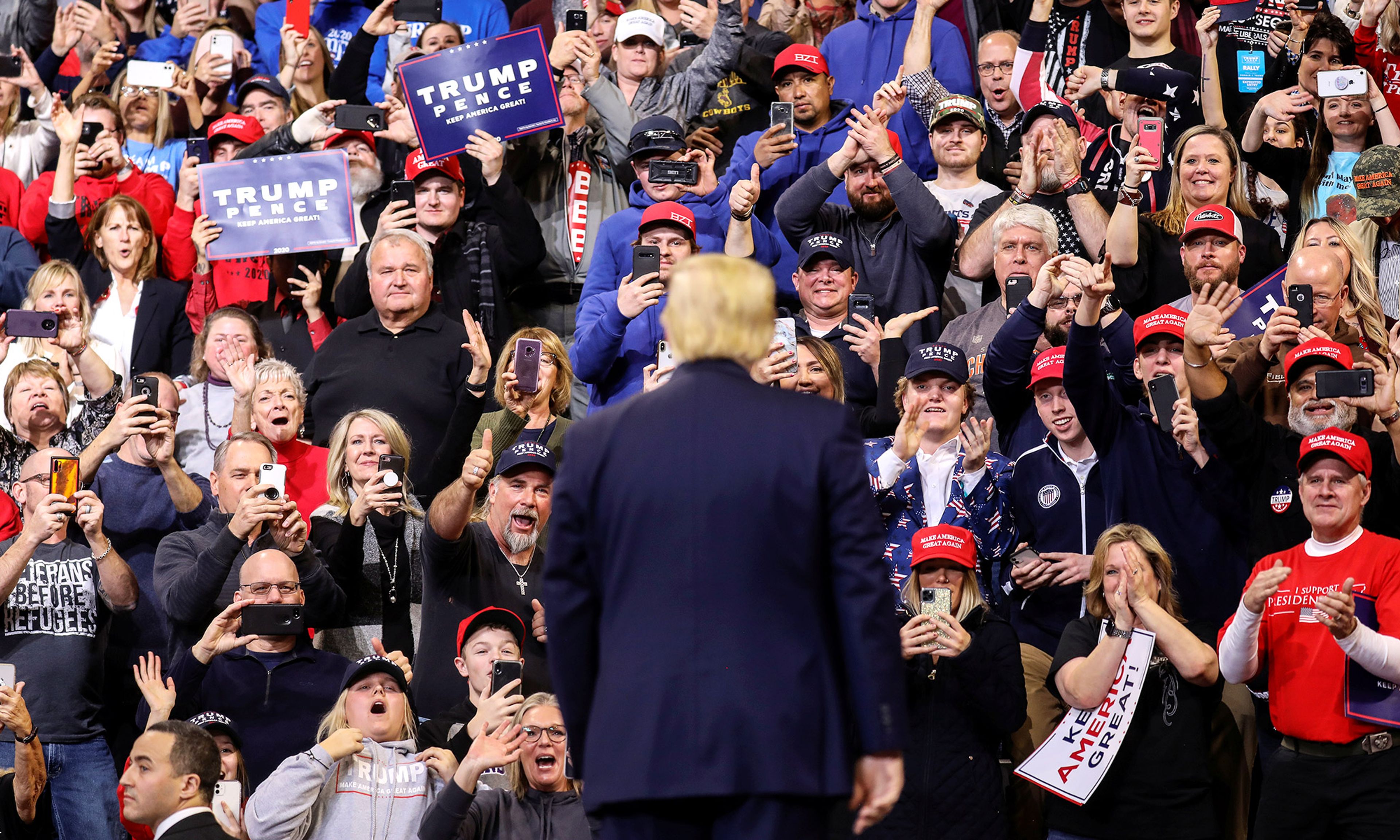
Will Trumpism survive President Donald Trump? For many observers, the answer is obvious: no. Trumpism is about Donald Trump, and only Donald Trump, and it has no substance beyond that. It is a rhetoric and an affect, in service to him, and that’s on its best days. On most others, it is a gibbering cult and series of baroque conspiracy theories. Trumpism is just a giant sucking sound around the black hole of the man’s own vanity. It will eventually disappear, as he has, up his own backside.
This is, I think, incorrect. Trumpism is a populist-nationalist politics. It is populist because it preaches political doctrines largely rejected by the incumbent political class: an America-first foreign policy, revision of the aims of our trade policy, and a halt to mass migration. It is a nationalist project whose ultimate aim is to restore the democratic link between the citizenry and government — a link that has been threatened by a class of “experts” who govern a subordinate native class on behalf of oligarchic interests. Trumpism seeks a political mandate from the losers of post–Cold War globalization. It chafes at the restraints of a “world order” when it does not suit the national interest. It is the restorationist character of this nationalist project that makes it appealing to many conservatives and, ultimately, an ally of conservatism — even if an occasionally annoying or obstreperous one.





Comments