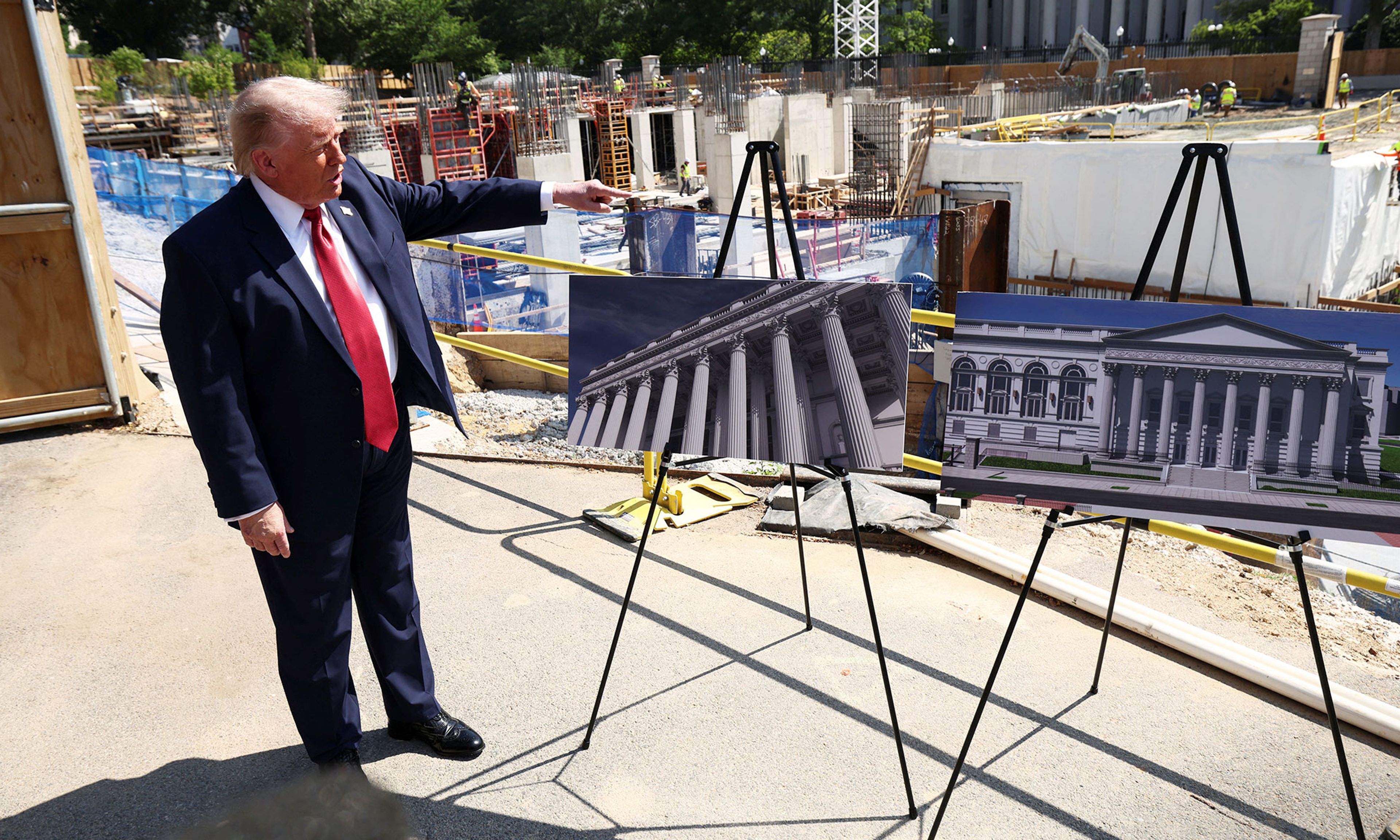
When news first broke that President Donald Trump had torn down the East Wing to raise in its place a massive new ballroom, it seemed that the former television star had confused his reality shows. Instead of The Apprentice, which had brought him the fame to run for the presidency, Trump thought he was now leading Extreme Home Makeovers. Incredulity greeted the surprise demolition of the East Wing and its swift replacement with a $600 million ballroom and office complex. Putting aside questions of architectural taste, the project seemed to exceed the president’s powers. The Constitution gives Congress the sole authority over the property of the United States. Congress had not passed any specific law to alter the East Wing and had not appropriated any funds for the new ballroom. End of story.
But a closer look at the law reveals that the president is not waging war with the courts and the Constitution. As is often the case with Trump’s legal controversies, the ballroom fracas really takes the form of a dispute between an energetic executive and a supine Congress. President Trump does not claim he has the constitutional authority to alter the White House or any other federal building. Instead, he claims that Congress has delegated the power of home renovation, as it were, to the presidency. A careful look at the law reveals the controversy to be a much closer case than appreciated, which explains why Chief Justice John Roberts last week lifted lower-court stays of the construction pending full-blown litigation of the case.





Comments