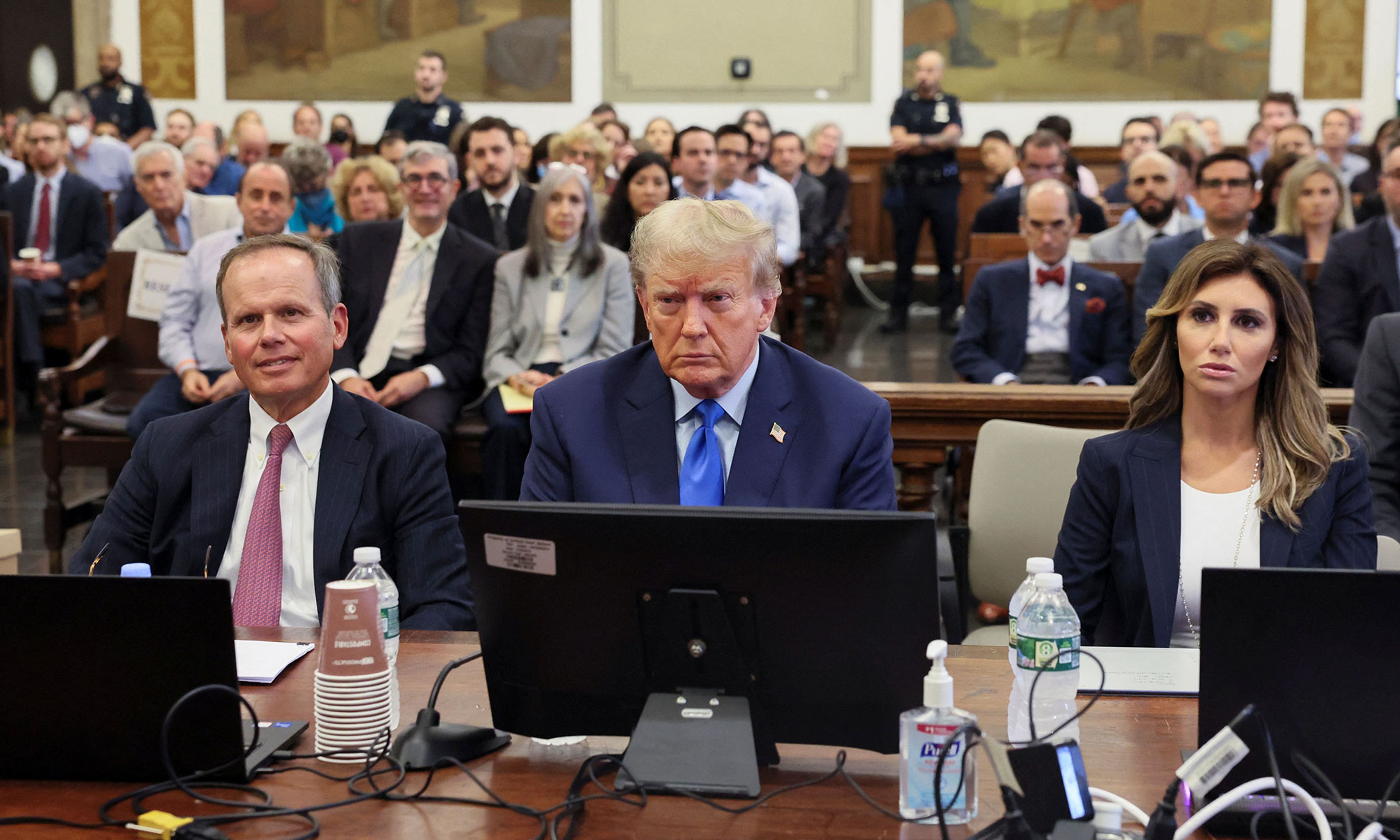
As I listened to the news coverage while driving across a big chunk of the country yesterday, it became clear that there is still confusion about exactly what is happening in the Manhattan courtroom where former president Donald Trump is standing trial. At issue is the civil fraud case brought by New York attorney general Letitia James. On Monday, the trial began with opening statements and the first of many witnesses. Before hitting the road, I dashed off a column to try to explain it — especially the oddity that the trial is seemingly starting only after guilt has been found and a sentence imposed (or, in civil-law parlance, liability has been found and judicial relief ordered).
Confusion about this is widespread. Some, for example, liken this civil proceeding to criminal prosecutions (especially death-penalty cases), which are bifurcated into the “guilt phase,” where the jury determines whether the defendant committed the alleged offenses, and the “penalty phase,” where the judge (or the jury in a capital case) imposes sentence. That analogy is not exactly wrong, but it’s not quite accurate, either. So let’s try to make more sense of things.





Comments