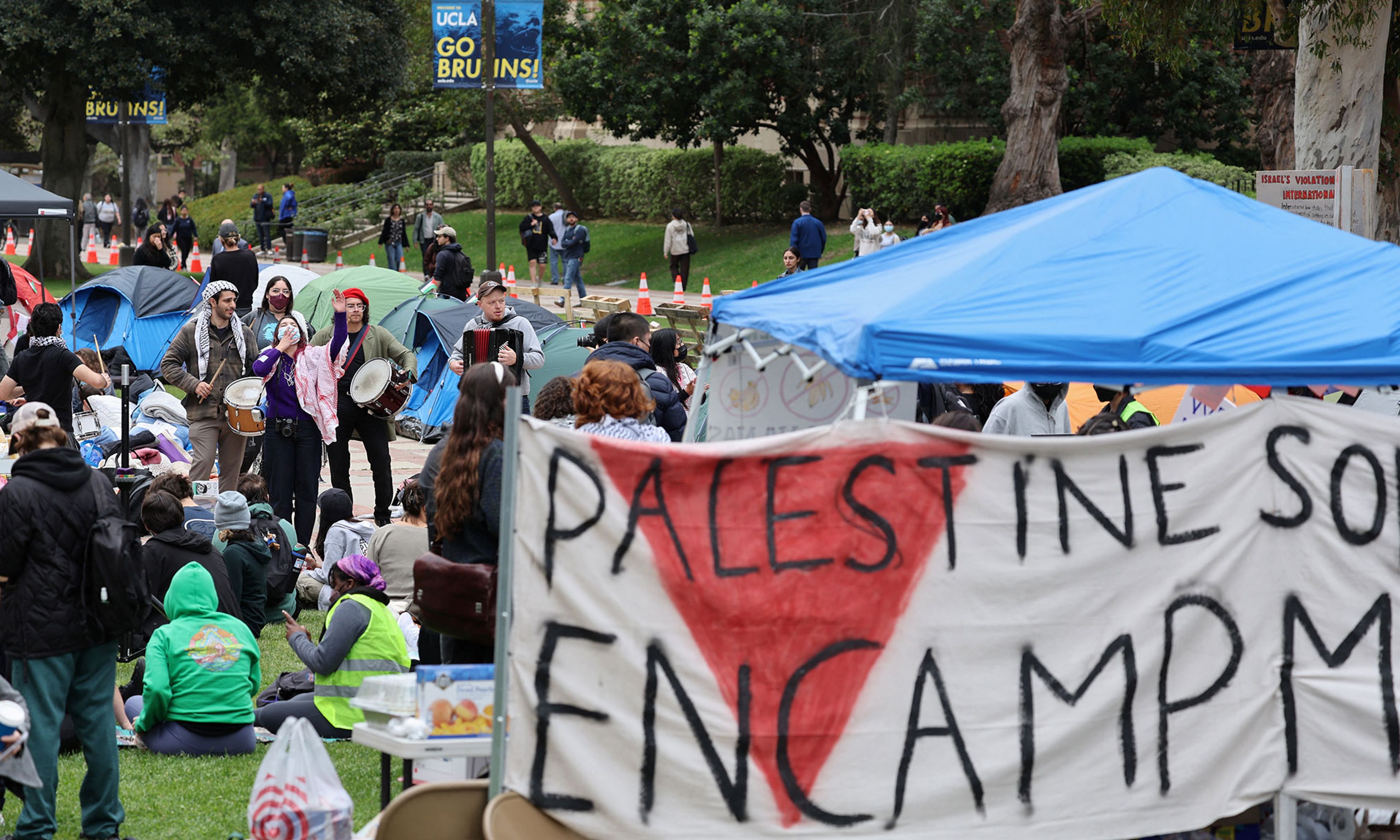
Over the last few weeks, the Trump administration issued a finding of fact that UCLA violated the rights of Jewish students. As a result, the administration suspended over $500 million in grants, then demanded that UCLA pay $1 billion to the U.S. Treasury and victimized students to lift the grant freeze. The complaint has merit, insofar as it addresses one shameful week of the university tolerating student protests that violated their peers’ civil rights. However, the administration is showing us how the hostile-environment doctrine of civil-rights law can subordinate freedom of expression to political orthodoxy.
In August 2024, a federal district court issued an indignant preliminary injunction in Frankel v. UC Regents. As a faculty member whose office borders the main quad, I personally witnessed the events contested in this case. In April 2024, anti-Israel protesters seized about half of the main quad for seven days, most of which fell during midterm examinations. During this time, the protesters controlled access to part of the quad, including the main entrances to the undergraduate library and the university’s most iconic hall; they only allowed access to these outdoor areas to their ideological sympathizers. The court agreed with Frankel and the other plaintiffs, all Jewish students, that the protesters’ being allowed to set up an anti-Israel ideological litmus test to cross the main quad or enter the library via the front door violated the plaintiffs’ civil rights.




Comments