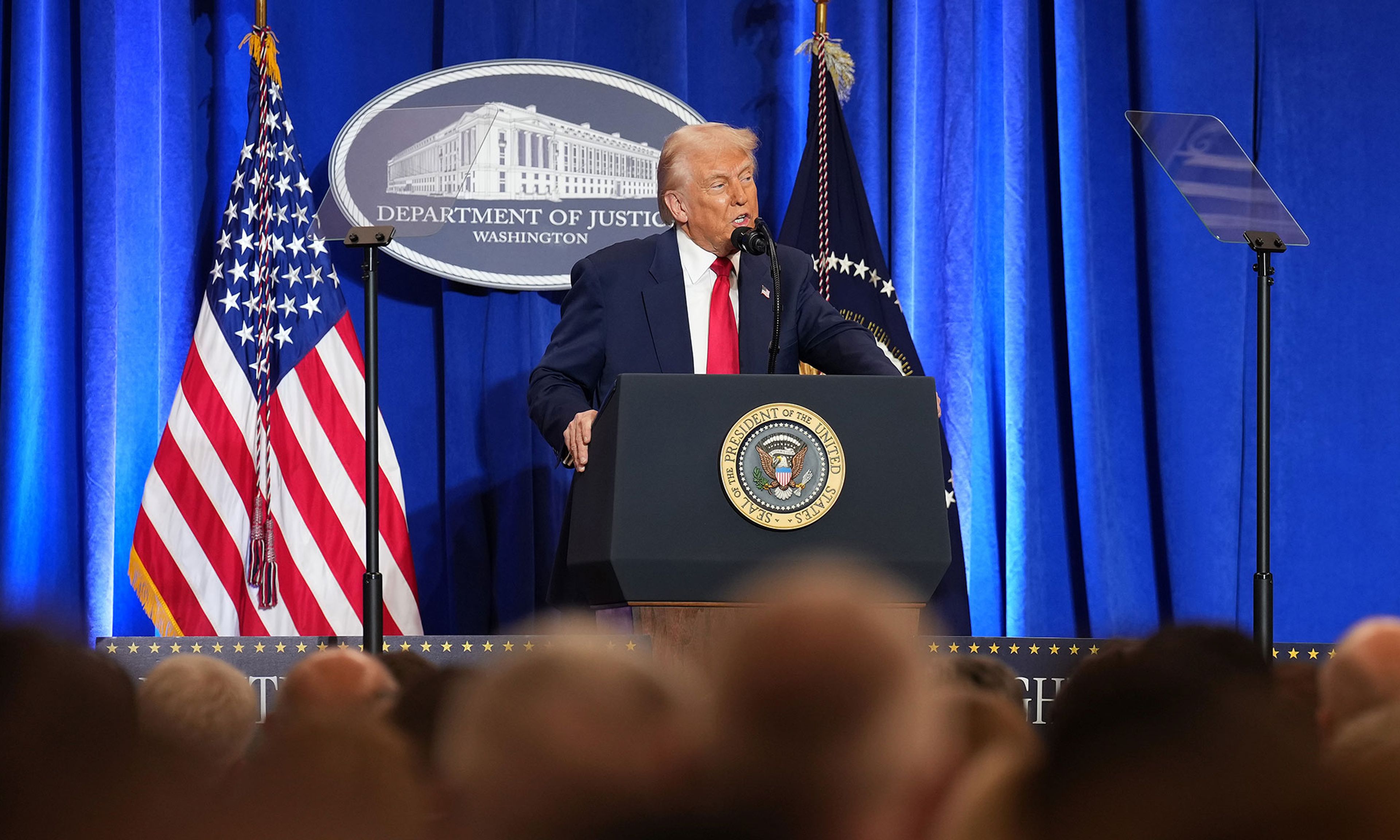
On the campaign trail, candidate Donald Trump pledged to use the 1798 Alien Enemies Act to deport illegal-alien gang members. On March 15, President Trump delivered on his promise, ordering the removal to El Salvador of about 300 Venezuelan illegal aliens suspected of being members of the Tren de Aragua (TdA) gang.
While controversy immediately arose over whether the administration had defied a court order to stop the deportation flights, the more important question will soon demand an answer: whether the Alien Enemies Act applies at all. The act grants sweeping powers to the executive branch but only during a time of declared war or “invasion or predatory incursion” by “a foreign nation or government.” President Trump will have to make a difficult case that TdA and other gangs act at the behest of foreign nations that are conducting an invasion of the United States. While Andy McCarthy goes even further and concludes that only a congressional declaration of war can justify the use of the act, we would not completely rule out the possibility that the administration could make such a showing — especially if it has evidence that it has not made public. But we agree with Andy that it’s extremely doubtful that the administration would prevail.





Comments