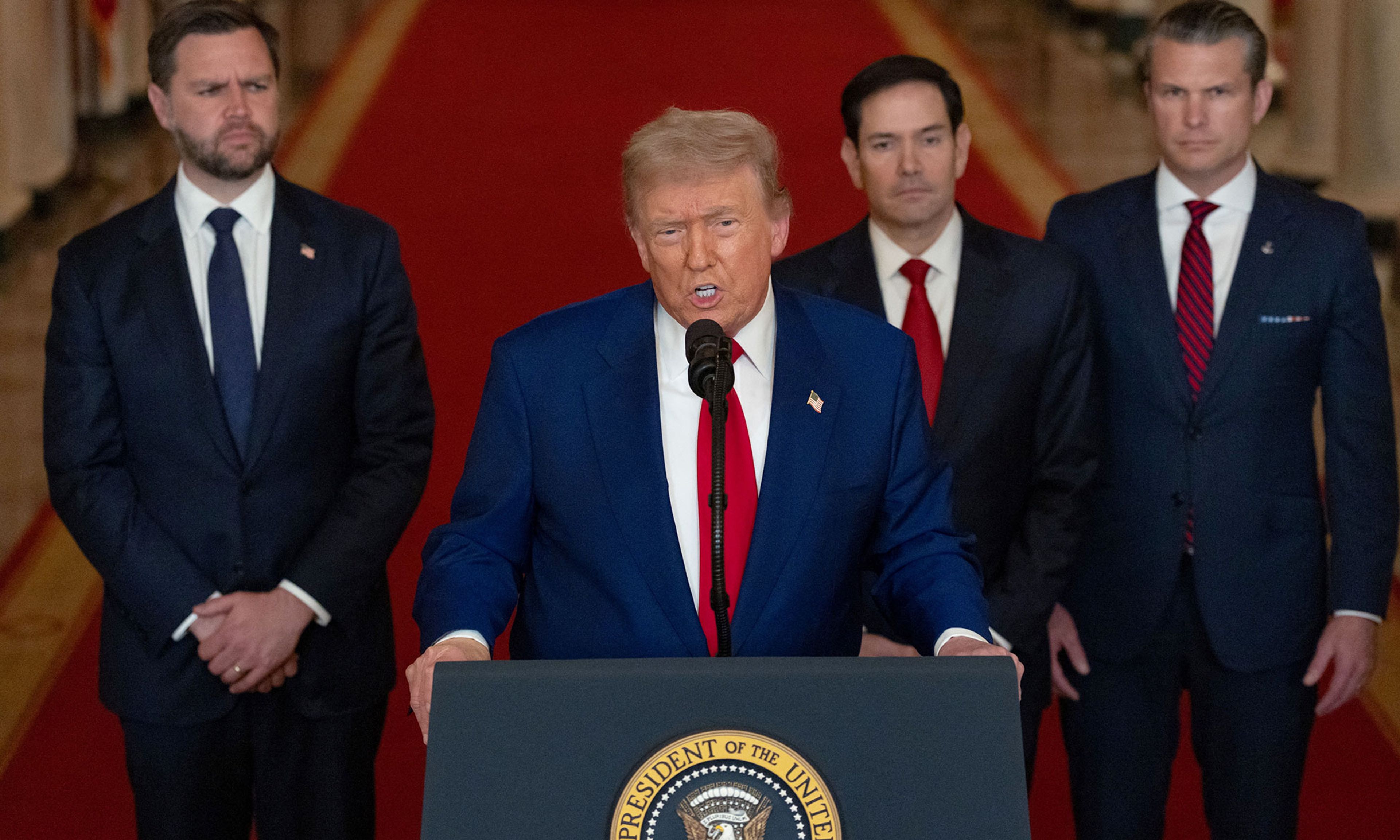
America’s weekend strikes on Iran’s nuclear facilities met little resistance in the skies above Tehran. But President Donald Trump may meet more serious opposition at home. Many members of the left and right wings of Congress claim that Trump has violated the Constitution and the War Powers Resolution in a way that might warrant impeachment. These critics, however, misrepresent the wartime relationship of the executive and legislative branches and distract from the real congressional check on the president: the power of the purse.
Late on Saturday night, the U.S. Air Force used B-2 stealth bombers to drop massive bunker-busting bombs on the Fordow uranium enrichment plant in Iran, while the U.S. Navy bombarded the nuclear facilities at Isfahan and Natanz with Tomahawk cruise missiles. In a White House address, Trump called the attack “a spectacular military success” that left Iran’s nuclear sites “completely and totally obliterated.”




Comments