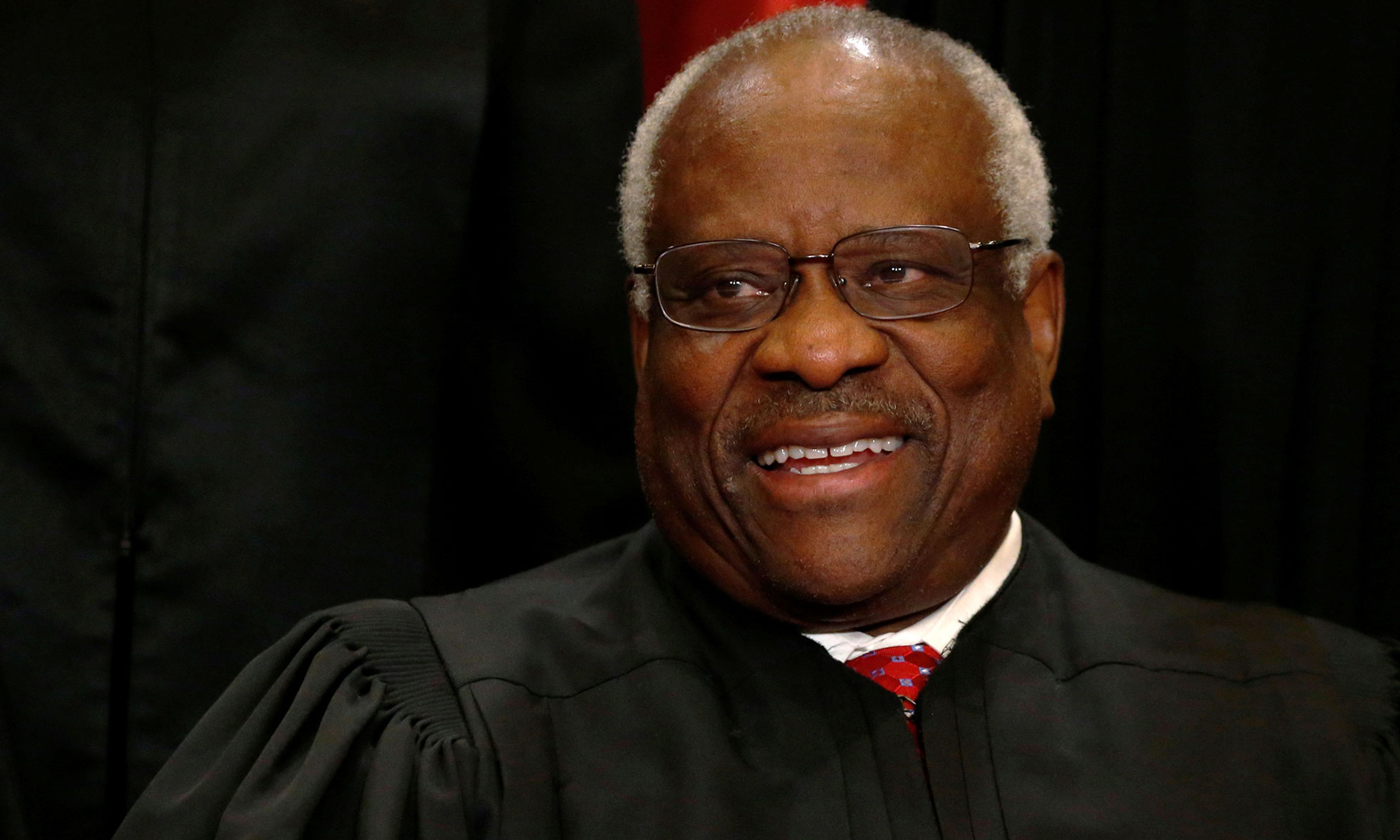
Social media is, let’s face it, excitable. On June 28 it went wild at the report — to quote a typical headline, from NBC — that “Clarence Thomas says federal laws against marijuana may no longer be necessary.” OMG, the Twitterverse exclaimed. The most right-wing justice on a conservative Supreme Court, ready to throw pot law into the ashcan of history! What more proof could you need that the world has changed?
Except that if anything had changed, it wasn’t Thomas. A decade and a half earlier, in Gonzales v. Raich, he’d argued in dissent that the federal government lacks constitutional power to ban locally grown and used pot. In the new case, the Court had declined to take up the plight of a cannabis business whipsawed between the federal government’s “recent laissez-faire policies on marijuana and the actual operation of specific laws” in such areas as taxes and financial regulation. In a statement commenting on the Court’s refusal to wade in, Thomas reminded his colleagues that one of the premises of the Raich majority was that the feds had sought to pursue a comprehensive ban that might be undermined by inconsistent enforcement. That rationale, Thomas pointed out, had been badly undercut by the evolution in recent years of today’s “half-in, half-out regime that simultaneously tolerates and forbids local use of marijuana.” It was, in effect, a tactfully phrased “I told you so.”


Comments