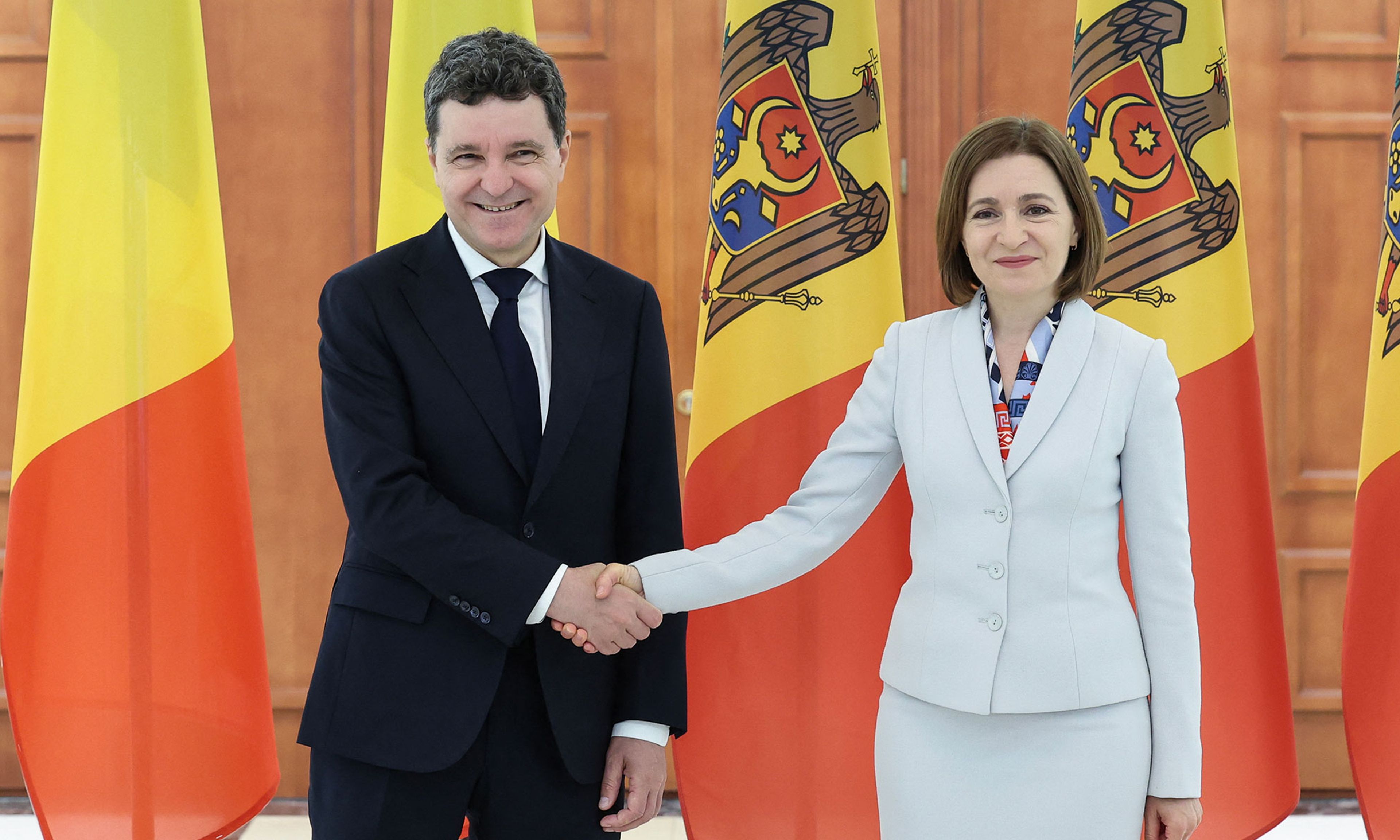
Last week, Romania’s Chamber of Deputies adopted a bill authorizing its government to begin talks with neighboring Moldova with the aim of unifying the two countries. The bill was enacted tacitly under Romania’s parliamentary rules, which automatically approve any bill that has not been voted on within a 45-day deadline. While the bill, put forward by the ultranationalist S.O.S. Romania party, is expected to fail in the Senate, it has nevertheless reignited debate over Romania and Moldova’s future. While unification would of course require consent from both countries, there are good reasons for the West to support such a move.
In 1918, the Russian Empire’s Romanian-speaking Bessarabia area declared independence and promptly voted to join Romania. Bessarabia remained in Romania until 1940, when Joseph Stalin, who had an eccentric penchant for arbitrarily redrawing borders, announced the creation of the Moldavian Soviet Socialist Republic from parts of the Bessarabia region that the USSR had recently annexed from Romania. After World War II, all of Romania found itself behind the Iron Curtain, though Romania — unlike the newly created Moldavian SSR — remained nominally independent.




Comments