Yogi Berra was right: “You can observe a lot of things just by watching.” In my time, I have worked with and watched three presidents (Nixon, Ford, and Reagan) and at least one future president (George H. W. Bush as a blushing, braying veep). Richard Nixon was very interesting. He had a sharp, penetrating mind that loved to tackle a complex problem and solve it. His thinking had a brilliant if cynical clarity–as long as his private concerns weren’t caught up in it.
Jerry Ford was a different case. He was a thoroughly decent fellow whom you wished well. He was honest, kind, and competent, though not, to put it mildly, a master of the spoken word.
My years in the Reagan White House started accidentally and ended deliberately. I was drafted on the way in and gave six months’ notice on the way out. I could take no more of White House hacks and climbers who gloried in the title of “The Honorable” (which many of them were not).
But Ronald Reagan was something else. I got to know him because he–and the palace coterie–had come to have confidence in me. This meant a guaranteed weekly meeting plus automatic phone access. Sometimes, when I didn’t call him, he called me. It could be a nuisance, admittedly a prestigious one, if you were with a girlfriend at the Washington Canoe Club on a summer weekend and your beeper went off just as things were getting personal. Still, Reagan’s tone and character made it very nice. He was someone whom you could actually tell–barring our being on the verge of World War III–that you were rather busy and would be back to work on Monday.
For most of his first term I had the pleasure of observing Ronald Reagan at close quarters, first as the White House staff adviser on the arts and humanities, then as director of presidential speechwriting. Given my past experience, there was nothing very exciting about serving another stint at the White House–it was rather like being called up from the reserves to serve in Korea after having had more than your fill of soldiering during World War II. But when duty calls, you answer.
I had always liked what I knew about Ronald Reagan, but my personal contact with him had been limited. In retrospect, what I had written about him–based on intuition–in January 1981 in the inaugural issue of the Los Angeles Herald-Examiner summed up the unique qualities he brought to the presidency: “He knows who he is and is at peace with himself. It’s something in the man that’s embedded in the American spirit.”
Once I came to work at the White House, I began to realize how right my hunch about him had been. There is a wonderful quote from William Menninger that describes part–but not all–of Ronald Reagan’s qualities as a leader: “The executive is inevitably a father figure. To be a good father, whether it is to his children or to his associates, requires that he be understanding, that he be considerate, and that he be human enough to be affectionate.”
Time and again I had to write speeches that purveyed unpleasant news to the American people. I did my best to put it in a good light. But it was the “father figure” who kept the confidence of ordinary Americans.
I am not the maudlin sort, but I really came to love the old chap. He was bright (both sunny and intelligent), kindly, and always interesting and understanding. One of the first things he told me after I’d been drafted to do his speechwriting was, “Aram, whenever you think I’ve changed something in the wrong way, tell me.”
What a simple statement of honesty, humility, and self-confidence.
Writing for Ronald Reagan was easy. The fact is that he made his writers sound good. Given anything that wasn’t certifiable tripe, the man could make it ring, make it glow.
He was also a charmer on a personal level. I’ve always believed that you can tell a lot more about people by the way they treat their underlings than by the way they behave in public with VIPs. I made a point of occasionally taking in my whole staff–secretaries and all–to meet him. He always made them feel special, each and every one, just like he did all those people out there to whom he spoke on television. And he told great stories.
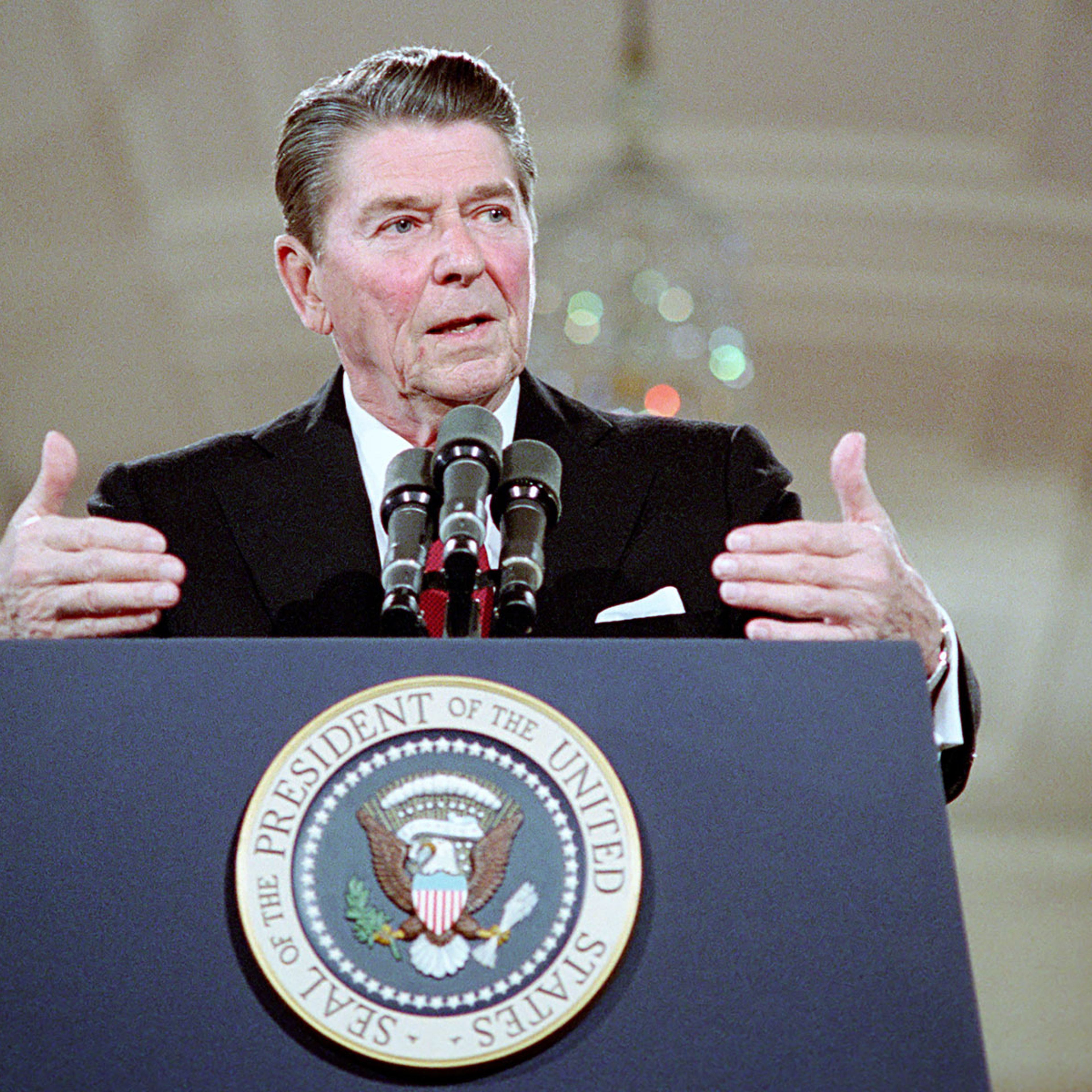
Ronald Reagan was everybody’s loveable granddad, and a lot more. He was–God bless him–a very intelligent man rather than a not-very-bright intellectual. He had vision, instinct, and an innate sense of right and wrong, and he knew what could or could not be accomplished. He had a winning, natural charm, and he never used it selfishly.
Ronald Reagan changed America and the world, and he changed them for the better. In the twilight of his years, he may not have remembered the details of all he did for us. But we remember, and will never forget.
Old cynic that I am, I still take pride in having known and served him.
–Aram Bakshian Jr. is editor-in-chief of American Speaker and writes frequently on politics, history, and the arts.




Comments