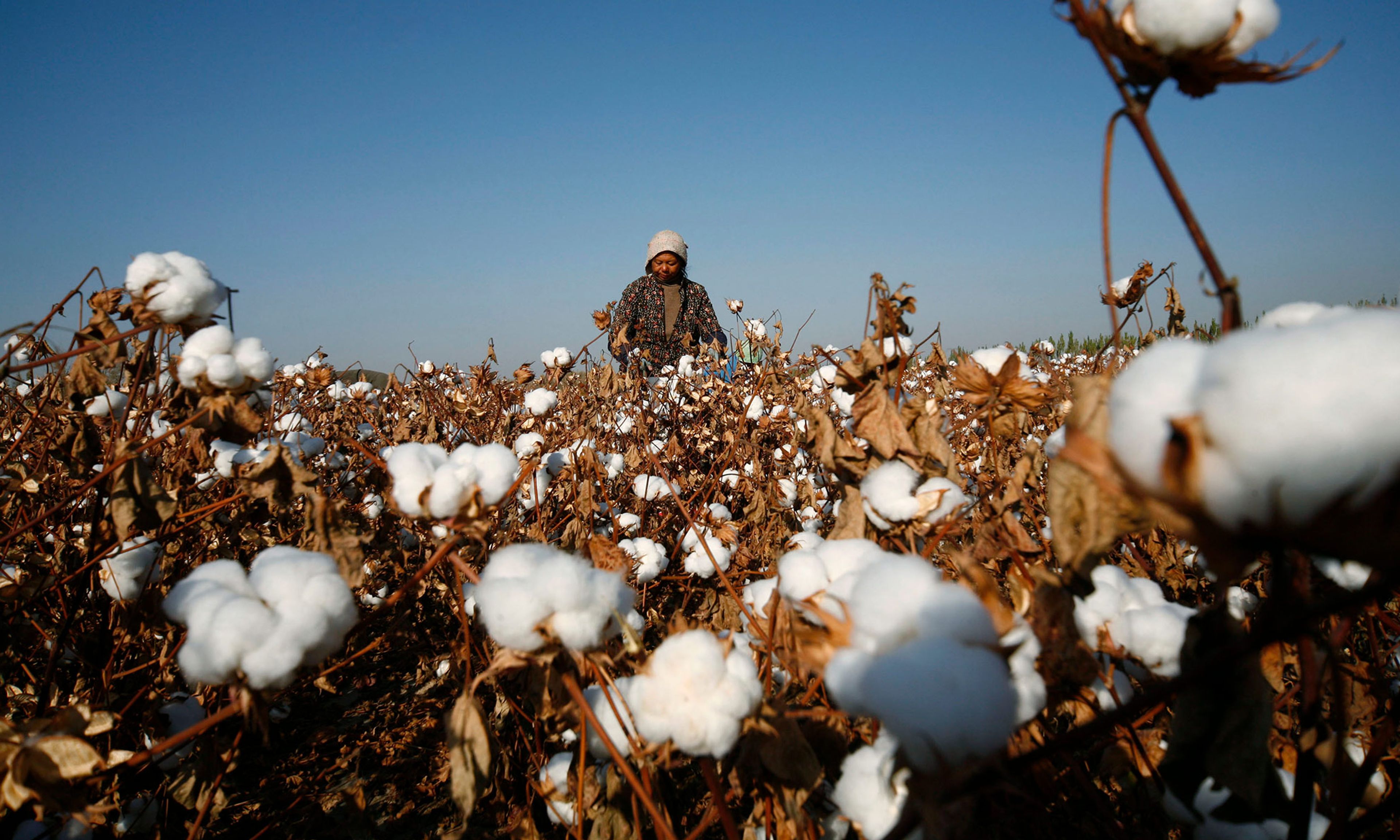
The strategic competition between the United States and China has deepened over the past several weeks as the two countries have traded diplomatic blows over the South China Sea, China’s human-rights record, and technology. In this flurry of activity, the United States has pressed Beijing on its crackdowns in Hong Kong and the Xinjiang region of China. Many of the U.S.’s initial sanctions targeting officials involved in the Uighur concentration camps were largely symbolic, having little concrete effect. Most of the targets would never dream of stepping foot on American soil, or of moving money to institutions vulnerable to U.S. financial pressure. But the American sanctions regime got some bite late last month, when the Treasury Department unrolled new measures targeting an entity known as the Xinjiang Production and Construction Corps (XPCC).
The latest sanctions, announced July 31, apply to the XPCC and two officials associated with it: Peng Jiarui and Sun Jinlong. The move effectively blocks all of the XPCC’s activities and property at all tied up in the American financial system. The authority for the sanctions derives from the U.S. government’s previous designation of Chen Quanguo for human-rights abuses under the Global Magnitsky Act. Chen, who oversees the mass detention and political-reeducation program in Xinjiang, serves many roles in the messy, overlapping nexus of Chinese political institutions: First Political Commissar of the XPCC, Communist Party Secretary of the Xinjiang region, and a member of the Politburo. Here, the U.S. government has used his stewardship of the XPCC to target the organization, which plays a significant role in the repression of the Uighurs.




Comments