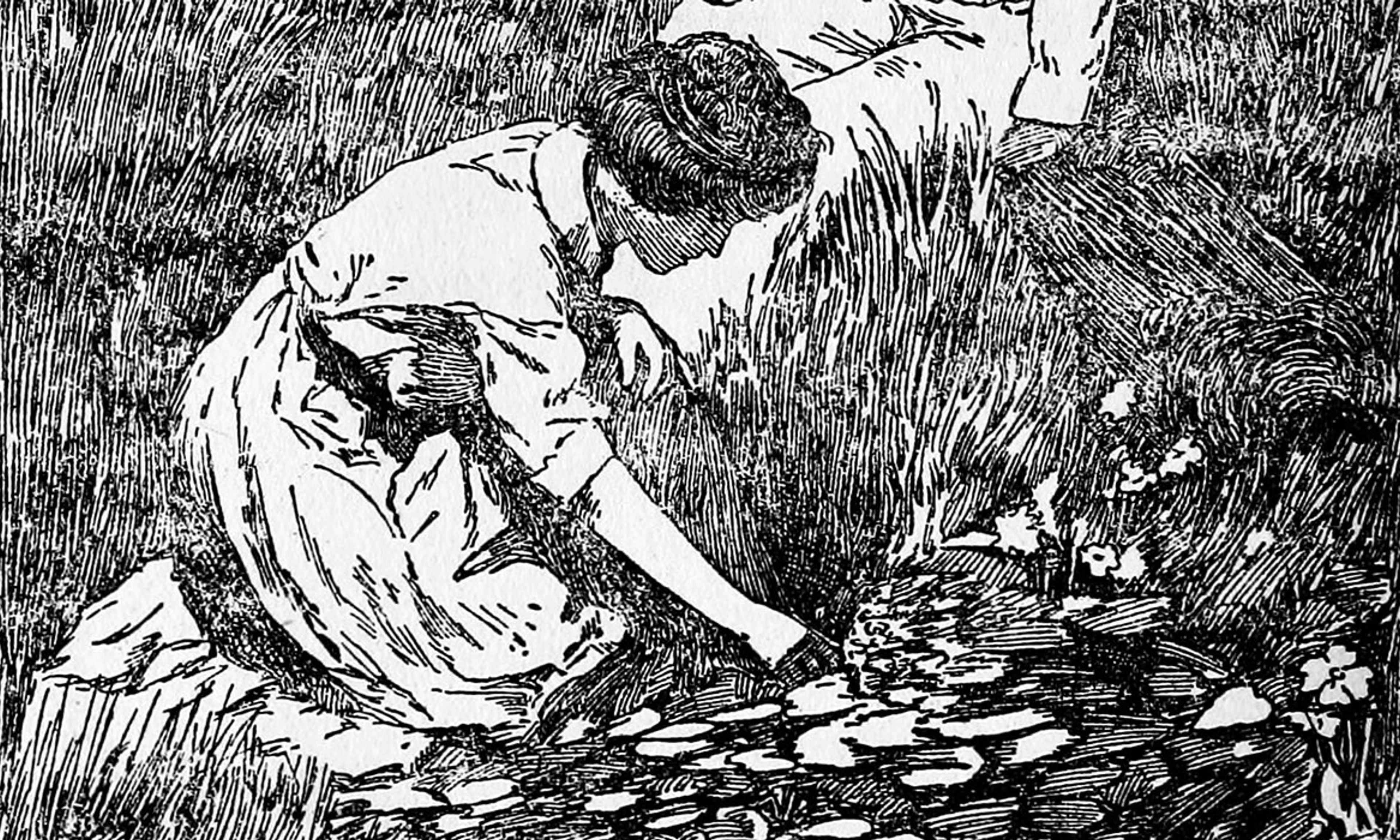
It’s fascinating to observe how yesterday’s best sellers become the next day’s bargain-bin denizens. With some stories, this is a literary tragedy. Many books that delighted readers a century ago are mostly unknown today. Gene Stratton-Porter’s A Girl of the Limberlost is just such a book, and despite its seemingly outdated language and sensibilities, it is a lovely work that deserves wider recognition.
First published in 1909, A Girl of the Limberlost tells the story of Elnora Comstock, a plucky, generous, clever heroine whose widowed mother treats her harshly. Despite the obstacles set up by her mother, Elnora puts herself through high school, using money she earns selling moths caught in the Limberlost. Though the story is fictitious, the Limberlost is a real place. Until the late 1800s, 13,000 acres of swamp and forest covered part of eastern Indiana and was home to myriad types of flora and fauna. This incredible setting serves as the backdrop for a tale of perseverance, hatred, forgiveness, pride, and love. The book captures in clear prose both small details such as the delicious contents of a full lunch box and mighty moments of womanly fury.





Comments