Washington Is Fighting Yesterday’s Middle East

The region is no longer characterized by cross-border networks, but rather by states expanding their defense industries.

Share this story

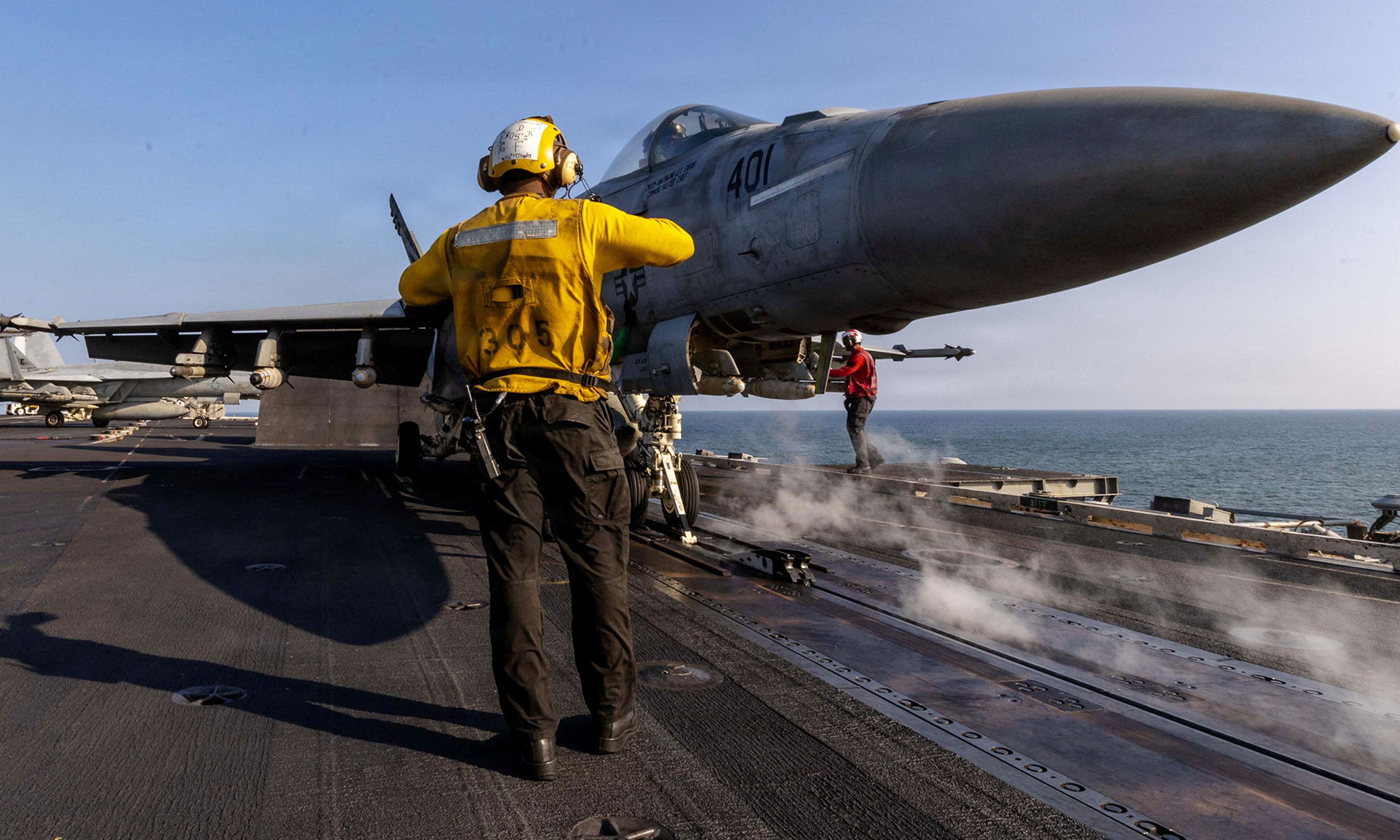
A U.S. Navy F/A-18E Super Hornet prepares to launch from the flight deck of the Nimitz-class aircraft carrier USS Abraham Lincoln in support of Operation Epic Fury from an undisclosed location, March 6, 2026.

U.S. Navy/Handout via Reuters

America’s ongoing confrontation with Iran has exposed more than the limits of Tehran’s regional strategy. It has exposed the limits of the strategic framework through which Washington still views the Middle East. Those limits are rooted in a sobering reality: For a quarter century now, U.S. policy in the tumultuous region has been shaped by the strategic assumptions of the post-9/11 era.

Following the September 11, 2001, terrorist attacks — when al-Qaeda, under Osama bin Laden, killed nearly 3,000 Americans — President George W. Bush launched what became known as the “War on Terror.” This American-led global effort marked a sharp departure from traditional military doctrine in its redirection of focus from nation-state adversaries to decentralized terrorist networks such as al-Qaeda and ISIS.


Bradley Martin

About the Author

Bradley Martin

Bradley Martin is the executive director of the Near East Center for Strategic Studies. Follow him on Facebook and X @ByBradleyMartin.

Liram Koblentz-Stenzler

About the Author

Liram Koblentz-Stenzler

Dr. Liram Koblentz-Stenzler is the head of the Global Extremism and Antisemitism Desk at the International Institute for Counter-Terrorism (ICT) at Reichman University, Herzliya, and a visiting scholar at Brandeis University. Follow her on LinkedIn.

Comments

Advertisement

Advertisement