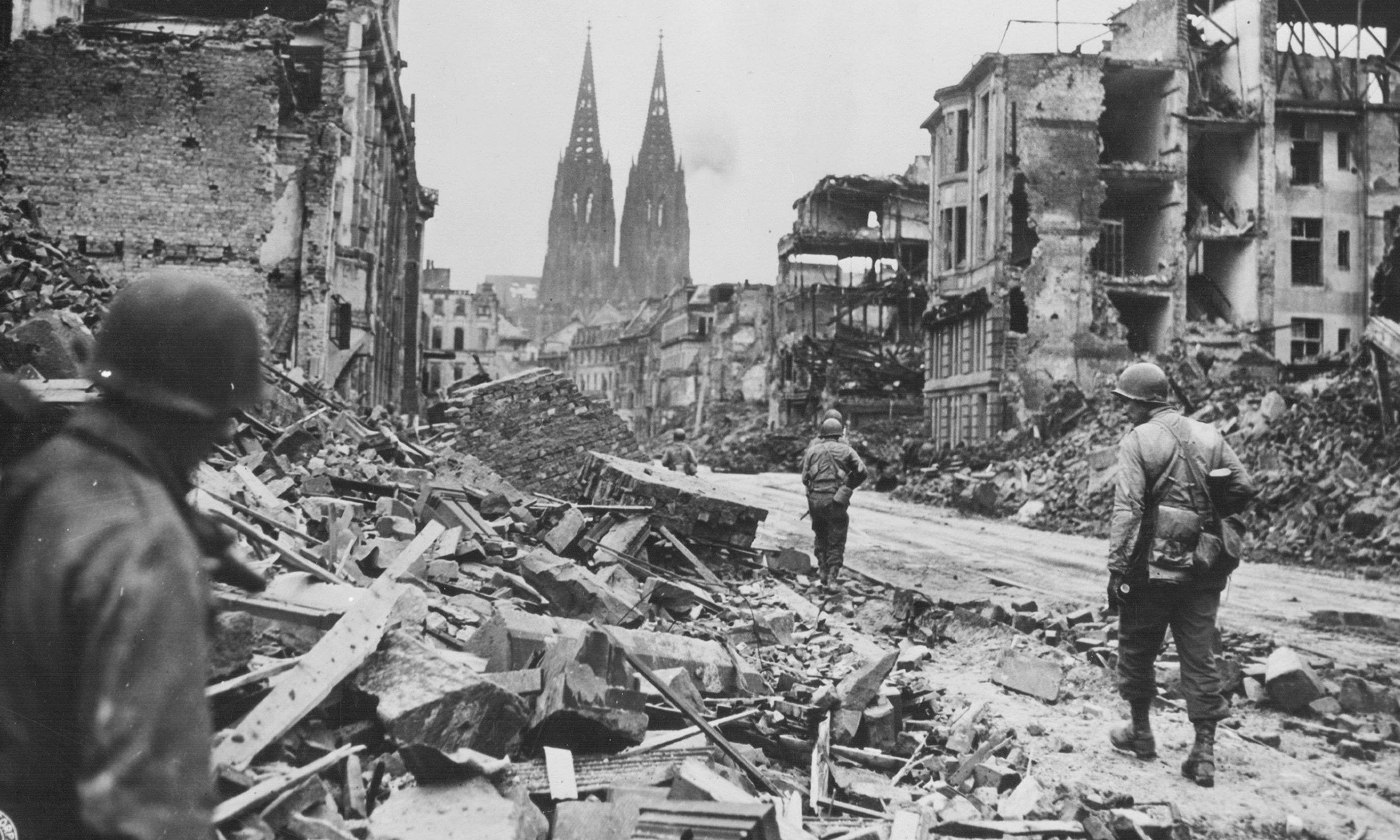
There has arisen of late a cottage industry encouraging the thinker and the policymaker to set aside the Second World War. On the elevated end of things are works like Alec Ryrie’s 2025 book, The Age of Hitler and How We Will Survive It, which argued that the postwar liberal order was a function of (post facto) opposition to Hitler. (Modern asylum law, for example, is not meant to contend with small boats bearing Pakistani men: It was written for Anne Frank.) Also on the high end is R. R. Reno at First Things, who argues in “Putting World War II Behind Us” that “World War II encourages a Manichean mindset, one that rushes to describe conflicts as world-historical clashes between unmitigated evil and unimpeachable good.” This is, he argues, deranging to modern statecraft and discourse both. At the low and base end is Tucker Carlson promoting internet historian Darryl Cooper’s revisionism, leaning heavily into apologetics for the Third Reich and hatred for its enemies, notably Winston Churchill and the Jews. This last is a narrative as old as Nazism itself, being of the same source. The former, however, is morally and intellectually legitimate and deserves a response.
Ryrie and Reno are surely correct in their descriptive analysis. The world after 1945 is indeed ordered, in the grand-strategic sense, in response to the Second World War. The major institutions — the United Nations, NATO — emerged from it, and the assumptions dictating behavior are to a meaningful extent rooted in it. Metaphors are often enough derived from it, especially when describing evils and antagonists. Reno specifically argues that the war, having been a civilizational disaster of the first order, is in the end no template. “To its orgy of violence . . . we owe the soul-eating nihilism that today threatens the future of the West,” although this is properly more the First World War than the Second. For the Western Allies, at least, the Second World War was a struggle against a species of “soul-eating nihilism” against which — see Carlson and Cooper — we still contend today.



Comments