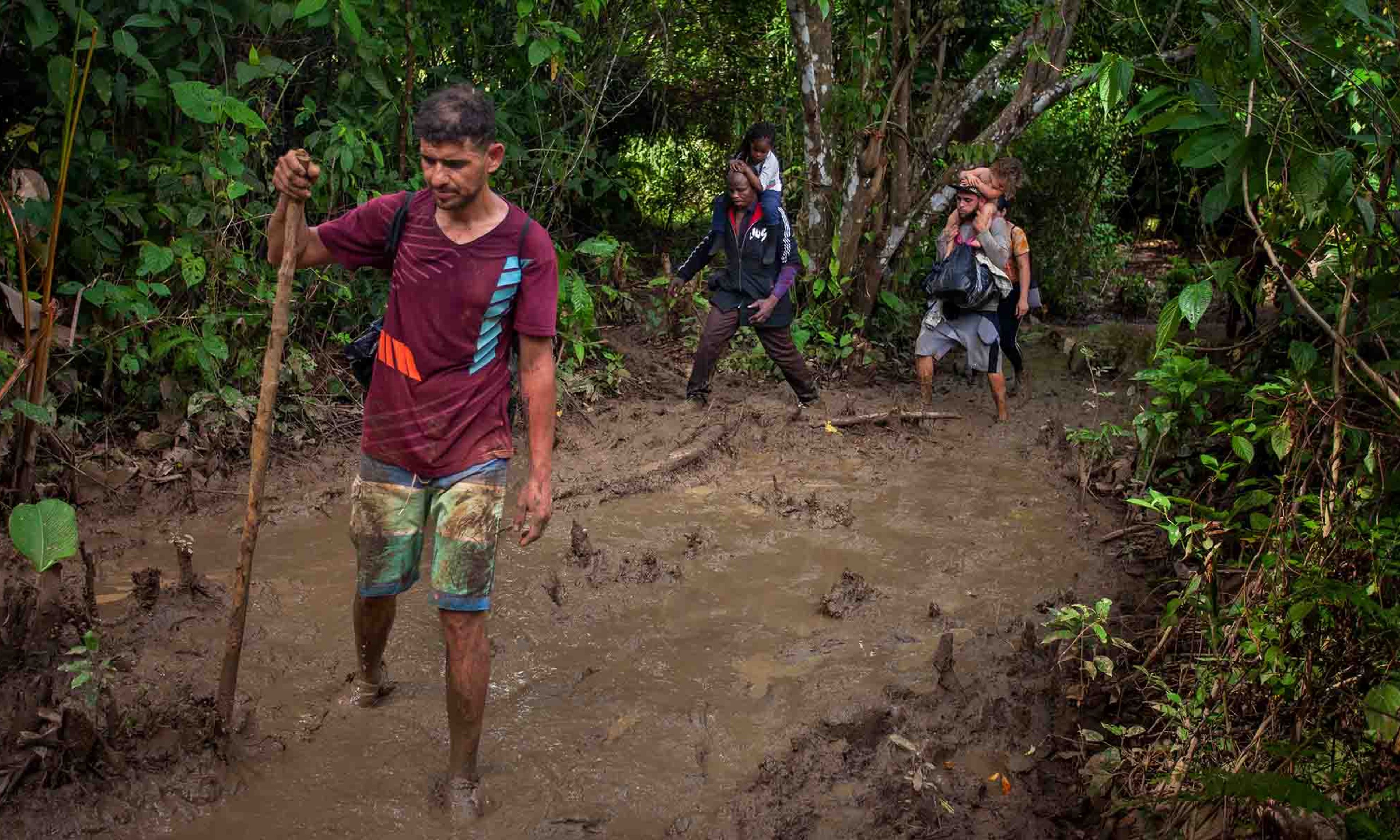
The most important barrier to illegal entry to the United States is so impassable that only one normal car has ever crossed it. Sixty-two years ago, a Land Rover made the journey. And it took five months to do so, crawling along at just over a tenth of a mile per hour. This barrier is guarded ferociously day and night, with truly deadly sentries who are indifferent to human life. And it’s not even on the American border — it is the no-man’s land that exists between Central and South America, the Darien Gap between Panama and Colombia. It is the only place between Prudhoe Bay in Alaska and Ushuaia, Argentina, the world’s southernmost city on planet Earth, that cannot be driven over.
There is not a single road that joins North and South America, precisely because the geography of this place is so forbidding. The 100 kilometers between the city of Turbo in Colombia and the town of Yavisa in Panama is a dense equatorial jungle, rising quickly into treacherous mountains. It is crisscrossed with rivers that regularly become flash floods because the Darien Gap is one of the rainiest locations on Earth. It’s often over 95 degrees during the day and usually at 100 percent humidity. The wildlife is treacherous — including poisonous snakes and frogs, any of which can induce a medical emergency in a place that is hundreds of miles from the nearest human habitat. And then there are the billions of mosquitos, many of them carrying malaria or dengue. There is no cell service, so nobody can use modern cellphone maps or GPS trackers to figure out their exact location or whether they are going in the right direction. The only moderately safe way to cross the gap is to take boats or planes to bypass it entirely. But that costs significant money, and rules out many hundreds of thousands of those most desperate to escape crumbling regimes in South America.




Comments