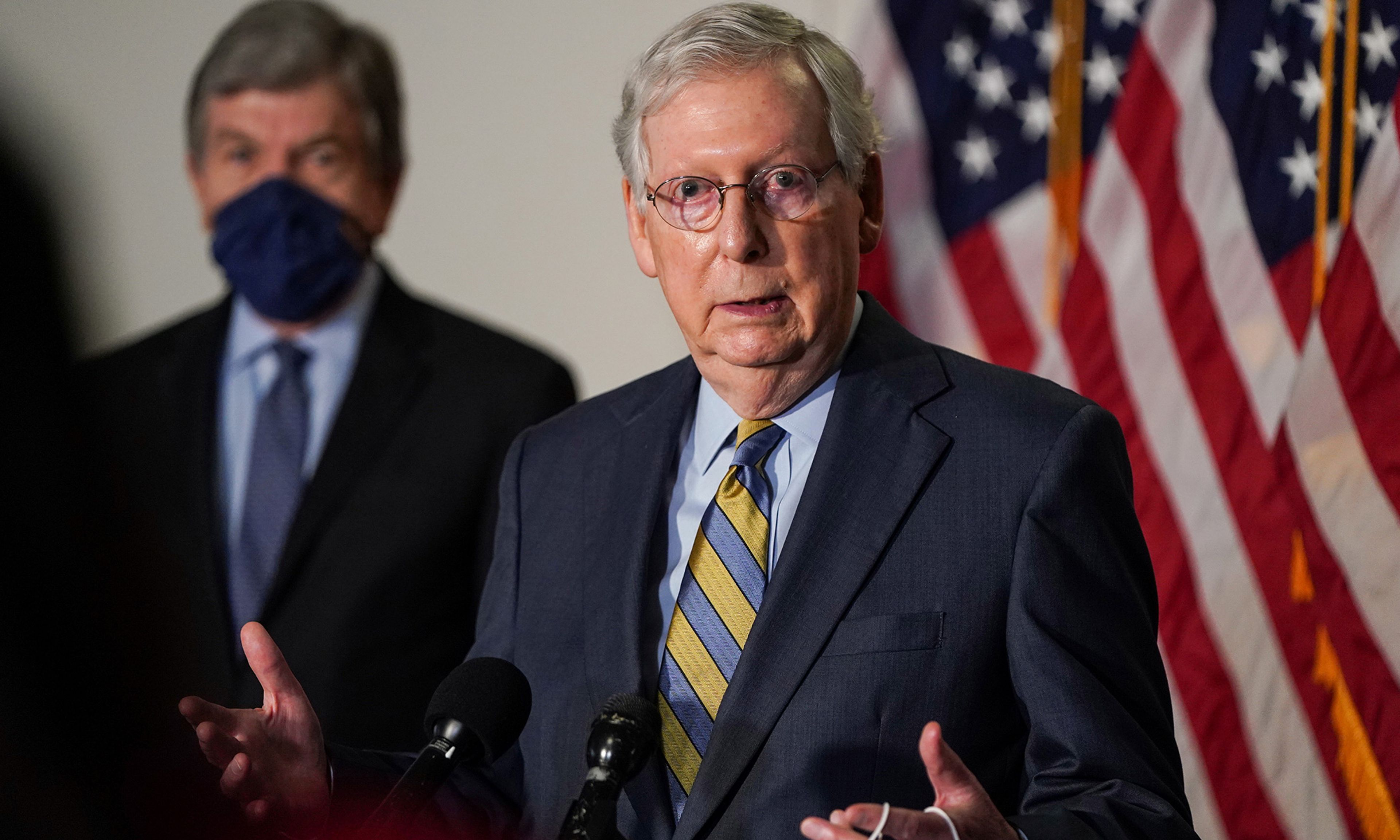
We don’t know yet what will happen in the presidential election, but the odds clearly favor a Joe Biden victory, and even more strongly favor the Democrats holding the House. Harry Truman in 1948 was the only president whose party retook the House before the end of his presidency, after losing it. If Biden wins, much of his agenda will thus depend on whether Democrats take the Senate. If Trump pulls out a surprise victory, his ability to keep confirming judges at a brisk clip will likewise depend on the Senate. In some ways, control of the Senate may be even more important over the next two years than control of the White House. Democrats need a net gain of four Senate seats to gain control, or three to create an evenly divided Senate in which the vice president casts deciding votes.
As of now, the polling shows a close, competitive contest in the Senate. The RealClearPolitics averages favor the Democrats gaining the four seats they need, picking up Colorado from Cory Gardner, Maine from Susan Collins, Arizona from Martha McSally, North Carolina from Thom Tillis, and Iowa from Joni Ernst, while losing Doug Jones in Alabama. Polling may be reliable, but it could also be missing something. Even aside from the general issues why polls missed Republican voters in 2016 and 2018, we may be dealing with a particularly high-turnout election, which could do unpredictable things if there are a lot of the kinds of voters who are hard to capture in polls. So, we should be thinking less about what we see as certainties in the polling, and more about ranges of possible outcomes.





Comments