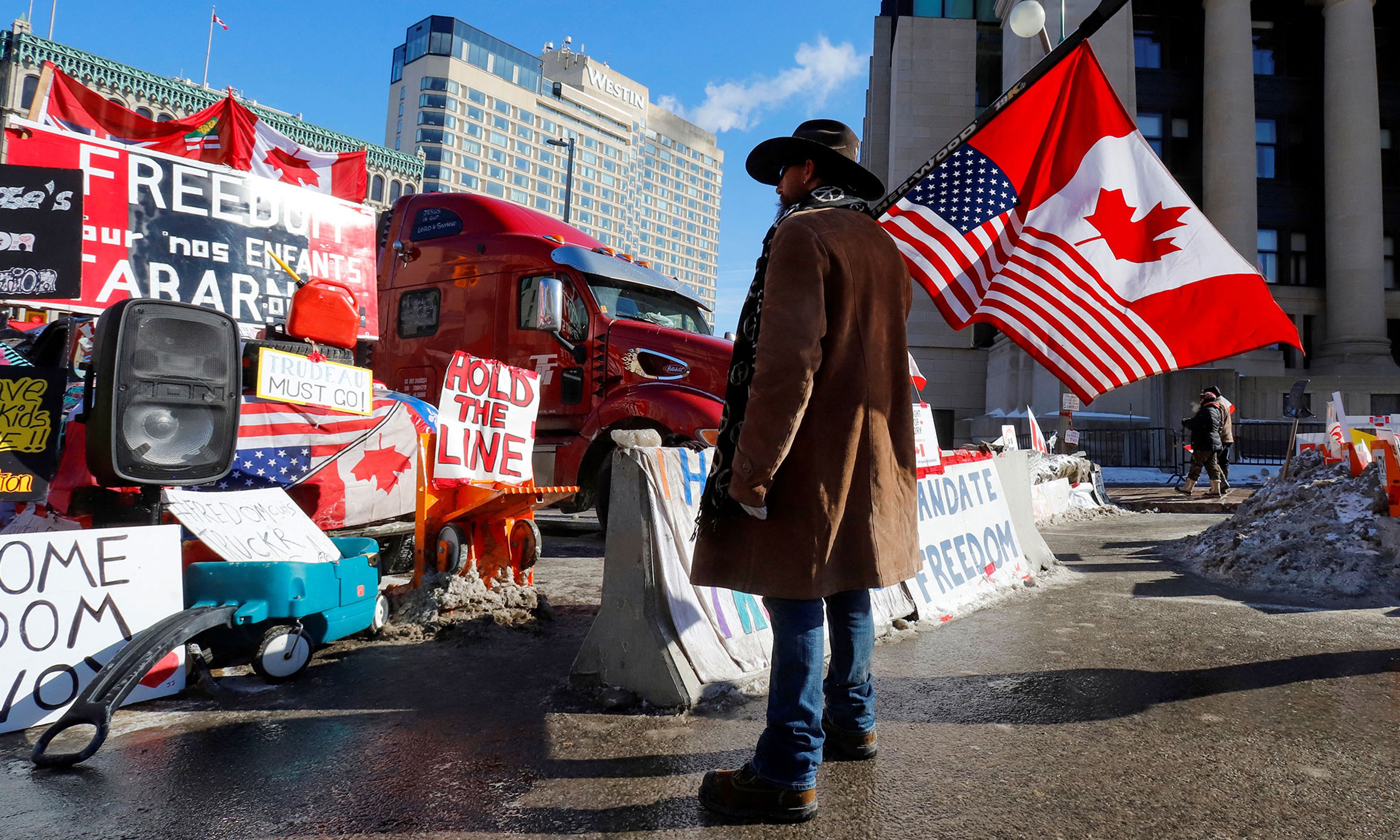
The Canadian trucker convoy that arrived in Ottawa to protest the nation’s pandemic mandates at the end of January is all but gone, its participants arrested or cleared out by a militarized police force that descended on the city just over a week ago. But the movement nevertheless can claim a remarkable slate of political victories at home and a role in having inspired copycat anti-mandate protests across the West.
The self-described “Freedom Convoy” began in earnest on January 29, when hundreds of trucks from across Canada converged on Parliament Hill in the capital. What started as a truckers’ protest against vaccine mandates quickly evolved into a mass protest against pandemic restrictions writ large, with thousands of Canadians flocking to Ottawa to join the demonstrations. For 21 days, a makeshift community of anti-mandate protesters held prayer services and dance parties, and served free food and drink from tents and hastily built encampments. There were a handful of alleged instances of vandalism, and offshoots in other parts of the country were rightly criticized for blockading trade routes. But by and large, the movement was remarkably peaceful, particularly in light of its decentralized and largely spontaneous nature.




Comments