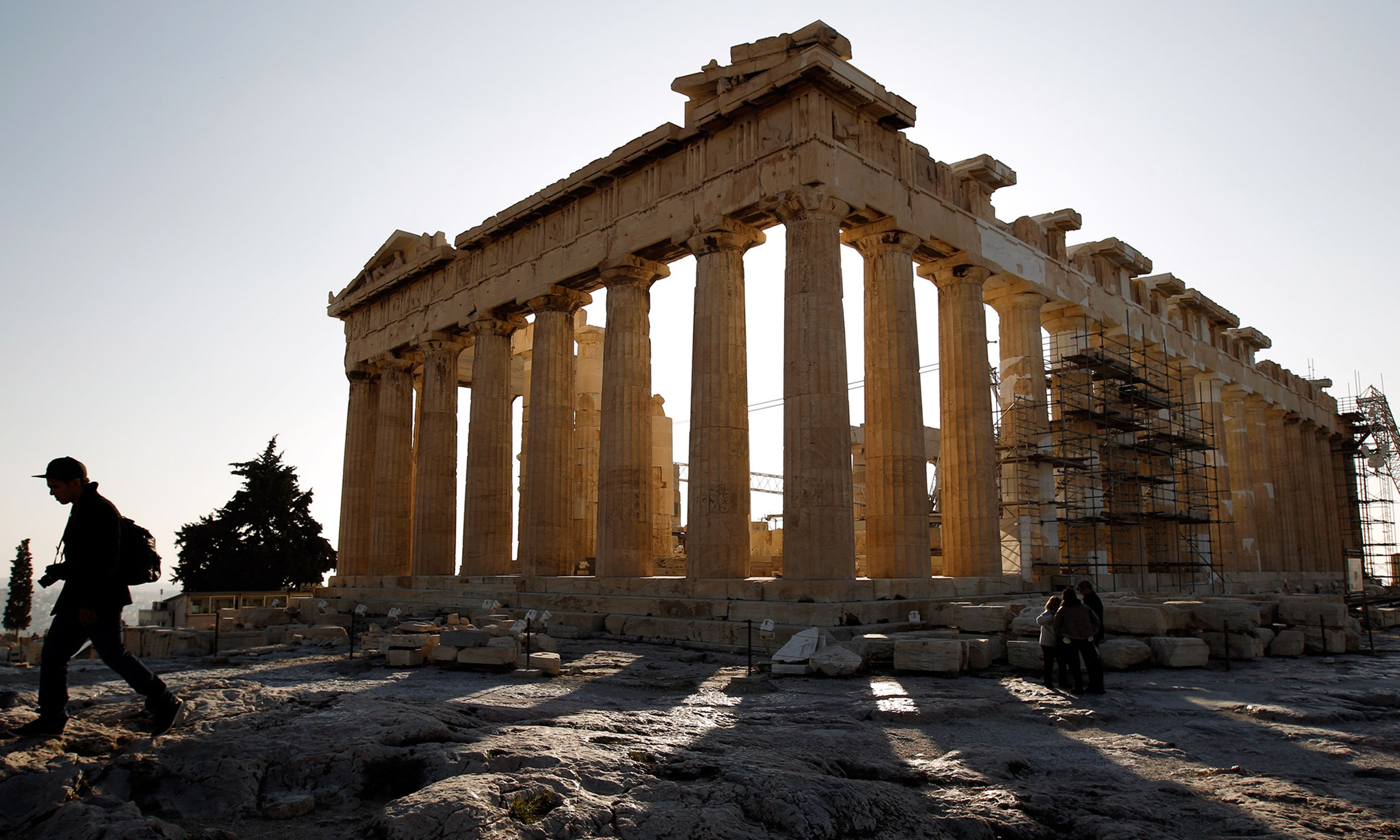
Before 1776 A.D., before 1619, before 1492, before A.D., there was 490 B.C. and the Battle of Marathon, which freed Athens to found our civilization. Obviously, this date and occasion deserve study and remembrance. Indeed, Thomas Jefferson argued in his Notes on the State of Virginia (1785) that the main goal of education in a democracy is to enable the people to defend their liberty, and that Greek, Roman, and English history is the subject that best equips citizens to do so. Edith Hall, Gaisford lecturer at Oxford University, has added that such a defense of liberty requires “utopian thinking, fearlessness about innovation, critical thinking, and the ability to argue cogently.” All can be learned, she wrote, from the “succinct, entertaining formulations in the works of the Greeks.”
Yet a recent Independent Institute white paper, which I co-authored with Victor Davis Hanson and Williamson M. Evers, examined the state of teaching of the classical world in American education and found it sadly wanting. We concluded that the logical way to repair this deficiency is to import into American high schools the British GCSE and A-level courses in Classical Civilization, which are quite comprehensive but taught in English, so mastery of Latin and Greek is not required.



Comments