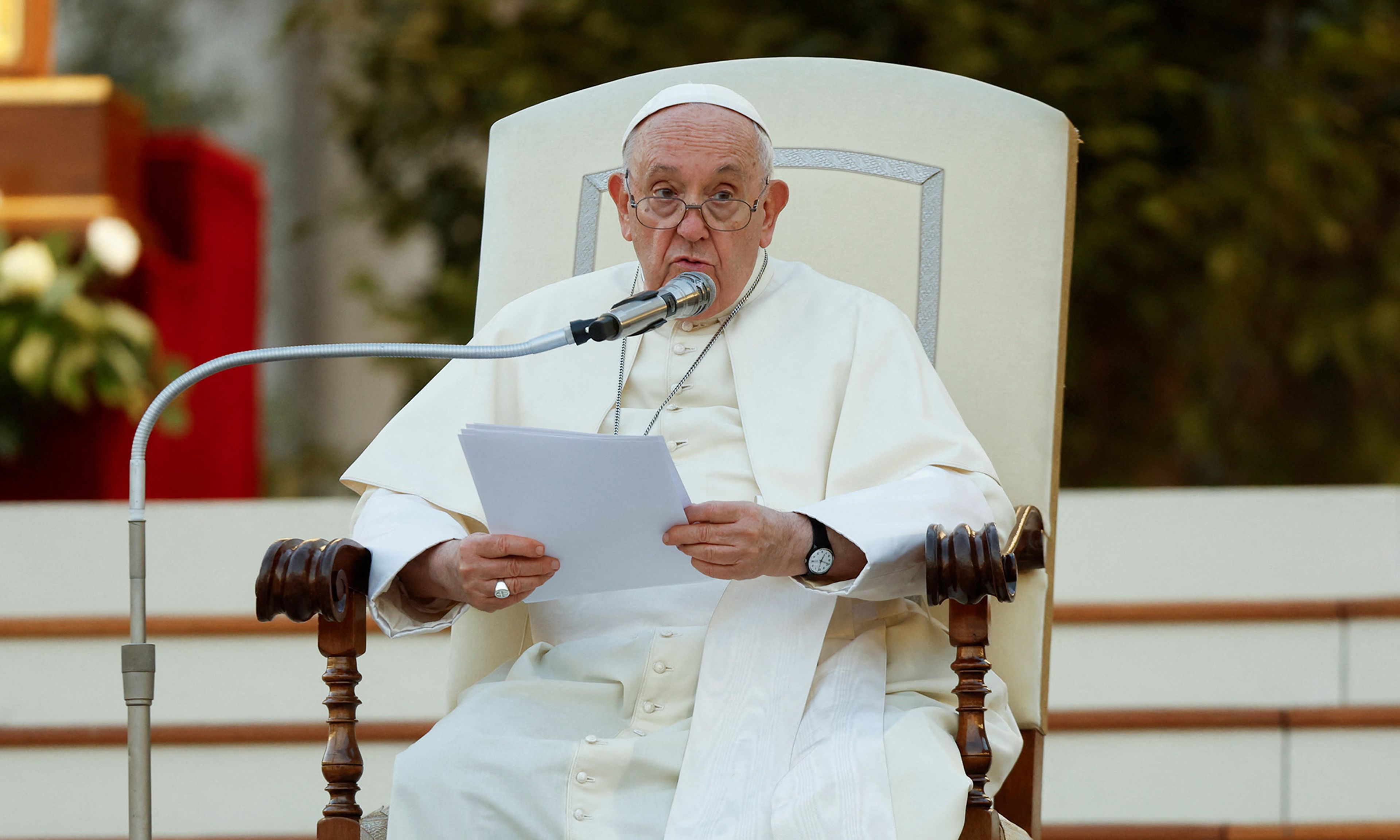
On October 4, Pope Francis decided again to comment in apocalyptic terms “on the climate crisis,” the subject of Laudate Deum, his apostolic exhortation that is the sequel to his 2015 encyclical, Laudato Si’. While the document includes some sense of what Catholics call “integral ecology,” linking human dignity, society, and nature, Laudate Deum unfortunately suffers from too much trust in international governing bodies, a missed opportunity for the papacy to be a stronger moral voice when it comes to China, and a fundamental misunderstanding of some basic economics.
Let’s take the global organizations first. You might be tempted to think of the Catholic Church when you think of international organizations committed to the common good. Indeed, this has traditionally been the role of the pope, who as a moral voice also applies Christian principles in the church’s effort to evangelize the world. But the organizations Pope Francis has in mind are the United Nations, with its Framework Convention on Climate Change (UNFCCC), and the Conference of the Parties (COP), which gave us the Kyoto Protocol and Paris Agreement.




Comments