‘Freedom,” like any number of political buzzwords, has been used to defend or assail almost every imaginable political program in existence, from anarchist-adjacent libertarianism to Stalinist communism and fascism. As Frank Filocomo notes on the Corner today, the anarcho-capitalist economist Murray Rothbard “once argued for a ‘purely free society’ that would, among other things, ‘have a flourishing free market in children’ bought and sold as goods by parents.” The French Revolution’s Jacobin radicals famously fought under the banner of liberté, egalité, fraternité. (Or “liberty, equality, fraternity”). Vladimir Lenin argued for a “proletarian freedom,” in contrast to the “bourgeois freedom” of the capitalists, arguing that “there cannot be, nor is there nor will there ever be real ‘freedom’ as long as there is no freedom . . . for the workers from the yoke of capital.” Ronald Reagan framed his vision of freedom in terms of limited government: “Man is not free,” he maintained, “unless government is limited.”
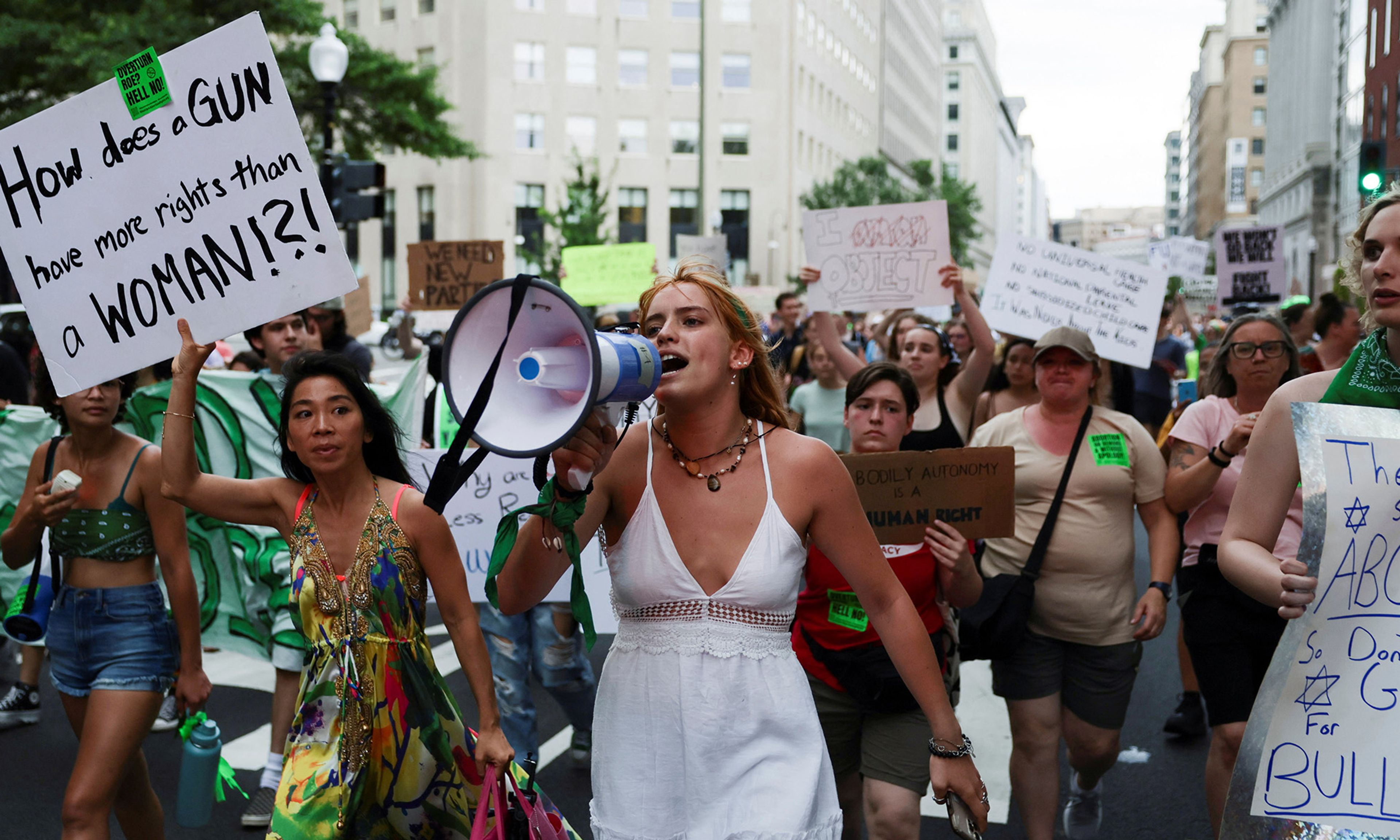
Today’s progressives, too, are seeking to recast their political project in terms of freedom. The New York Times reports “that Democrats at every level of the party and of varying ideological stripes — including President Biden, abortion rights activists in Kansas and, now, a constellation of left-leaning groups — are increasingly seeking to reclaim language about freedom and personal liberty from Republicans”:



Comments