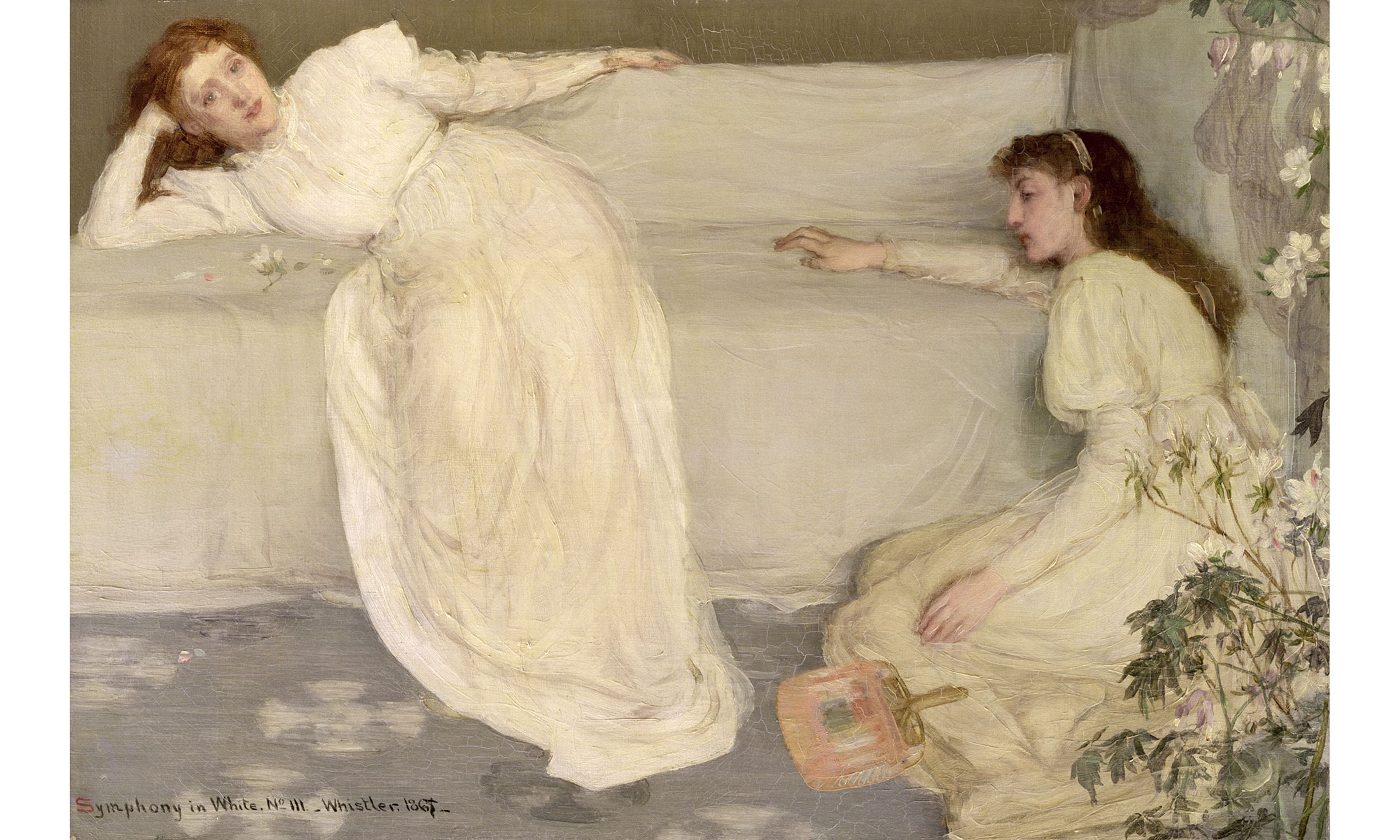
The Woman in White: Joanna Hiffernan and James McNeill Whistler is the lovely, important new exhibition at the National Gallery in Washington. Whistler (1834–1903) was, in his lifetime, the most written-about artist of the 19th century. His London nocturnes put the hardest of hearts in rapture. These and his gauzy, tonal portraits cleared the decks of fussy Victorian art, inviting Modernism to emerge.
In surveys of American modern art, Whistler is almost always the starting point. He had an idiosyncratic handle on the art of every century. Though he always insisted he was an American — he was born in Lowell, Mass. — the British say he’s British. Arrangement in Grey and Black No. 1, from 1871, called “Whistler’s Mother,” always hung among the Impressionists at the Musée d’Orsay in Paris. I’m not sure what the French think about him now, but for years they considered him, in a big stretch, French.

Comments