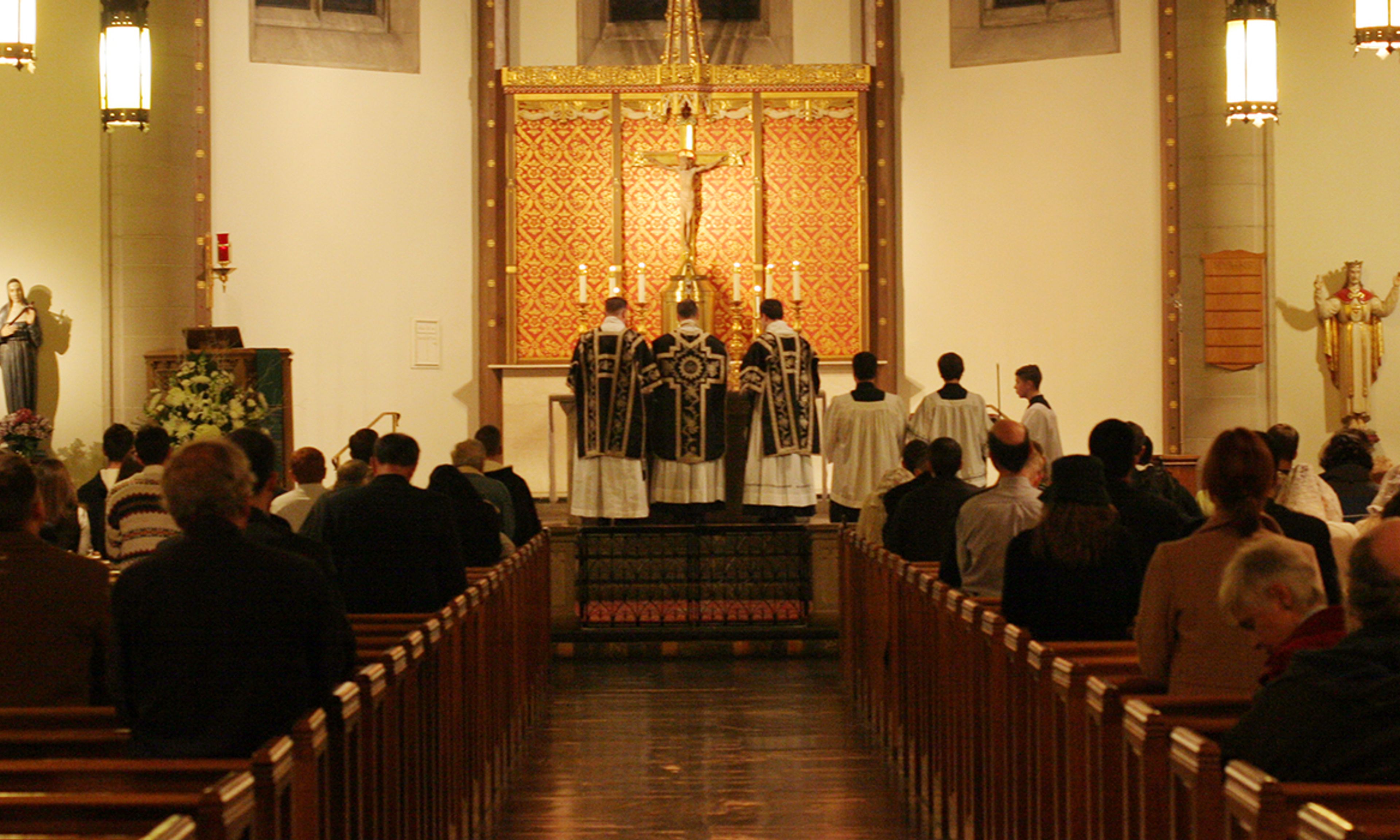
When the German novelist, playwright, and litterateur Martin Mosebach published his book The Heresy of Formlessness, the Roman Liturgy and its Enemies, he could not have possibly anticipated the next 20 years of drama. But somehow, his life had prepared him for it. In this beautiful and personal reflection on religious faith and ritual, he recalls his Protestant father’s devotion to reading the scriptures while his mother made her quick appearance at Mass. From his father he learned passages like, “Iniquity came forth from Babylon, from elders who were judged, who were supposed to govern the people.”
He had written a book that had defended the old Roman Rite — the traditional Latin Mass of the Western Church, 30 years after the Roman Church had tried to discard it. The old Mass had devotees — among them American conservatives with a literary bent like Patrick Buchanan and the founder of National Review, William F. Buckley Jr. But Mosebach had taken up the cause of the old liturgy itself. But in 2002, the Traditional Mass was at a low ebb, barely tolerated by the Vatican, championed by religious groups who were excommunicated, and celebrated mostly in forgotten places. To make it one’s cause was to place oneself at the margins not just of the modern world, but of the modern Church. It was like confessing an enthusiasm for leprosy itself.





Comments