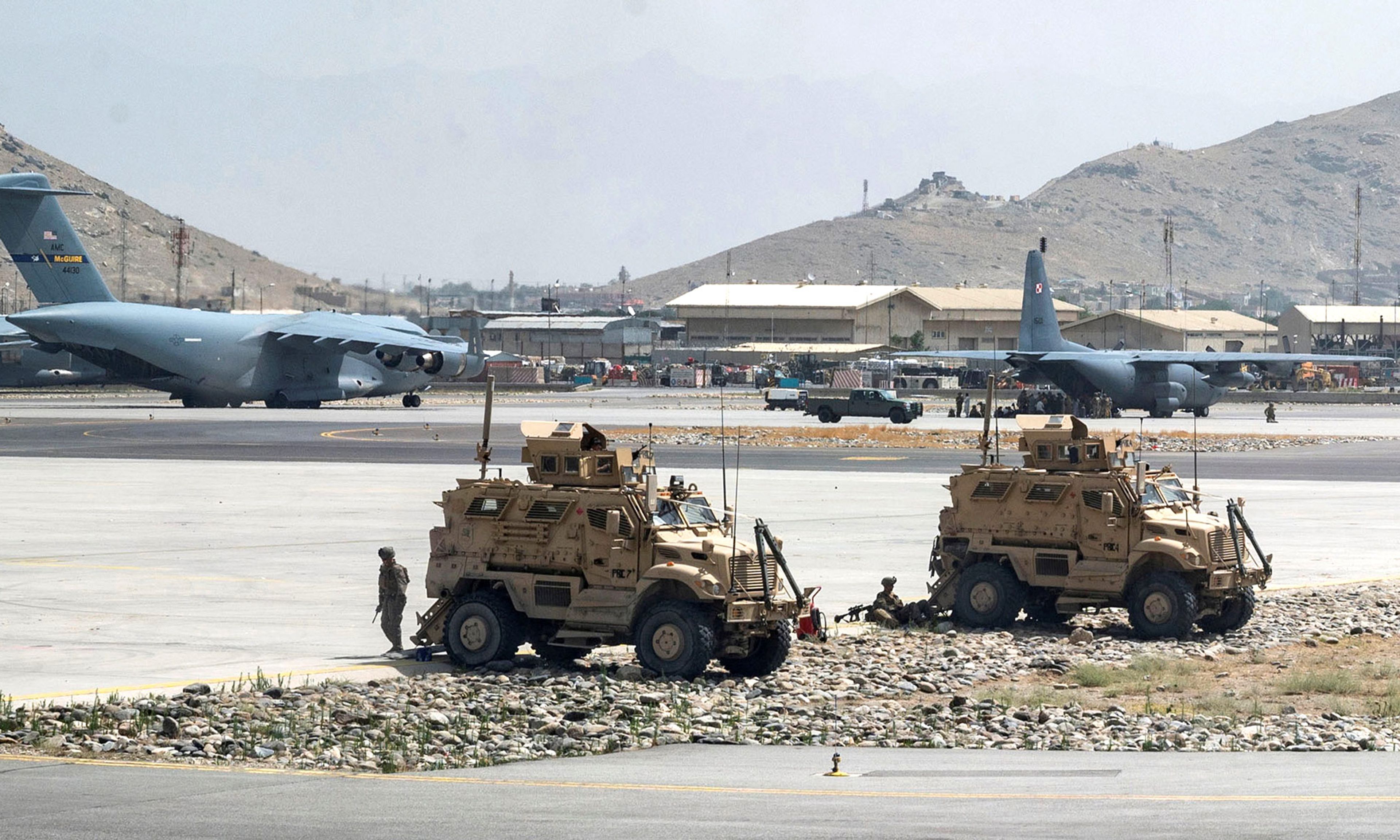
We were officials in the Department of Justice two decades ago when al-Qaeda attacked us, destroying the World Trade Center in New York and one-fifth of the Pentagon and killing nearly 3,000 civilians, including all those on board four hijacked airliners. We advised President George W. Bush’s administration as it launched its lightning attack to rout the Taliban from power in Afghanistan, where it had provided safe haven to Osama bin Laden and his terrorist gang. We are aghast at the Biden administration’s disastrous flight from Afghanistan almost two decades to the day since the 9/11 attacks.
As part of the administration that played a part in the invasion of Afghanistan in 2001 and its subsequent occupation by American forces, we accept part of the blame for what went wrong. On September 25, 2001, we advised the White House that the United States had the right to attack al-Qaeda to prevent future attacks and to overthrow the Taliban for sheltering terrorist operations on its territory. We believed that President Bush had the constitutional authority as commander in chief to defend the United States from attacks by nations or by brigands such as al-Qaeda, that he had the right to disrupt any opponents that might launch future attacks, and that Congress had given its support in the Authorization for Use of Military Force, which we helped negotiate with congressional leaders. We stand by that legal advice, which recognized the president’s traditional constitutional powers; those powers have justified the campaign against al-Qaeda not just in Afghanistan but throughout the world.




Comments