Why We Write Our Laws Down

To live under a government of laws rather than a government of arbitrary power, we must know what the law requires of us, and what it affords us.

Share this story

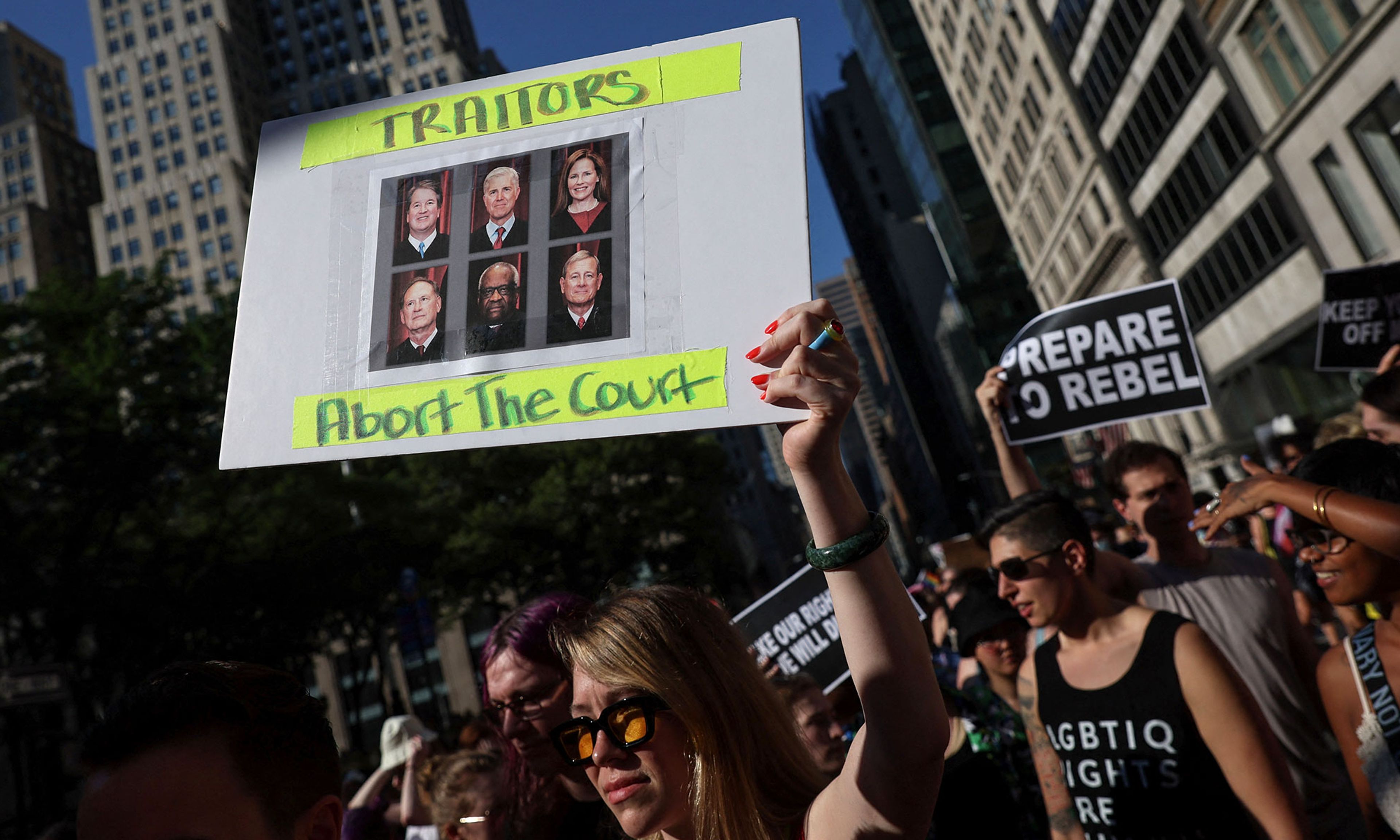
People walk holding signs during the NYC Dyke March, a demonstration for the First Amendment right to protest taking place without permits or sponsors, a day after the Supreme Court ruled in the Dobbs v Women’s Health Organization abortion case overturning Roe v Wade in New York City, June 25, 2022.

Shannon Stapleton/Reuters

Because of the Dobbs decision, there is at the moment a great deal of talk about different theories of constitutional interpretation and the legitimate role of the Supreme Court. For an especially unedifying example that I’ll return to below, try getting through this borderline-nonsensical discussion between Ezra Klein and Professor Larry Kramer, whose “popular constitutionalism” is only our ancient enemy, the “General Will,” in a very poor disguise — Rousseau goes to Stanford law.

But there are issues that we should think about at least a little bit that are prior to questions of constitutional theory and interpretation, beginning with the most basic question of law: Why do we write our laws down?


Kevin D. Williamson

About the Author

Kevin D. Williamson

Kevin D. Williamson is a former fellow at National Review Institute and a former roving correspondent for National Review.

Comments

Advertisement

Advertisement


