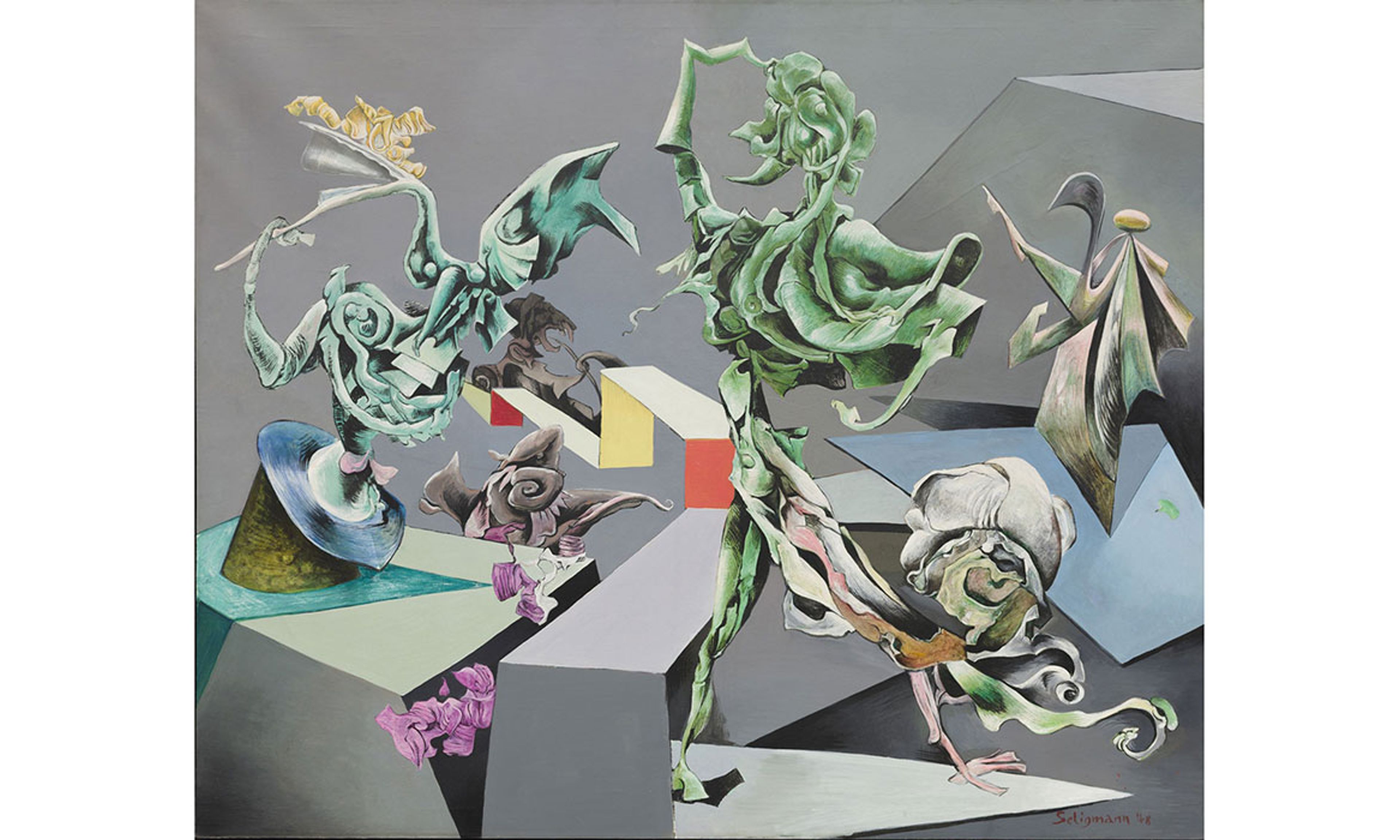
When I was in Venice to visit the Biennale, I saw Surrealism and Magic: Enchanted Modernity at the Peggy Guggenheim Collection. I enjoyed it, but how could I not? It’s about magic, alchemy, the occult, witches, war, sex, goddesses, cosmic unity, and existential anguish. And it’s in Peggy Guggenheim’s sultry, oddball palace on the Grand Canal. It begins with Enrico Donati’s Evil Eye, from 1946, a sculpture made from painted plaster, glass, mirrors, and glass. “Oh, the nogoodniks who deserve the Evil Eye,” I thought. Dating to the time of the pharaohs, it’s the oldest known curse. “But you’re a good Methodist, Brian, and don’t believe in such things.” After seeing this exhibition, I left thinking, “Well, we’ve forgotten our dreams.”
“We can dream, can’t we?” is the first question to ask ourselves in looking at Surrealist art, which draws, in part, on the unstable, unpredictable realm of dreams. Though we live, more or less, in a world ruled by reason, by logic, we all dream in our sleep, even if, on waking, we’ve forgotten our dreams. This endows Surrealism with accessibility, since, like our dreams, it doesn’t have to make sense, and like our dreams, interpretation is personal. Unlike lots of modern art, then, it’s accessible.


Comments