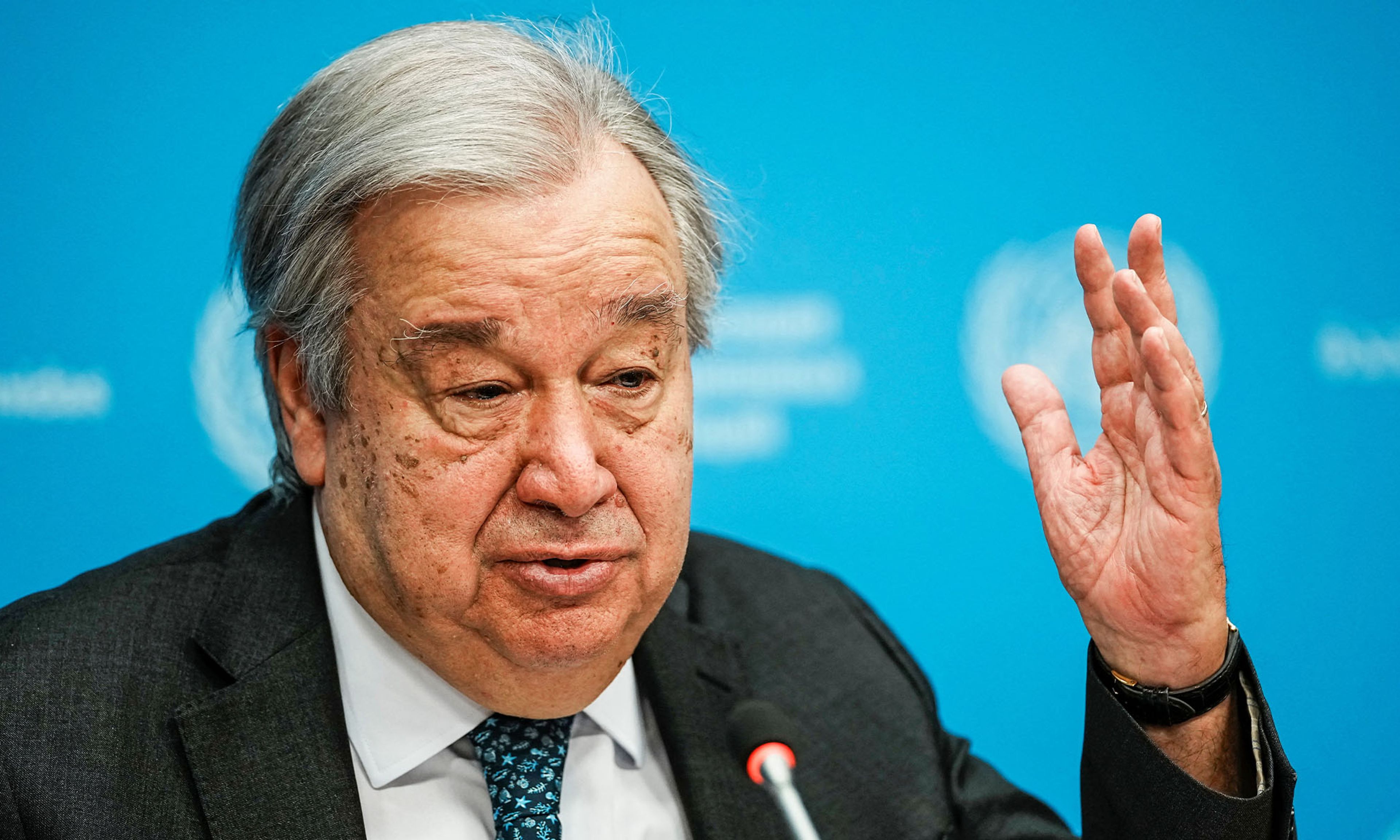
Although the United Nations Charter entrusts the U.N. Security Council with the “primary responsibility for the maintenance of international peace and security,” the U.N. was barely, if at all, consulted about the U.S.-Israeli strikes on Iran. And why should it have been? From Russia’s war on Ukraine to Iran’s war on its own people, the United Nations has proven itself to be impotent and irrelevant on most serious matters of global importance.
Almost immediately after the Iran strikes began, U.N. Secretary General António Guterres condemned the military action and demanded “an immediate cessation of hostilities and de-escalation” on the grounds that the actions violated the U.N. Charter. U.N. General Assembly President Annalena Baerbock declared that “concerns regarding Iran’s nuclear program, regional activities, and human rights violations must be addressed in accordance with the U.N. Charter and international law.” U.N. human rights chief Volker Turk called for de-escalation and a return to negotiations. Russia and China condemned the violation of Iran’s “sovereignty, security and territorial integrity” in the Security Council, calling for an immediate cessation of hostilities and the resumption of negotiations.

Comments