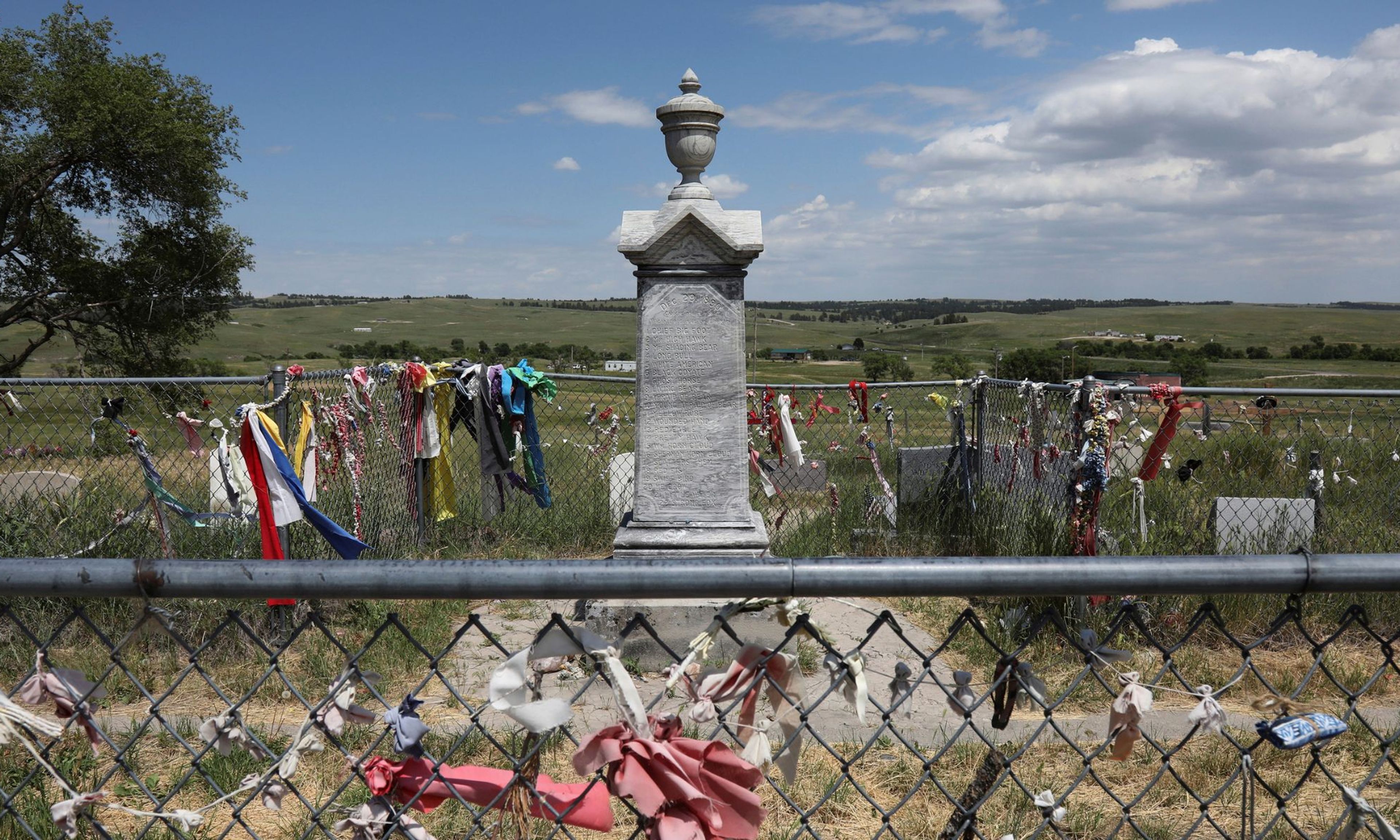
The Defense Department has announced that it is officially reviewing 20 of the Medals of Honor awarded to men who fought against the Lakota in the engagement at Wounded Knee Creek in 1890. That skirmish, described as a “massacre” by present-day historians and progressive politicians, ended with the death of more than 250 Lakota natives, including many noncombatants, women, and children. This would be the first potential rescission of any Medals of Honor since a full review of all such commendations was undertaken in 1916. Congress suggested that the awards should be stripped from their long-dead recipients as part of the 2022 National Defense Authorization Act, in a passage added by liberal senator Elizabeth Warren (D., Mass.), who said that the rescissions would be “a step toward righting wrongs against native peoples.” The relevant text, Section 585, reads: “Each Medal of Honor awarded for acts at Wounded Knee Creek, Lakota Pine Ridge Indian Reservation, South Dakota, on December 29, 1890, is rescinded.”
Despite the clarity and forcefulness of that language, the rescission still requires an internal DOD process, which Secretary Lloyd Austin has encouraged. In his letter starting the review process, Austin purports to limit the scope of the inquiry, writing that the assessment “is limited to reviewing each [Wounded Knee Creek Medal of Honor] awardee’s individual actions during this specific engagement.” Later in the letter, however, he opens the field for a much broader vision, including consideration of “the context of the overall engagement,” as well as adding multiple Interior Department personnel to the review board. Adding these civilians to the process shows that this review is not being done on a purely military basis, increasing the potential for modern political considerations to alter the outcome.





Comments