
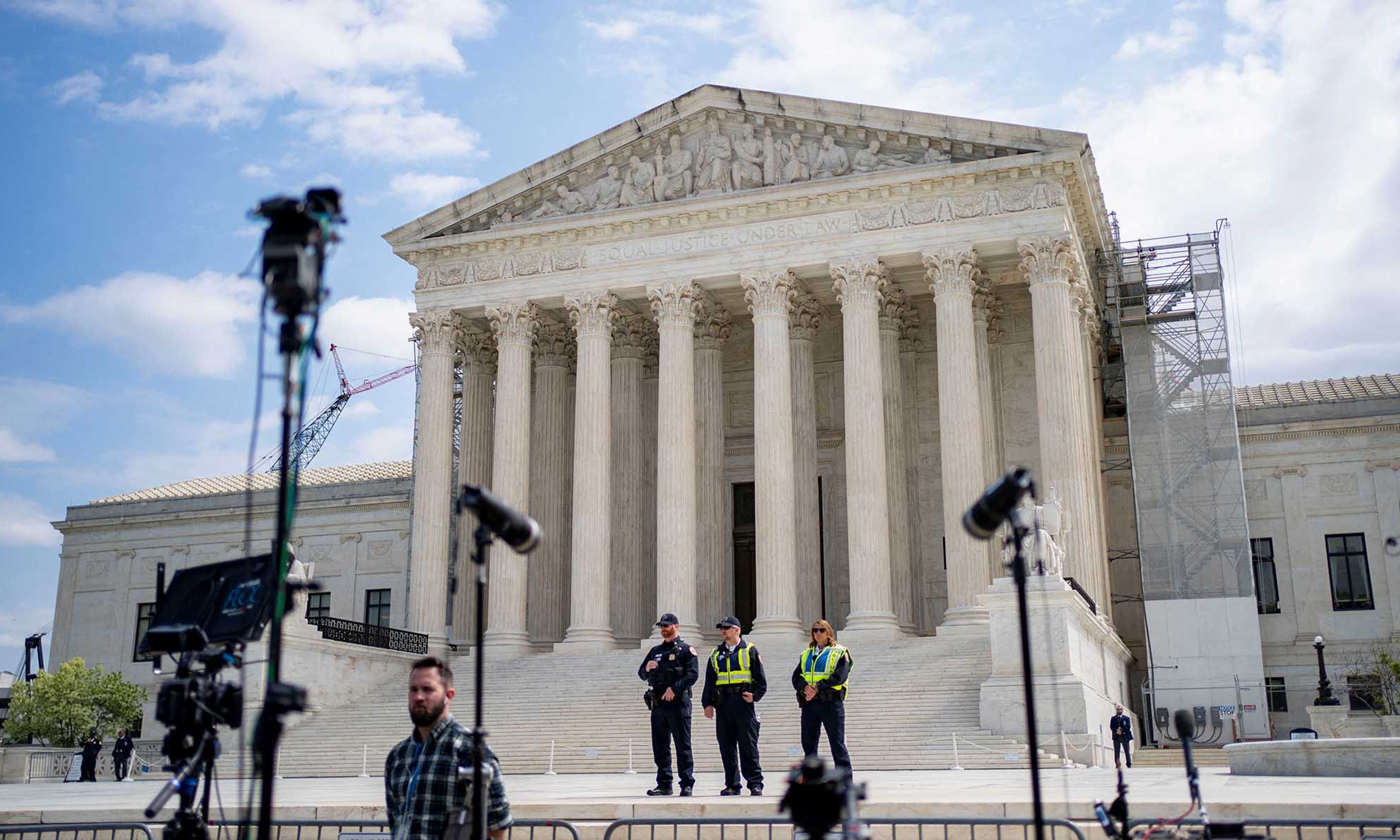
Last year, Senate and House Judiciary Committee Chairmen Chuck Grassley and Jim Jordan warned the chief justice of the Supreme Court of a growing problem in the Trump era: judges’ giving anonymous quotes to journalists. You see, for months, left-wing trial judges in one-party district courts were handing out temporary restraining orders against administration policies like candy. Eventually, the matter reached the Supreme Court, where, in support of the rule of law and the separation of powers, the Court reined in the activist trial judges. The trial judges didn’t like this, so they got to complaining — anonymously — to sympathetic journalists about how the Supreme Court was lazy, stupid, and bad. Hence the letter.
The Judicial Conference’s Codes of Conduct Committee may agree with the chairmen, to a certain extent. The committee just released Advisory Opinion 118, “Ethics Considerations Related to Public Speech and Civic Engagement by Judges.” Like most such advisory opinions, it mostly recapitulates previous gloss of the ethics canons, but it also seems to address the current moment.
On one hand, it specifically authorizes the kind of speech we’ve seen from previously silent judges who are all of a sudden defending “judicial independence.” That was unavoidable. Citing the chief justice’s 2024 year-end report, the committee said that “the Code and its previous advisory opinions leave room, in at least some circumstances, for the measured defense of judicial colleagues from illegitimate forms of criticism and attacks that risk undermining judicial independence or the rule of law.” What kinds of criticism are illegitimate? What attacks risk undermining judicial independence? I suppose they’ll know it when they see it, and of course the judiciary is going to authorize the judiciary to defend the judiciary.
More interesting is what comes later. The advisory opinion counsels, “Judges should also consider whether the chosen form, or method, of their civic engagement may lead to the public perception that the judicial position is being exploited to advance the private interests of the judge or others.” It urges them to “retain a measure of control” over their writing “to avoid exploitation of the judicial position for private gain.” What it means by that is “public statements that have been solicited by others for their own use or purposes” may present “ethical risk.” Indeed, “simply addressing certain topics might be viewed as taking a partisan position or reflecting a lack of impartiality.”
The judicial bureaucracy speaks in riddles, so it requires some reading between the lines. Let me try. It’s fine to defend the judiciary against attacks, but, generally speaking, judges need to think about how they do it. In particular, they should do it in ways they control. They control things they say and write; they don’t control things other people say and write about them. So stop giving quotes to people who are pushing an agenda. Don’t do it especially when someone calls to ask for it.
In other words, give a speech to defend the judiciary, or write a letter to the editor. But when NBC calls you for an interview to push a leftist hit job, say no.
The thing with advisory opinions of the Codes of Conduct Committee is that they’re a sort of ethical safe harbor. If you comply with them, you can’t get in trouble. Now we know where the safe harbor is when it comes to chatty judges, and it’s not in anonymously bloviating to activist reporters. Hopefully, they’ll keep that in mind.




Comments