
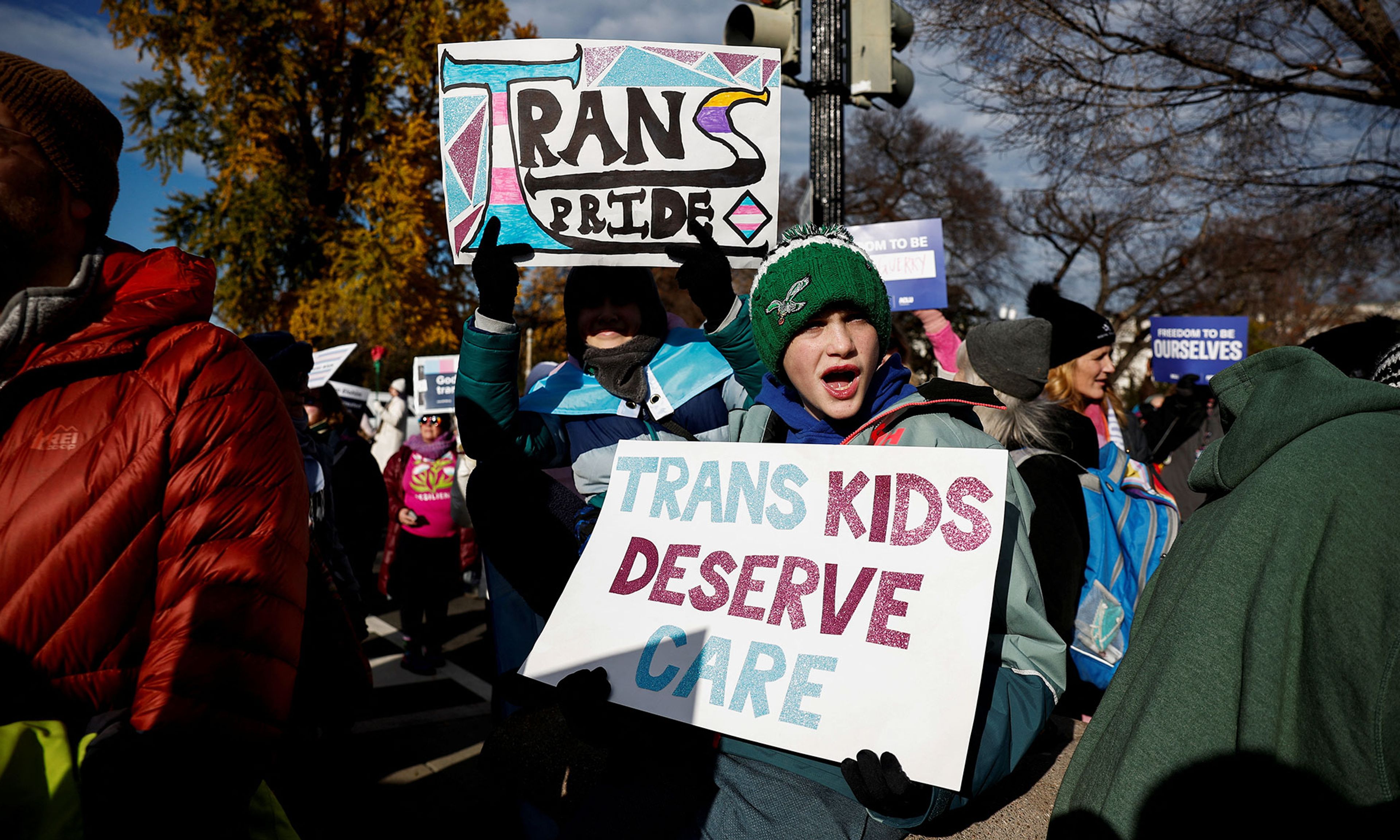
A few days ago, the Western District of Washington issued a temporary restraining order against President Trump’s executive order on “Protecting Children from Chemical and Surgical Mutilation.” The executive order declares it “the policy of the United States” not to “fund, sponsor, promote, assist, or support the so-called ‘transition’ of a child from one sex to another.” It directs agencies to end reliance on guidance from the World Professional Association for Transgender Health that “lacks scientific integrity” and take “steps to ensure that institutions receiving Federal research or education grants end the chemical and surgical mutilation of children.”
Among other things, the district court held that this order “violates the Equal Protection Clause of the Fifth Amendment” (put aside that there is no such clause) because it “facially discriminates on the basis of transgender status” and sex. Its primary “example” purportedly proving facial discrimination was that “federally funded medical institutions can provide” “‘puberty blockers . . . to delay the onset or progression of normally timed puberty,’ to cisgender individuals, but not to an individual 18 or younger ‘who does not identify as his or her sex.’” “Thus,” the court continued, a “cisgender teen who needs puberty blockers in the course of cancer treatment could receive them from federally funded institutions, but a transgender teen who needs puberty blockers due to the same diagnosis—and not to align with the teen’s gender identity—could not.” In a footnote attached to this sentence, the court “notes” that puberty blockers “are sometimes used to treat prostate cancer.” The court then held that the regulations of cross-sex hormones and surgeries “likewise” discriminate.
This analysis is remarkably confused, even under the Ninth Circuit’s incorrect precedent that discrimination on transgender status implicates heightened equal protection review. The court’s puberty blocker analysis implicitly recognizes that comparing two individuals requires holding the “diagnosis” and treatment constant. So the court did not compare puberty blockers to treat precocious puberty to puberty blockers to “treat” gender dysphoria, apparently recognizing what the ACLU and the Biden administration in the pending United States v. Skrmetti case did not: Giving a six-year-old puberty blockers to enable normally timed puberty as a precocious puberty treatment is not the same as giving an eleven-year-old puberty blockers to stop normally timed puberty as a gender dysphoria “treatment.”
Instead, the district court compared a “cisgender teen” “who needs puberty blockers” to treat prostate cancer to a “transgender teen who needs puberty blockers due to the same diagnosis.” But prescribing puberty blockers to treat cancer falls outside the executive order, which applies only when the treatment’s purpose is “to delay the onset or progression of normally timed puberty” as part of what some call “gender affirming care.” And the court’s analysis does not work to show sex discrimination regardless, since “transgender males” (read: biological females) do not undergo prostate cancer treatment.
The court’s backhanded “likewise” application of its logic to cross-sex hormones and surgeries also fails, most obviously because the court did not even try to hold the diagnoses or treatments the same. As discussed after Skrmetti, “giving adolescent girls estrogen for an endocrine disorder is not the same as letting male youths take estrogen as part of transition.” (See generally Ed Whelan’s post on the “Same Treatments” fallacy.) And performing a vaginoplasty on a female with a congenital defect or trauma is not the same treatment as a “vaginoplasty” in a male, in which “the testicles will be removed, the urethra will be shortened, and the penile and scrotal skin will be used to line the neovagina, the space between the rectum and the prostate and bladder” (as described by Judge Brasher of the Eleventh Circuit).
The Washington district court’s order underscores the need for a proper resolution of Skrmetti by the Supreme Court. Until then, we will continue to see misuse of the Constitution to judicially mandate that the government allow clinics to medically transition and sterilize young children — ironically based on the clinics’ own gender stereotypes — with taxpayer dollars.




Comments