2000—In dissent (in City of Erie v. Pap’s A.M.), Justice Stevens, joined by Justice Ginsburg, opines that an ordinance generally barring public nudity violates First Amendment speech protections. Amidst discussion of pasties and G-strings, Stevens complains that the ordinance was adopted in response to a specific concern about nude dancing at strip clubs rather than about public nudity in general. So what? As Justice Scalia responds: “As far as appears (and as seems overwhelmingly likely), the preamble, the councilmembers’ comments, and the chosen definition of the prohibited conduct simply reflect the fact that Erie had recently been having a public nudity problem not with streakers, sunbathers or hot-dog vendors, but with lap dancers.”

Share this story
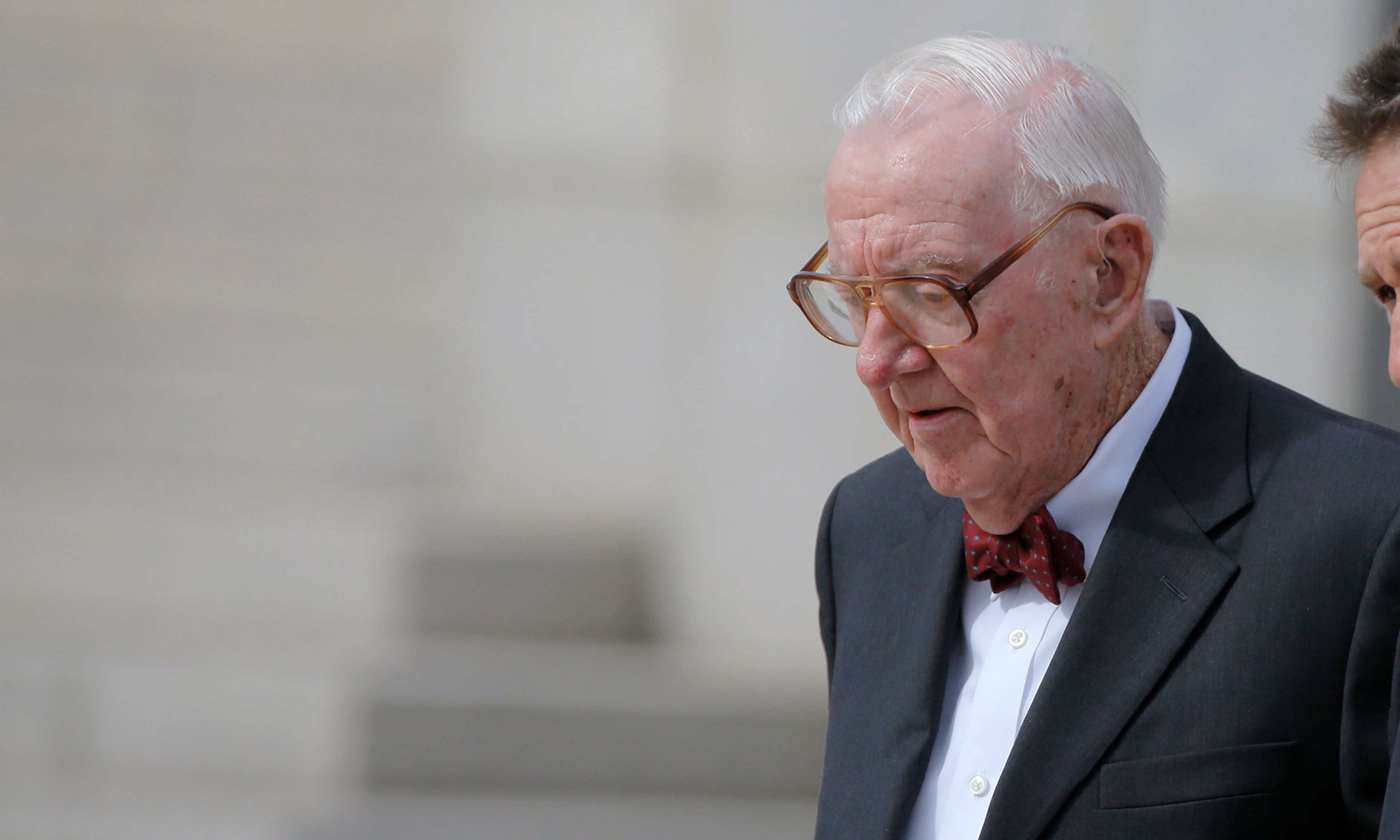
Retired Supreme Court Justice John Paul Stevens departs the funeral of Supreme Court Associate Justice Antonin Scalia at the Basilica of the National Shrine of the Immaculate Conception in Washington, February 20, 2016.
Carlos Barria/Reuters

About the Author
Ed Whelan holds the Antonin Scalia Chair in Constitutional Studies at the Ethics and Public Policy Center and is a regular contributor to National Review’s Bench Memos blog.
Advertisement
Advertisement



Comments