
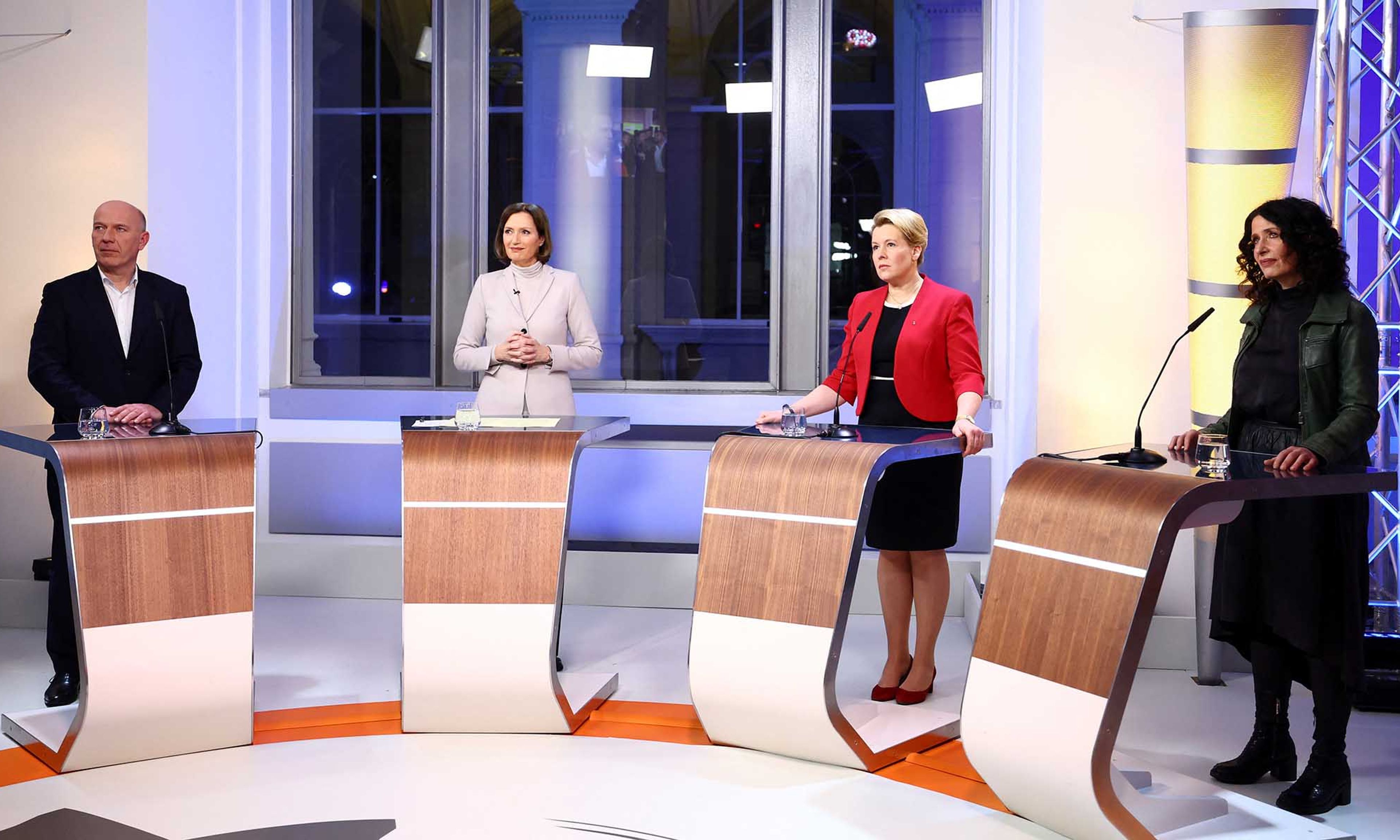
Berliners went to the polls yesterday to redo an election first held in September 2021. The German capital city is one of three city-states (along with Bremen and Hamburg) that elects its own legislature. Berlin’s Abgeordnetenhaus currently has 147 seats. After the 2021 election, the three left-wing parties — the SPD, the Greens, and The Left — formed a coalition government. The SPD was the largest party, with 36 seats, followed by the Greens with 32, and the right-wing CDU, in opposition, with 30.
The Abgeordnetenhaus is similar to the type of system that critics of the U.S. two-party system want to emulate. Seventy-eight seats are elected from districts, and the remainder are allocated proportionally according to the total popular vote. The total number of seats can fluctuate based on the results, with a minimum of 130 total seats. There’s a 5 percent threshold parties must cross to earn any seats. After 2021, six parties were above that threshold: In addition to the four parties already mentioned, AfD and the FDP join the CDU in the opposition.

Comments