
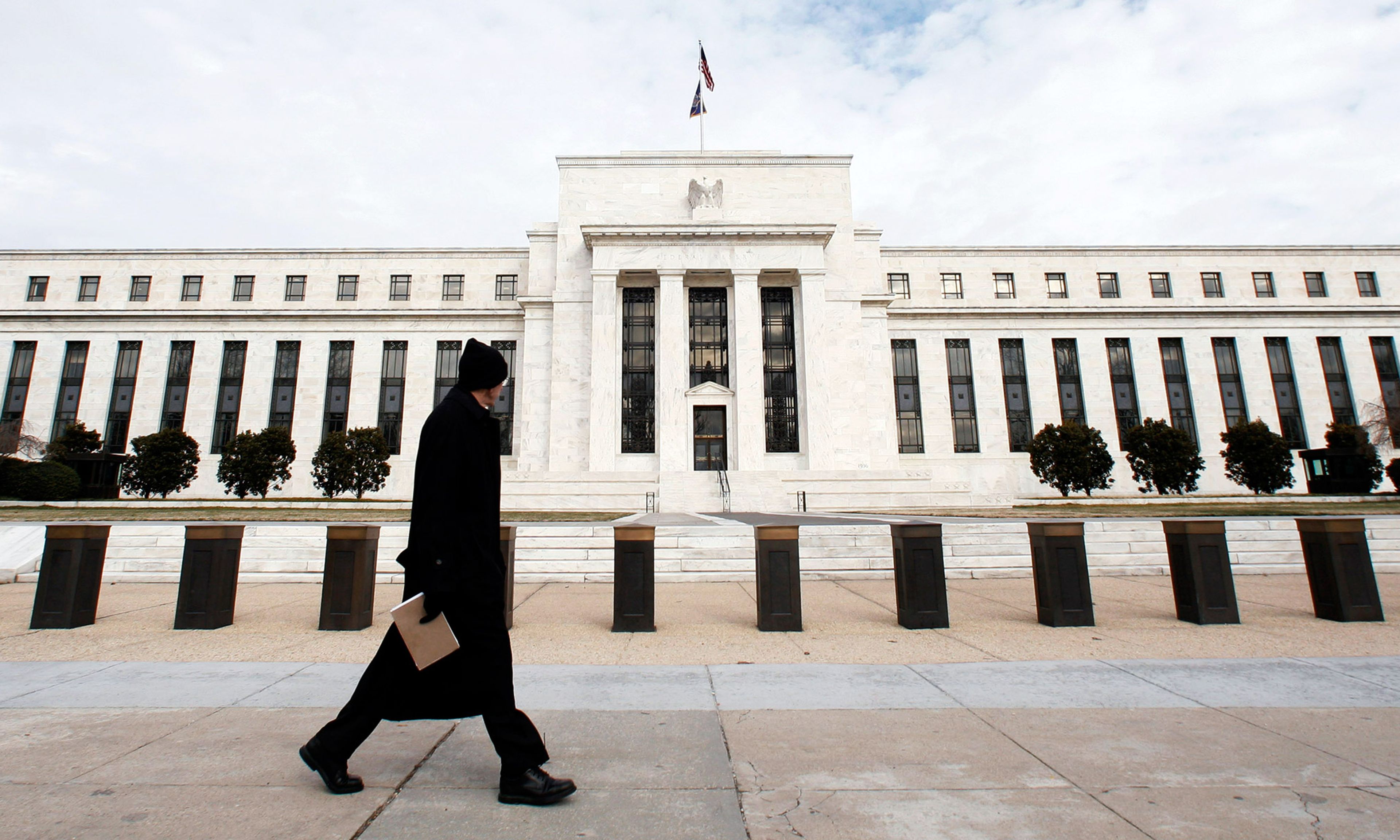
Our editorial today asks, “If the Fed is not executive, what is it?” Principally, it is a system composed of twelve chartered corporations, the Federal Reserve Banks. Such corporations were understood as a basic facet of law during and well before the American founding.
A corporation — as summarized by James Wilson, the most frequent speaker at the Constitutional Convention — was understood as “a person in a political capacity created by the law, to endure in perpetual succession.” Created and tasked by a legislature, such corporations were subject to all the same laws as individual citizens. They could make contracts, accumulate and spend money, and otherwise act freely so long as they honored their government-issued charters. Think of the East India Company in England, or universities in the prerevolutionary states.
The first corporation chartered by the U.S. federal government was the First Bank of the United States, created in 1791 by the First Congress. This was the country’s first de facto national bank, empowered to lend and borrow money across state lines. Like any corporation of the era, the bank was not within the executive branch — or any branch, for that matter. Its directors were largely elected by private stockholders and could be replaced only by them, not the president.
If the United States has a “fourth branch” of government in its national bank, this branch began in 1791. Yet none of the Founders believed that the First Bank was in any way part of the government, and its independence was therefore not unconstitutional. The bank was the brainchild of Alexander Hamilton, a delegate to the Constitutional Convention. It was famously opposed in the House by James Madison, another delegate, but only on constitutional grounds that Congress lacked the power of incorporation whatsoever. No opponent of the bank, including Madison, ever argued that if Congress possessed the power to charter corporations, those corporations needed to be within, or somehow accountable to, the executive branch. If anyone believed that the First Bank’s independence was problematic, they did not say so.
The Federal Reserve is different from the First Bank in many ways. Its regulatory authority, in particular, makes the Fed an odd blend of noncoercive and coercive powers that is difficult to reconcile with republican accountability. But critics of the Fed’s structure tend to argue that any national bank outside the executive branch is incompatible with an originalist account of the separation of powers.
These critics must answer this question: If the Federal Reserve’s independence is facially unconstitutional, was the First Bank established in 1791 also unconstitutional? If it was, why did no American founder or delegate to the Constitutional Convention make that argument? How could an independent national bank be conceived by Hamilton, accepted by Madison (at least on the independence count), passed by the First Congress (which included several more delegates to the Constitutional Convention), signed into law by George Washington (also a delegate), and deemed constitutional by John Marshall’s Supreme Court? All without a whiff of controversy over the bank’s full independence from the executive branch?
Of course, if the First Bank was constitutional, critics of the Federal Reserve’s structure must explain why the Fed is so fundamentally different that its independence from the executive — a much lesser independence than that of the First Bank, mind you — is intolerable.





Comments