
That’s the argument of an interesting new academic paper. (One of the authors summarizes it over at the Volokh Conspiracy.)
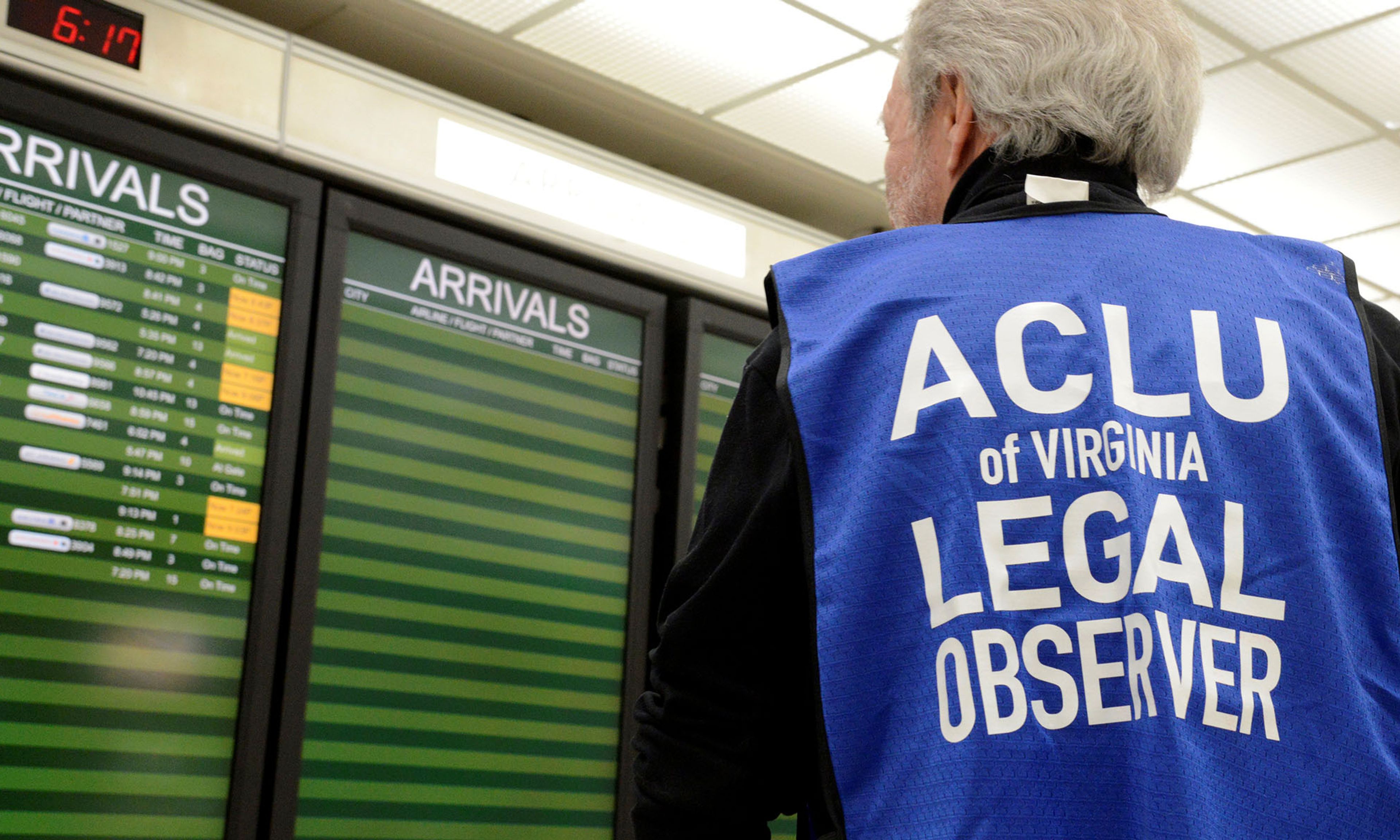
2016 was an absolutely horrific year for the city — whose homicide rate rose more than 50 percent above its 2015 level. And as it happens, this was also the first year of a new policy limiting stop-and-frisk. That policy resulted from a deal struck between the city and the American Civil Liberties Union to prevent a lawsuit.
Here are the basic trend lines we’re talking about (note there are two different Y axes):
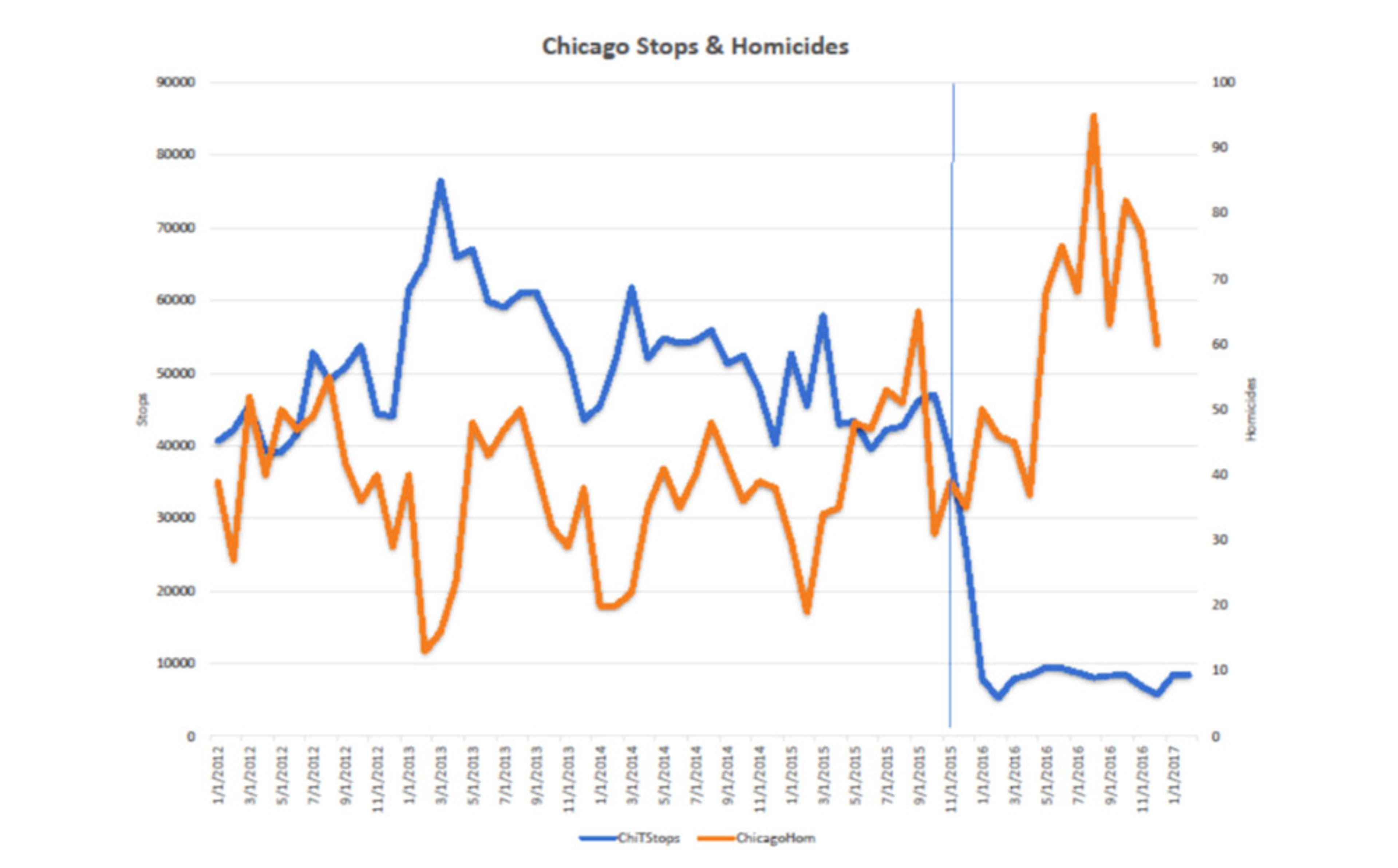
The shift that occurs at the vertical line is striking, and if you look carefully at previous years, you’ll see it’s even stronger than it seems. The policy went into effect during the winter, when homicides are usually down — but 2016 began with unusually violent cold months, and then everything exploded as summer arrived. There are similar trends in other measures of violence as well (nonfatal shootings, etc.). Certainly the data are consistent with the theory that criminals were emboldened when the police curtailed stop-and-frisk.
That works well as a narrative, but even a visually obvious correlation like this is hardly scientific proof — and that extra mile is where the paper stumbles a little. The authors bring out a bunch of fancy statistics to buttress their case (structural breaks! Bayesian model averaging!), but at the end of the day they’re analyzing two trends that look like the graph above. It’s hardly any surprise that countless tests all show a correlation between crime and stop-and-frisk, even when other variables are included as well; crime abruptly rose, and stop-and-frisk abruptly fell, at the same time. Coincidence is a hard thing to rule out, especially when you’re looking at trends in a single city, and all these tests really show is that the two trends did, in fact, coincide.
Another problem for the theory is that New York City similarly curtailed stop-and-frisk in recent years but saw no increase in crime. The authors point out some differences between the two cities that may make stop-and-frisk more effective in Chicago — NYC has far lower gun crime these days, for instance — but this is far from fully satisfying.
I’m a big believer in the idea that proactive policing can prevent crime, I’m open to a stop-and-frisk policy that’s carefully targeted and conscientious of individuals’ constitutional rights, and there’s no denying the correlation depicted in the chart above. But that only takes us so far, especially given the radically different results in New York.





Comments