
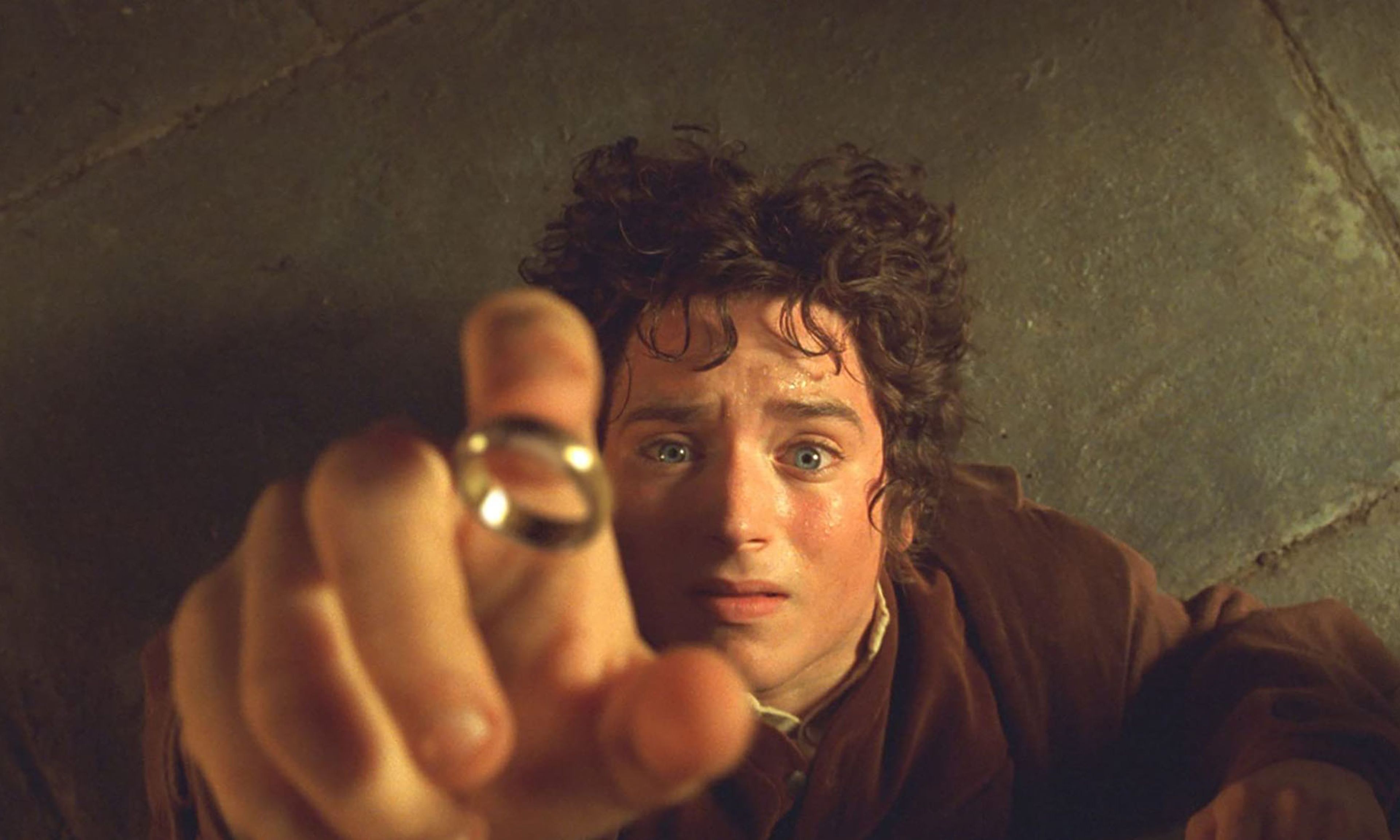
Did you really think that, with the first season of The Lord of the Rings: The Rings of Power concluded, you’d stop hearing from me about things Tolkien for a while? Well, think again. Although, I must confess, the latest development has me more confused than anything else. Apparently, Warner Bros. is releasing an NFT of Peter Jackson’s adaptation of The Lord of the Rings: The Fellowship of the Ring. Per Variety:
Fanatical collectors of Peter Jackson’s “The Lord of the Rings: The Fellowship of the Ring” will get the chance to buy limited-edition multimedia nonfungible token (NFT) versions of the fantasy epic.
Warner Bros. Home Entertainment is teaming with blockchain company Eluvio to launch “The Lord of the Rings: The Fellowship of the Ring” (Extended Version) Web3 Movie Experience, which will be available in two different editions that drop Friday, Oct. 21 at web3.wb.com. It’s the first time a major studio is releasing a movie as NFTs, which are unique identifiers that verify ownership of digital content.
“The Fellowship of the Ring” NFTs are the first ones to be available in the “WB Movieverse,” a new marketplace that will in the future include other titles from the studio. Jessica Schell, GM and EVP, Warner Bros. Home Entertainment, said future releases are yet to be determined. On the platform, fans will be able to buy, sell and trade movie NFTs.
I am confused, first and foremost, because I don’t exactly understand what an NFT is. But also because I don’t get why — other than for purely mercenary reasons — one is being “forged” in this instance. Greed is, of course, widely condemned throughout Tolkien’s Legendarium. Fanatical collectors of things fare little better. Apparently, Warner Bros. has a firmer hold on the rights to this product than the Tolkien-themed cryptocurrency the Tolkien estate blessedly shut down last year.
Saruman and Sauron, craftsmen and innovators that they were, would probably delight in this latest creation and try to figure out a way to turn it to their own ends. Tom Bombadil would be utterly unfazed by it. What would J. R. R. Tolkien himself think? He’d almost certainly be horrified and disgusted. He once wrote to his son Christopher that he considered “the growing habit of disgruntled men of dynamiting factories and power-stations” the “one bright spot” of the techno-tyrannic age in which they lived (many decades ago, it is worth remembering). Not that I’d endorse such behavior. But there is plenty we can do short of that. As I wrote earlier this year, when Mark Zuckerberg gloried in being compared to Sauron by his employees:
Those of us who nowadays struggle to look away from our phones or other devices for more than an instant, who seek desperately an escape from the flood of notifications and obligations such devices transmit and exacerbate, can surely relate to this; Zuckerberg himself laments that we are constantly “being barraged with news and information” — an irony, given his role in facilitating said barrage.
And if successful in freeing ourselves, even for a short while, from the domain of distractions, we will also be able to relate to Bilbo’s subsequent feeling of relief. That is, unless we let the Saurons of this world have their way. But defying their intentions is the one thing they would never suspect — and the one thing that can defeat their dark designs.
Let’s start by throwing these NFTs into the fiery chasm from whence they came — or just by declining to purchase them.






Comments