
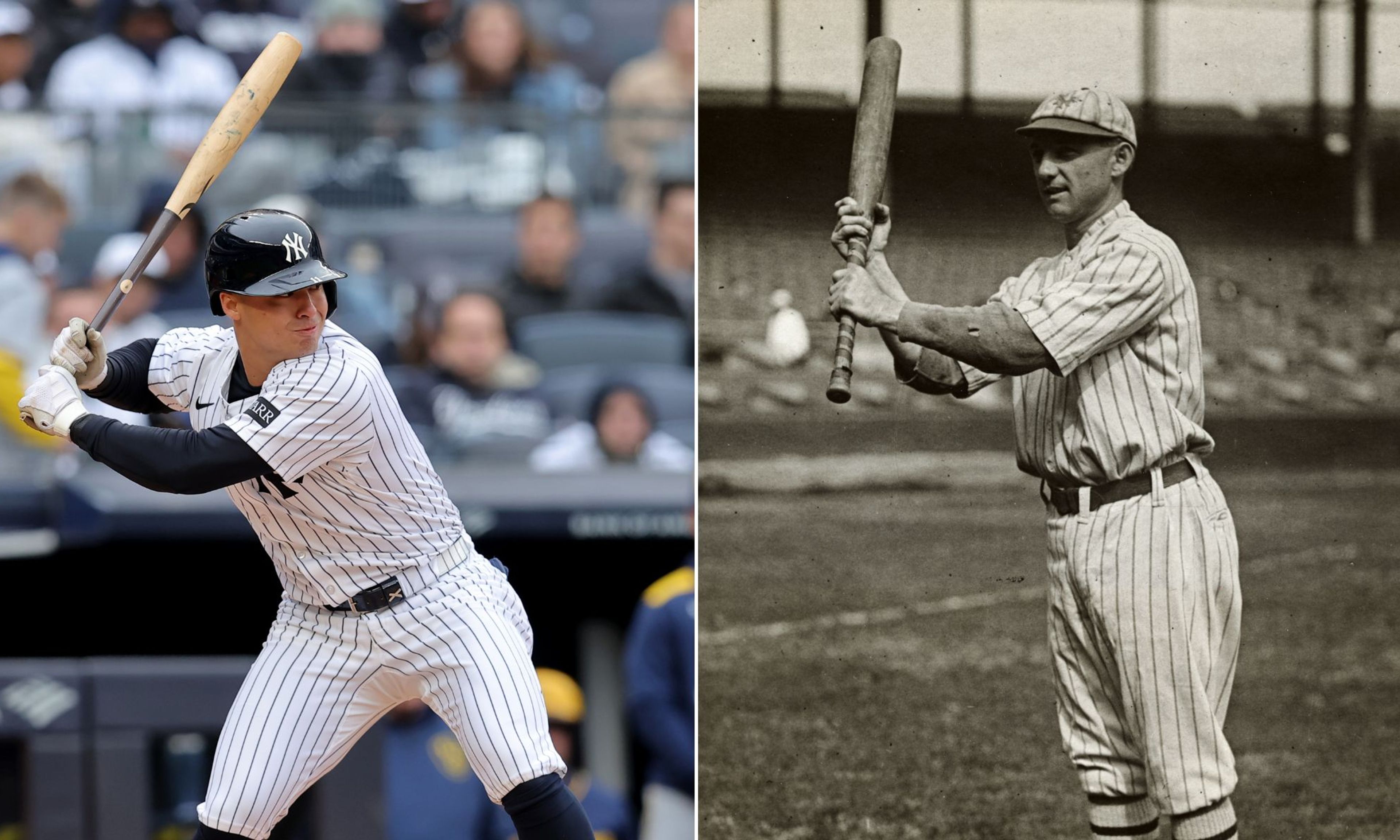
The big buzz of the first week of the baseball season is the “torpedo bat,” a novel shape for a bat that bulges outward at the barrel and tapers at the end. The theory is that bats involve a trade-off: lighter bats generate more bat speed, but wider ones have more surface to make solid contact. Bat shapes and their underlying philosophies have shifted a good deal over time, since 1884, when three-time batting champ and onetime .400 hitter Pete Browning of Louisville commissioned the original “Louisville Slugger” bats from Hillerich and Bradsby. At the time, some hitters even used cricket-style flat bats. Before 1920, more than a few old-timey singles hitters used bats that were nearly as thick at the handle as at the barrel, the better to control the bat with hands held apart when bunting or just slapping at the ball (and also to save expense on broken bats). Joe Sewell, the Hall of Fame infielder known as the game’s toughest strikeout, used the same bat for his entire career. Babe Ruth, by contrast, used one of the game’s heaviest bats, which did nothing to restrain the immense power of his swing. In the 1990s, players such as Barry Bonds started using whip-handled bats that were lighter and broke more easily.
The torpedo bat is all the rage right now because a couple of Yankees are using it and have recently helped the team launch 15 home runs in three games. (Granted, four of those are by Aaron Judge, who isn’t using the bat and doesn’t need the help.) It isn’t unfair to try out new, legal equipment — nor would it be unfair for the league to ban it if it proves destabilizing. You play with every legal advantage you can manage, but some things (like aluminum bats) are quite reasonably illegal in the hands of big leaguers.





Comments