
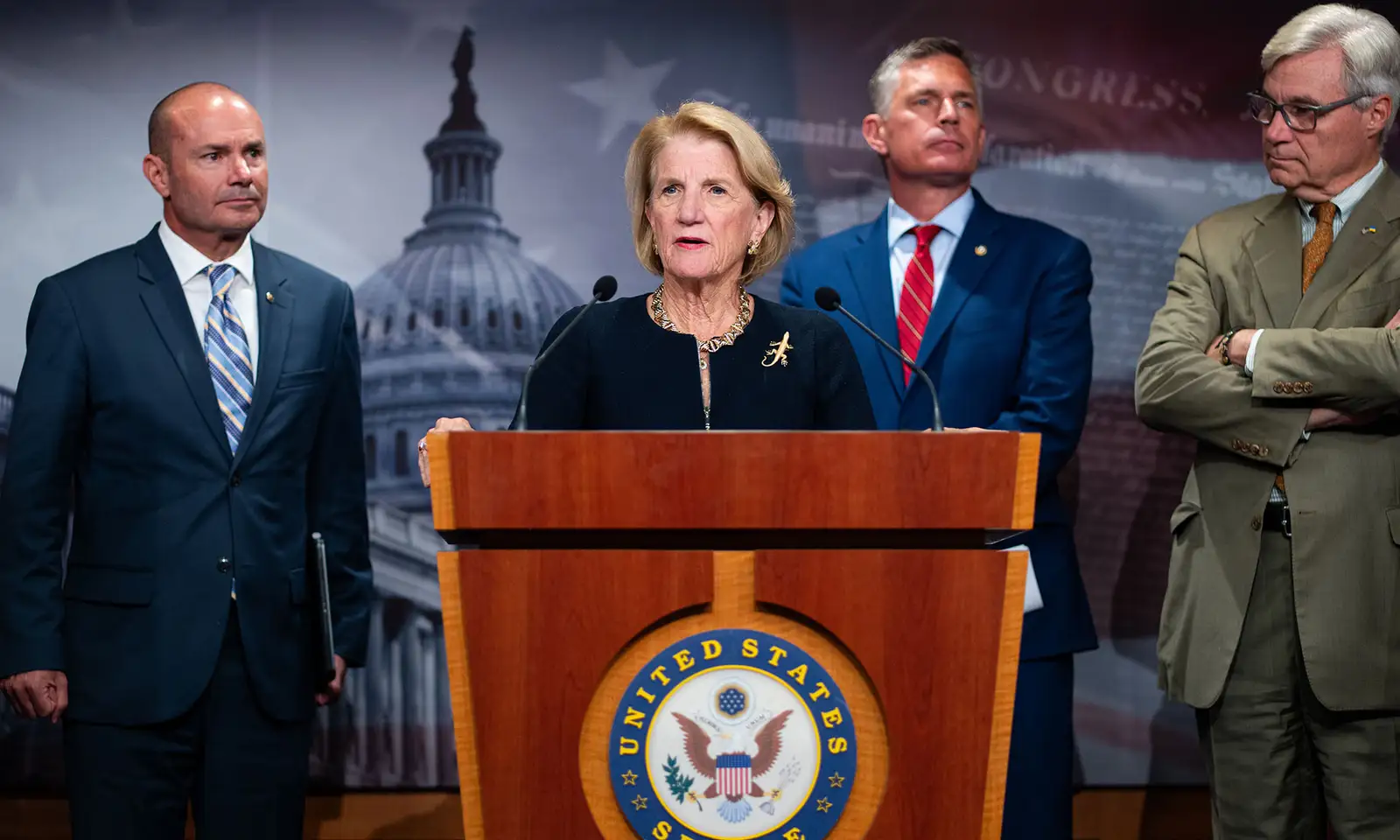
After months (years, really) of bipartisan negotiations, the Senate has just passed a comprehensive permitting reform bill, shaped entirely by its members, with input from the House, to tighten and improve several decades-old statutes while also restricting executive power.
Honestly, I can’t believe I just wrote that sentence in 2026. Congress is legislating. On an issue of national importance — our strained electric grid and the anemic pace of building almost any sizable project in America. And senators didn’t do it by simply handing the executive branch a bunch of power and discretion to make decisions for them. They actually debated individual provisions and policy choices and didn’t include waiver authority for the president to opt out of them.
The bill was negotiated by two Republican committee chairs (Shelley Moore Capito of West Virginia and Mike Lee of Utah) and two Democratic ranking members (Sheldon Whitehouse of Rhode Island and Martin Heinrich of New Mexico). When all was said and done, it was far from a party-line vote. Two Republicans voted against passage, and 14 Democrats voted in favor. On the Democratic side, the senators from Arizona, Colorado, Delaware, Hawaii, Minnesota, Nevada, New Mexico, New York, and Virginia all split their votes.
Imagine that: Senators from not only the same party but the same state voting differently on major legislation. The age of wonders has not passed.
This is what the process of lawmaking looked like for almost all of American history. It’s exactly what Congress is made to do — what our constitutional order with the legislature at the center requires. So much more of this, please.




Comments
On “Behold, Lawmaking!”